The easiest way to start reading again is to make the first step so small it feels almost daft. One page before bed. Five minutes with your morning coffee. A single chapter on the bus home.
That's the whole trick. You're not trying to finish a book this week. You're trying to become someone who reads a little most days, and that starts with showing up for a page you could read in the time it takes the kettle to boil.
Most reading advice sets you a target of fifty books a year that feels impossible by February. This is the opposite. Start absurdly small, tie it to something you already do, clear the obstacles away, and let it grow on its own.
Why a reading habit earns its place in your day
Reading does quiet, useful things for you, and the evidence is better than you might expect.
It calms you down. A 2026 review of the evidence by researchers at the University of Cambridge found reading for pleasure is linked to lower stress, less loneliness and better wellbeing, and their survey found reading was the most popular way adults said they like to unwind, with around 38% choosing a book over anything else. When you're absorbed in a story, your attention has somewhere to go that isn't the news or your inbox.
It seems to protect your thinking over the long run. A 14-year study of nearly 2,000 older adults in Taiwan found that those who read at least once a week were considerably less likely to show cognitive decline, even after accounting for education. This is observational work, so reading may be a marker of an active mind as much as a cause of one. Still, it points the same way as decades of similar research.
There's even a link with living longer. A study following more than 3,600 older adults in the United States found that book readers had about a 20% lower risk of dying over roughly 12 years than non-readers. Association isn't proof, and healthier people may read more to begin with. Still, few habits this pleasant come with findings this consistent.
If you read a print book at night, you also sidestep a screen. The Sleep Foundation notes that the blue light from phones and tablets can delay your body's melatonin and keep you feeling alert when you'd rather be winding down. A paper book under a warm lamp asks nothing of your brain except to follow the next sentence.
None of this needs you to read fast or read "important" books. Reading what you enjoy is what keeps you coming back, and coming back is the part that counts.
Start smaller than feels sensible
The biggest mistake is starting too big. You promise yourself an hour a night, manage two nights, miss the third, and quietly decide you're "not a reader".
So shrink the ask until it can't fail. James Clear puts it well in his advice on building a reading habit: read one page a day, and "optimise for the starting line". Some nights you'll read one page and put the light out. Plenty of nights you'll look up and realise you've read thirty. Both count as a win, because the goal you set was one page.
This is the two-minute version of the habit, and it works because the hard part is never the reading. It's the starting. Behaviour designer BJ Fogg built his whole Tiny Habits method on this idea that a change small enough to feel easy is a change you'll repeat. Once the book is open, momentum tends to do the rest.
If a page feels like nothing, good. That's the point. You can always read more. You can rarely make yourself read for an hour on a night when you're wiped out, and one page keeps the habit alive on exactly those nights. Our guide to tiny habits goes deeper on why the small version beats the ambitious one.
Attach it to something you already do
A new habit needs a reliable trigger, and the most reliable triggers are the things you already do every day without thinking.
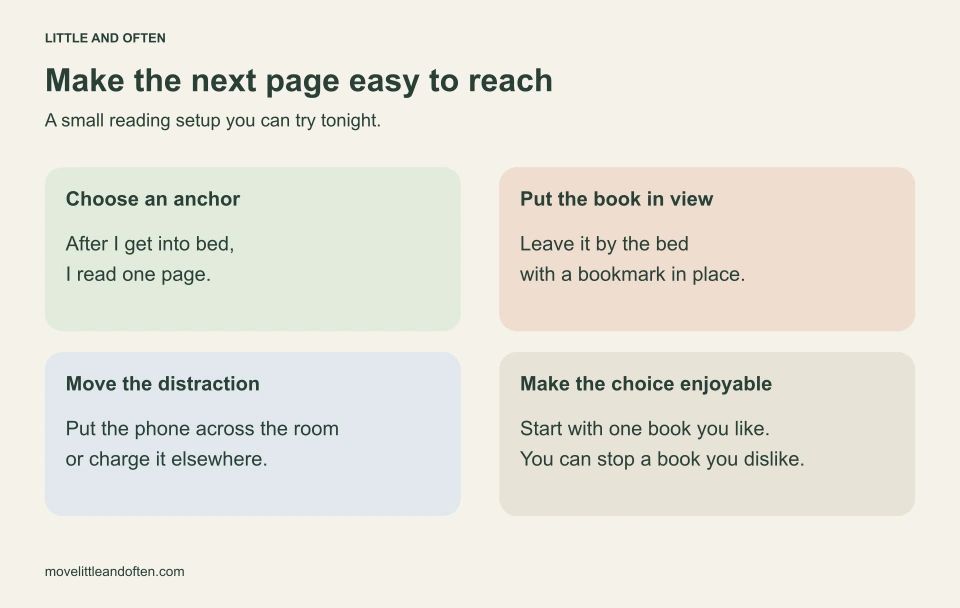
Pick an anchor and bolt reading onto the end of it. After I get into bed, I read a page. After I pour my morning tea, I read while it cools. After I sit down on the train, the book comes out before the phone does. The existing routine reminds you, so you don't have to rely on willpower or memory.
Bedtime is the classic anchor for good reason. It's already a fixed point, it replaces late-night scrolling with something calmer, and it signals to your body that the day is closing. Morning works well too, before the day's demands pile up and eat the time.
Give the habit a few weeks before you judge it. There's no magic number of days that turns an action automatic. In one well-known study, the time it took people to make a new behaviour feel automatic ranged from 18 days to 254, with a wide spread in between. So if it still feels like effort after a fortnight, that's normal, not failure. Our piece on how long it takes to build a habit unpacks the research.
Take the friction out
Every extra step between you and the book is a chance to not bother. Remove the steps.
- Leave the book where you'll see it. On the pillow, by the kettle, in your bag. A book on the arm of the sofa gets read. A book on a high shelf does not.
- Put the phone in another room, or at least across the room. If reaching for it takes effort, you'll reach for the book instead.
- Keep a bookmark in place so you never have to hunt for where you were.
- Read one book at a time when you're starting out, so choosing what to read never becomes its own decision.
And give yourself full permission to abandon books you're not enjoying. Clear's advice is to start plenty of books and quit most of them. Slogging through something dull teaches your brain that reading is a chore, which is the last thing you want in the early weeks. Life's too short for a book you're forcing.
Audiobooks and e-readers count
Reading doesn't have to mean ink on paper. If a format gets a story into your day, it counts.
Audiobooks turn dead time into reading time. A walk, the washing-up, the commute, a long drive. Many apps sync your place between the audiobook and the ebook, so you can listen on the move and pick up the same page in print at night.
E-readers have their own quiet advantages. You can carry a library in one hand, make the text as large as you like, and read a paper-like screen without the backlight that keeps you awake. If you're reading right up to lights-out, an e-ink reader or a warm night setting is kinder to your sleep than a bright phone.
Use whatever lowers the barrier on a given day. The format is a detail. The habit is the thing.
Keep track without turning it into a chore
Noticing your own progress helps a habit stick. A large review of studies found that people who monitored their progress toward a goal were more likely to reach it. A simple mark on a page or an app does two jobs at once. It reminds you, and it gives you the small satisfaction of a box ticked.
The catch is that tracking can curdle into pressure. The moment a broken streak makes you feel like you've failed, the tracker is working against you. So track the showing up, not the finishing. One tick for the day you read, however little. No tally of chapters, no reading-challenge leaderboard, unless those spur you on.
Here's a blank tracker you can copy onto a page in your notebook or the back of a bookmark:
Habit: Read a page Cue: after I get into bed
Mon ☐ Tue ☐ Wed ☐ Thu ☐ Fri ☐ Sat ☐ Sun ☐
And the same thing part-way through a week, so a couple of blanks sit there without judgement:
Habit: Read a page Cue: after I get into bed
Mon ☑ Tue ☑ Wed ☐ Thu ☑ Fri ☑ Sat ☐ Sun ☐
Five ticks and two blanks is a good week, not a failed one. If you'd like more on setting one up, we have a whole guide to using a habit tracker.
A kinder way to keep count
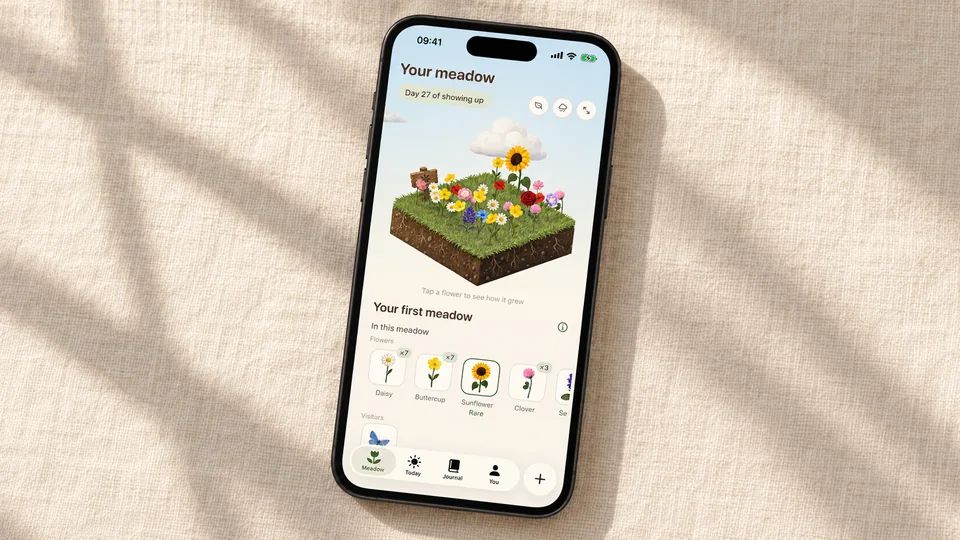
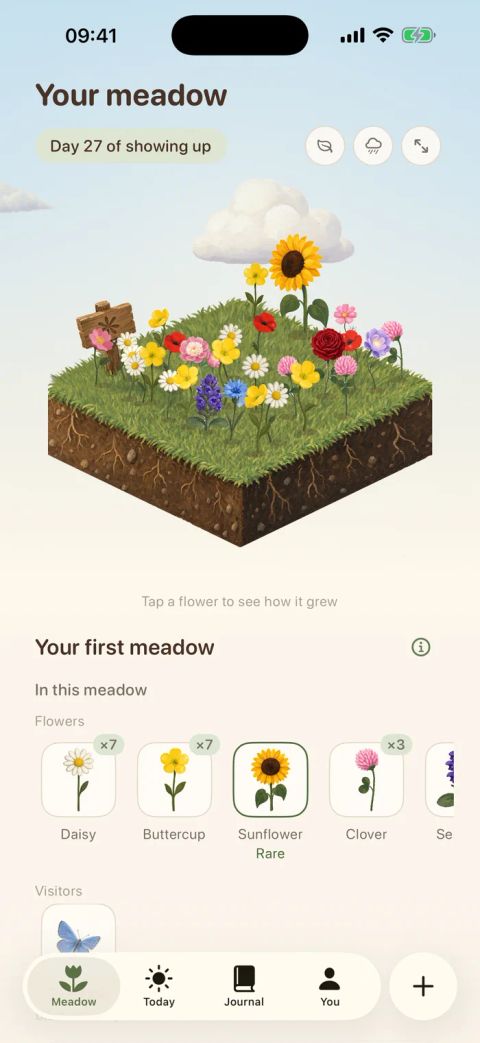
If a paper chart isn't for you, Meadow gives the habit somewhere to live on your phone without the guilt. You add reading as one of your small daily habits and tick it off on the days you do it, alongside a quick note of your mood and energy if you fancy it.
The difference is what happens when you miss. Meadow has no streaks, so a night you fall asleep three pages in resets nothing. Each day you show up grows a wildflower in a meadow that's yours alone, and that meadow keeps growing whenever you come back, whether that's tomorrow or next week. It's built for reading a little most days rather than punishing you for the days you don't. You can find it at growyourmeadow.com.
When you fall out of it, and you will
Everyone falls out of reading. A busy fortnight, a book that lost you halfway, a holiday that broke the routine. A slump isn't the end of the habit. It's a normal dip.
The reassuring bit of the research is that one missed day, or even a run of them, doesn't undo the progress you've made. Habits are more forgiving than the streak apps suggest. You don't start from zero. You pick up roughly where you left off.
Here's how to climb out:
- Go back to one page. Not thirty minutes, not the chapter you abandoned. One page tonight, to prove the habit still exists.
- Change the book. If the last one stalled you, that's the book's fault, not yours. Grab something fast and fun, even something you'd call a guilty pleasure. Chase momentum, not merit.
- Reset the anchor. If bedtime stopped working, try mornings, or your lunch break, or ten minutes before you make dinner.
For more on getting back on track after any wobble, our piece on healthy habits covers the mindset that keeps them going.
Common questions
How long does it take to build a reading habit?
Longer than the "21 days" myth suggests, and it varies enormously from person to person. In the research above, people took anywhere from a few weeks to the best part of a year to make a new behaviour feel automatic. Judge it by whether reaching for the book is getting easier, not by a date on the calendar.
How many pages a day should I read?
As few as you like. One page a day is a real habit and a fine place to stay. The right number is the one you'll do on a tired Tuesday, not the one that looks impressive.
Do audiobooks count as reading?
For building the habit, yes. Listening keeps you engaged with a book and fits into moments print can't reach. If your aim is close study of a difficult text you might want it in front of you, but for reading more and enjoying it, audio counts.
Is it better to read before bed?
Reading a print book or a dimmed e-reader before bed is a good wind-down and easier on your sleep than scrolling, because you avoid the bright, alerting light of a phone. If you find a gripping book keeps you up too late, save the page-turners for daytime and keep something gentler for the pillow.
What if I can't concentrate?
Start with a page, put the phone in another room, and pick something you find hard to put down. Concentration is a muscle that comes back with use. Short, absorbing books rebuild it faster than worthy ones you feel you ought to read.
The one thing to do tonight
Put the book you most want to read on your pillow before you leave the bedroom this morning. Tonight, when you climb into bed, read one page. That's the whole task, and it's how the habit begins.
AUTHOR
Co-founder of Meadow.
Ash is co-founder of Meadow, a habit and movement tracking app that turns small acts of self-care into a growing wildflower meadow.
Little and often, with Meadow
Consistency, not intensity.
Meadow turns the movement you enjoy and the habits that help you feel good into a meadow of wildflowers. No streaks to break, and your flowers never wilt.
Download Meadow