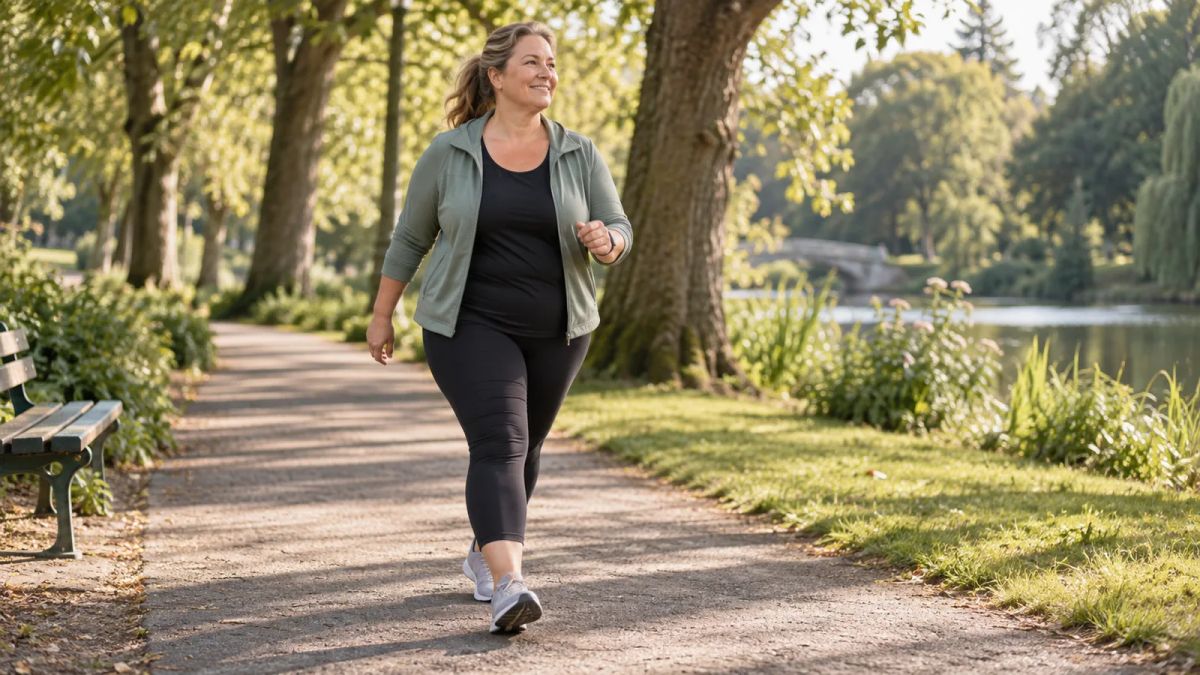
Getting to 10,000 steps rarely means carving out a spare 90 minutes to march. It means scattering short walks through a day you're already living, so the total climbs while you get on with everything else. Most people who hit the number don't do a big daily walk at all. They've found the ten minutes here and five minutes there that a normal day hides, and they've hung those walks on things they do anyway so remembering isn't left to willpower.
This is the how-to. If you're still weighing up whether 10,000 is the right target for you, our piece on 10,000 steps a day covers where the number came from and why a lower figure suits many people. Here we'll assume you want to reach it, or get close, and look at how to make that happen on an ordinary week.
Where the steps already hide
The movement that gets you to 10,000 is mostly the kind you don't schedule. Researchers call it non-exercise activity thermogenesis, or NEAT: the energy you spend working, pottering, standing, climbing stairs and moving about that isn't formal exercise. An overview on the NCBI Bookshelf notes that NEAT "can vary by as much as 2000 Kcal per day when comparing two adults of similar body size", and that a desk-bound worker's daily activity energy tops out far lower than someone on their feet. The gap between a sedentary day and an active one is made of small, unglamorous movement.
Before you plan any walks, look at where steps leak out of your current day.
The school run, the walk to and from the car, the trip to the bin, the pace around the supermarket, the stairs you take without thinking. Then look at the moments you sit through that could hold a short walk instead. A phone call you take at your desk. The ten minutes an advert break gives you in the evening. The bus stop you get off at because it's outside your door. None of these feels like exercise, and that's the point. They ask nothing of your motivation.
A rough audit helps. For one normal day, jot down where your steps come from and where the flat, seated stretches are. The seated stretches are your raw material.
Hang new walks on old routines
The reason a walking plan falls apart is usually not effort. It's that you meant to fit it in later and later never came. The fix is to attach each walk to something already fixed in your day, so the existing routine does the reminding. The American Heart Association's guidance on making habits stick is to tie a new action to a habit you already have, which is the part memory is worst at without a cue.
Pick anchors that repeat whether you feel like it or not. After I pour my morning coffee, I walk to the end of the road and back. After I finish lunch, I do a loop of the block. When the kettle goes on, I pace the kitchen until it clicks off. The cue you already do carries the walk you're adding.
Here's a plan you can copy onto a note. There's a blank version to fill in, then a worked example under it.
After ____________________ , I walk ____________________
After ____________________ , I walk ____________________
After ____________________ , I walk ____________________
Filled in, a day might read:
After my morning coffee, I walk a lap of the garden and up the road
After lunch, I walk a ten-minute loop of the block
After the evening news starts, I walk during the first ad break
Three anchored walks like these can close a bigger gap than you'd expect, and none of them needs a free hour that never appears.
Turn calls and meetings into steps
A surprising number of the things you do sitting down don't need you sitting down. A catch-up call, a one-to-one, a podcast, a voice note to a friend. Take the ones that don't need a screen on your feet.
There's a health case for it beyond the step count. Harvard Health reports on research finding that five minutes of walking after every half-hour of sitting was the pattern that lowered both blood sugar and blood pressure, with break patterns dropping systolic blood pressure by 4 to 5 points compared with sitting all day. A walking call does two jobs at once. It breaks up the sitting and it feeds the total.
If you work from home, the setup is easy. Put your phone on speaker or your headphones in, and walk the hallway, the garden or the street while you talk. In an office, suggest a walking one-to-one for the conversations that suit it. A slow lap of the building beats a meeting room chair, and you'll often think better on the move.
Break it into chunks you won't notice
Ten thousand looks like a wall when you picture it as one march. Split across a day it's a series of small, forgettable efforts. The CDC now makes this official: you don't have to do your activity all at once and can break it into smaller chunks through the week. A scatter of short walks counts the same as one long one.
Cleveland Clinic uses step bands that make the target feel less binary. It describes fewer than 5,000 steps a day as sedentary, 5,000 to 7,499 as low active, 7,500 to 9,999 as somewhat active, and 10,000 or more as active. Wherever you sit now, the next band up is a modest move, not a leap.
Think in three-part days. Roughly 3,000 steps before work, 3,000 across the middle of the day and 3,000 in the evening add up to 9,000; another 1,000 incidental steps would bring you to 10,000. Miss one block and you have still added useful movement to your day.
Build up gradually, not overnight
Open our free Build your daily steps (PDF). Save or print it to use alongside this guide. No sign-up needed.
Jumping from 4,000 steps to 10,000 tomorrow is how people end up sore, discouraged and back on the sofa by Thursday. The NHS advice on walking for health is to build up your pace and distance gradually, and it points out that even a short brisk walk counts towards your week. Cleveland Clinic's starting advice is gentler still, beginning with five minutes of walking and adding from there.
A steady ramp works better than a heroic first week. Add roughly 1,000 steps a day to your current average, hold it until it feels ordinary, then add another 1,000.
Here's a four-week build for someone starting around 4,000 steps a day. Read across: the target for the week, and a rough way to get the extra in.
Week 1, aim for 5,000. Add one ten-minute walk after lunch.
Week 2, aim for 6,500. Keep the lunch walk, take calls on your feet.
Week 3, aim for 8,000. Add a morning loop before work or the school run.
Week 4, aim for 9,000 to 10,000. Add an after-dinner stroll and use the stairs.
Shift the weeks to fit your body. If a jump feels like too much, hold the lower number for another week. The point is a rise you can keep, not a fast one you abandon.
A desk-bound day, indoors
Some days you barely leave your chair, and the target looks impossible from a desk. It isn't, but it takes deliberate interruptions.
- Set a nudge for every half-hour and walk for a few minutes when it goes off, the pattern the Harvard research favoured.
- Refill your water bottle from the furthest tap, and drink enough that you're up and down all day.
- Take the stairs to a bathroom on another floor, there and back.
- Walk the length of the house or office while the kettle boils or a file uploads.
- Do a slow lap during every phone call you can take standing.
Stacked up, these small breaks turn a seated day into a few thousand steps you'd otherwise have lost. On a day when even that won't happen, a short burst of harder movement fills a similar gap. Our guide to exercise snacks covers minute-long efforts like a quick flight of stairs, which do work for your fitness that a slow amble can't.
Rainy days and dark evenings
Weather and short winter days are the usual excuse, and they're beatable. Indoors, you can walk laps of the house, march on the spot through a TV programme, or pace up and down the stairs a set number of times. A shopping centre, a museum or a large supermarket gives you a warm, dry circuit. If you'd rather be out, the right coat and a head torch turn a wet evening walk from a chore into a habit you can keep all year.
The goal on a bad-weather day isn't your full 10,000. It's to keep the habit alive so it's still there when the sun returns. Half your steps beats none, and a short walk logged as a short walk keeps the pattern going.
Watch the days add up
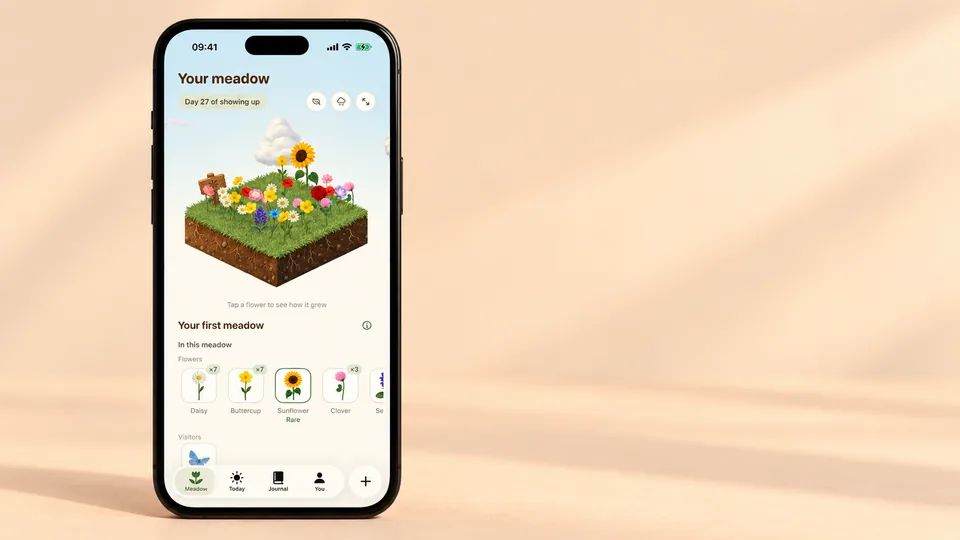
Marking each walk gives you something steady to look back on, which tends to help more than staring at the same daily number and feeling behind. A tick on a wall calendar does the job. So can an app.
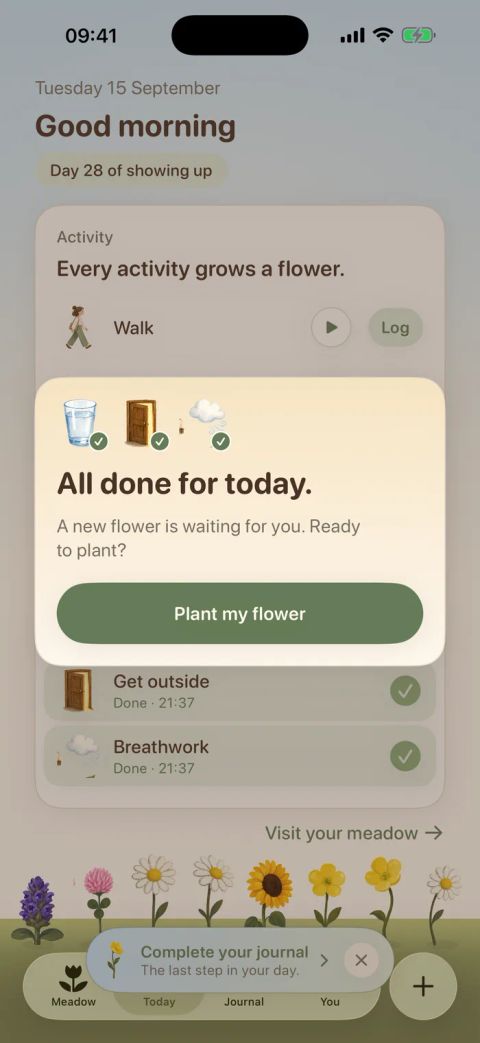
Meadow is built around showing up rather than chasing a flawless week. Made for iPhone, it lets you log a walk with a timer, tick off small daily habits like getting outside or drinking water, and note your mood and energy, and each day you move a new wildflower blooms in a meadow that's yours alone. Because it counts consistency, there are no streaks, so a rained-off day when 10,000 slips out of reach resets nothing and your flowers never wilt.
Frequently asked questions
How long does it take to walk 10,000 steps?
For most adults, around 90 to 100 minutes of walking spread through the day, at a comfortable pace. Split into short chunks across morning, midday and evening, no single walk needs to run longer than about half an hour.
How far is 10,000 steps?
Roughly four to five miles for many people, depending on your height and stride. That's a useful check against a step counter, which can miscount if you push a buggy or trolley and keep your arm still.
Do the steps have to be brisk to count?
Every step adds to your total, so a gentle amble counts. Brisk minutes do extra work a raw count can't see, though. The NHS marks a brisk pace as one where you can still talk but not sing, so aim for some of your walking to reach that.
What if I have a desk job and can't get outside?
Break up the sitting with short indoor walks, take calls on your feet, use stairs and far-off taps, and set a reminder to move every half-hour. A desk-bound day can still reach several thousand steps, and you can top it up with a walk at either end.
Is 10,000 the right goal for me?
Not necessarily. Health benefits appear well below it, and the sensible number depends on your age and starting point, which our guide to how many steps a day walks through. If 10,000 keeps you moving and cheerful, aim for it. If it leaves you defeated, pick a figure you'll meet most days.
Your first move is small. Look at tomorrow, pick one repeating moment, a morning coffee, the end of lunch, the evening news, and decide the short walk you'll hang on it. One anchored walk is a 10,000-step habit starting.
AUTHOR
Co-founder of Meadow.
Ash is co-founder of Meadow, a habit and movement tracking app that turns small acts of self-care into a growing wildflower meadow.
Every little bit counts
Five minutes counts. So does a dance in the kitchen.
Log the movement you enjoy and the small habits that help you feel good, and watch them bloom into something you can see.
Download Meadow