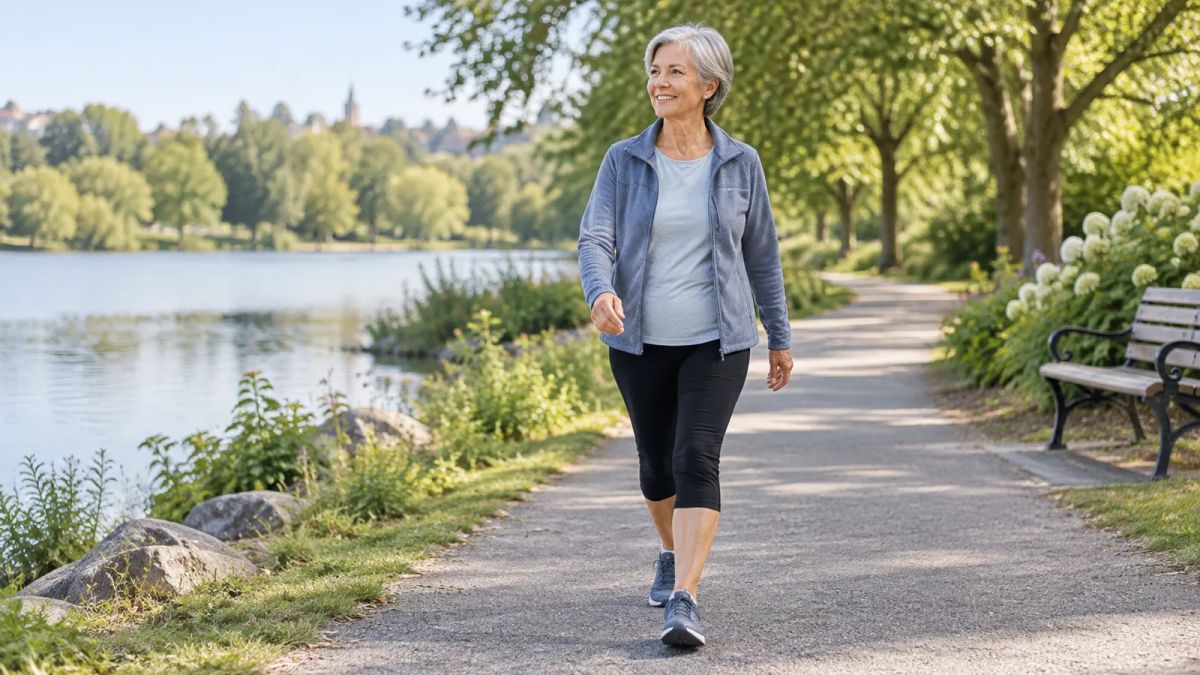
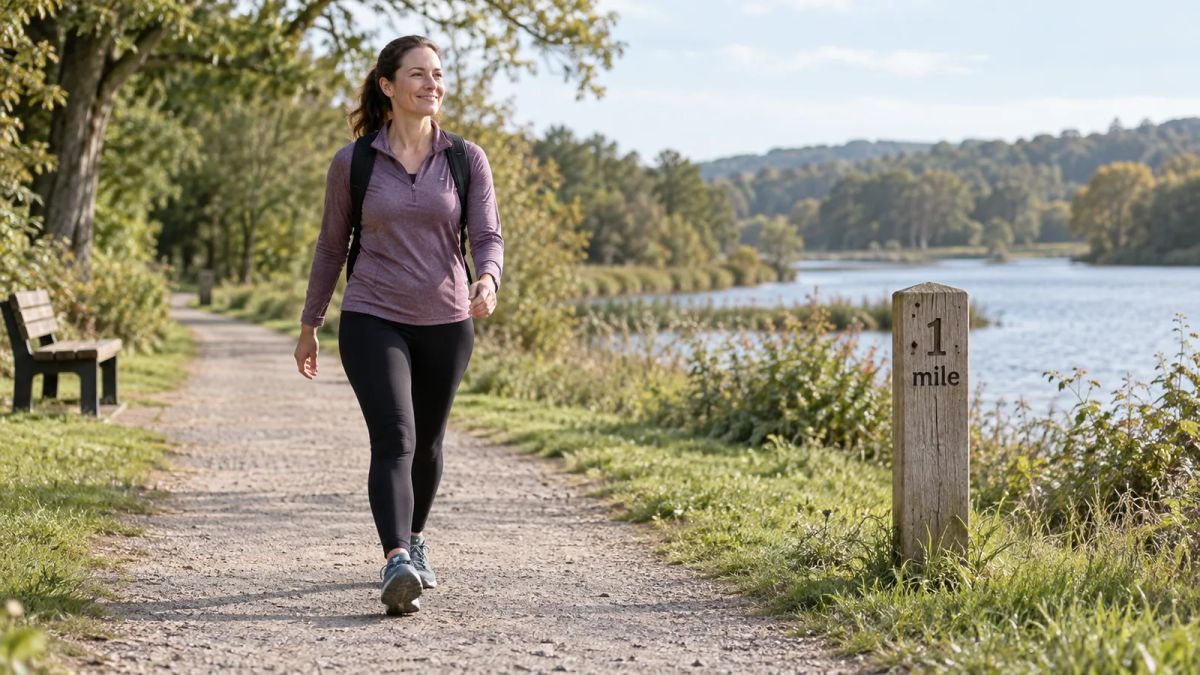
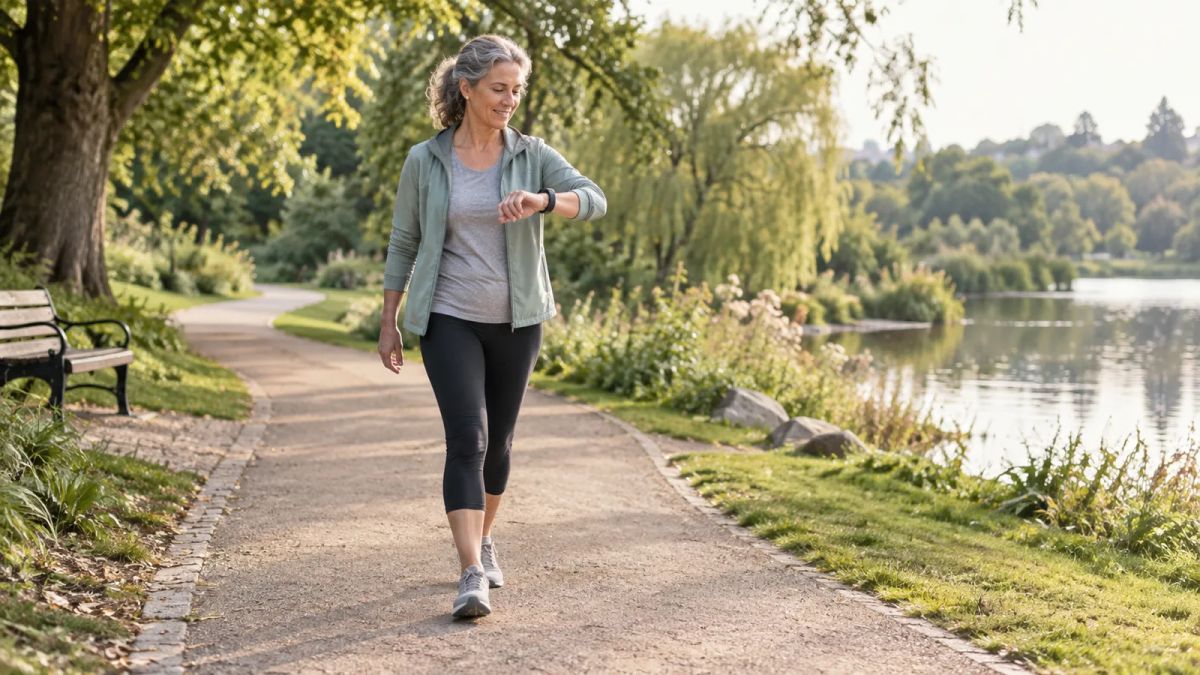
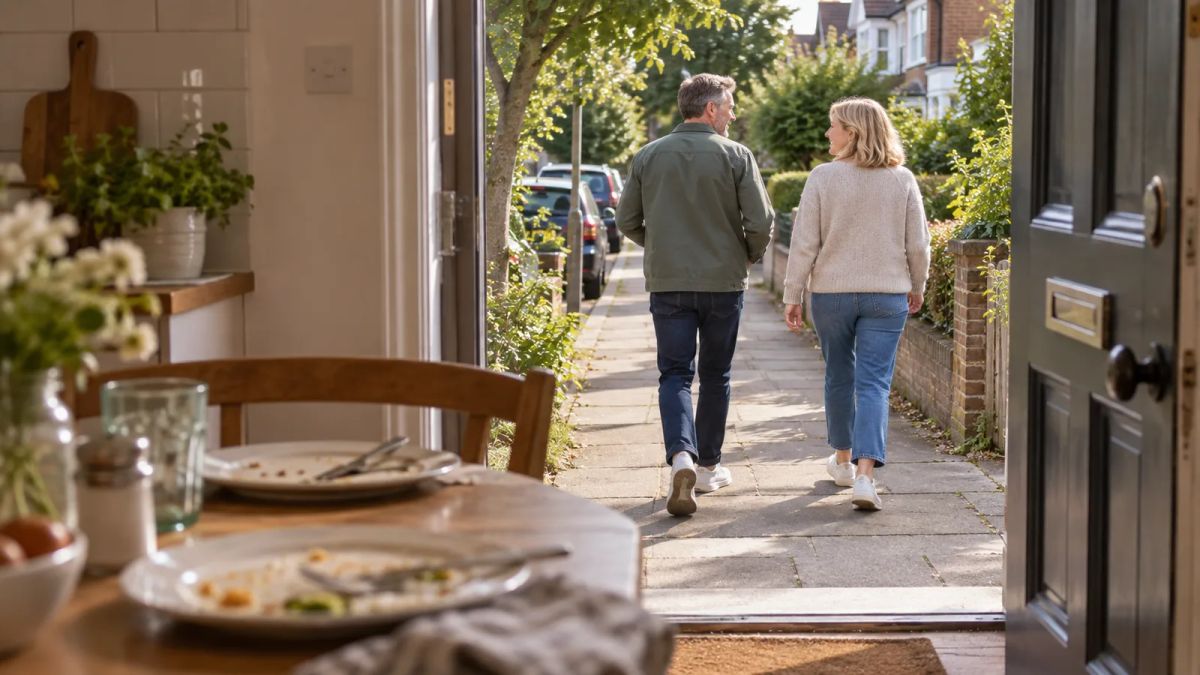
The hot girl walk is a longer outdoor walk you take with your head as involved as your legs. You go out, usually alone, and keep your thoughts on three things while you move: what you're grateful for, the goals you're working towards, and a bit of quiet confidence in yourself. The name is playful and the practice underneath it is calm. It's a walk with a mindset attached, and the mindset is why people keep going back to it.
Here is the whole thing in one line. Go for a decent walk, hold your attention on gratitude, plans and self-respect, and let the movement and the thinking work on you at the same time.
What follows is where the walk came from, what those three thoughts are for, why pairing them with movement tends to help, and how to shape the whole thing around your own life, not someone else's route.
Where the hot girl walk started
The trend began with Mia Lind, a University of Southern California student who posted her first video about it on TikTok in January 2021. She had started walking to ease stress during the pandemic, and her version was a four-mile outdoor walk built around a short mental routine.
The name nods to the "hot girl summer" mood of the time. The idea behind it was steadier than the branding suggests, and Lind has always described it as a practice about headspace before anything else.
On the official Hot Girl Walk site, the three things you think about are set out plainly: what you're grateful for, your goals and how you will reach them, and your confidence. That last pillar gets framed as "how hot you are", and it reads better as self-respect than as anything to do with a mirror. What has kept the walk alive is the mindset, not the label.
The three things you think about
Strip away the name and you have a walk plus a small piece of attention, pointed at the parts of life that get crowded out on a busy day.
Gratitude is the first. It asks you to notice one or two things that are working, which is harder to do with a screen in your hand and easier to do while your feet are moving.
Goals come next. A walk gives you a rare stretch of time to think forward without being interrupted, so you turn something over, plan a step, or catch a decision you have been avoiding.
Confidence is the third, and it's the one people find awkward at first. You don't have to arrive at feeling wonderful about yourself. Noticing one thing you handled well this week counts. The practice is the noticing, not a performance of high self-esteem.
None of this is about how your body looks or what it weighs. The version worth keeping is the one about mood and headspace, and it works best when you leave appearance out of it entirely.
Why moving and thinking together tends to help
The mood lift from a walk is easy to feel and harder to pin down, so it's worth being straight about the evidence.
Movement does appear to protect mental health. Harvard Health reports on a large genetic study that found a 26% drop in the odds of becoming depressed for each meaningful increase in measured physical activity, with an example as ordinary as replacing an hour of sitting with an hour of brisk walking. The same write-up makes the encouraging point that gentle movement scattered through a day, walking included, can add up for your mood.
Hold that lightly. It's an association drawn from population data, not a promise about any single walk on any single day. A walk isn't a treatment for low mood or anxiety, and if those feelings hang around it is worth speaking to your GP. What a regular walk offers is a low-cost window that belongs to you, and for a lot of people that alone is worth protecting. There is more on this in our piece on the benefits of walking.
For the walking itself, the NHS is the steadier guide. It describes a brisk walk as a pace where you can still talk but not sing, and it suggests building up gradually rather than chasing distance on day one. You don't have to march the whole route. A hot girl walk can hold a brisk stretch in the middle and an easy amble at either end and still count.
The four-mile format, and why the number is optional
Four miles is roughly an hour of walking for most people, which is a lot if you are starting from very little. The distance was never the sacred part of this.
The lasting idea is the pairing of a longer, unhurried walk with a chosen frame of mind. That pairing scales down to whatever you can manage. Two miles works. Twenty minutes works. The mindset doesn't check your step count before it lets you in.
If you like the structure of a set distance, keep it. If it turns the walk into a chore, drop it and go by time or by feel instead.
Make it your own
The template is a starting point, and the walk gets better the more you bend it to fit your life.
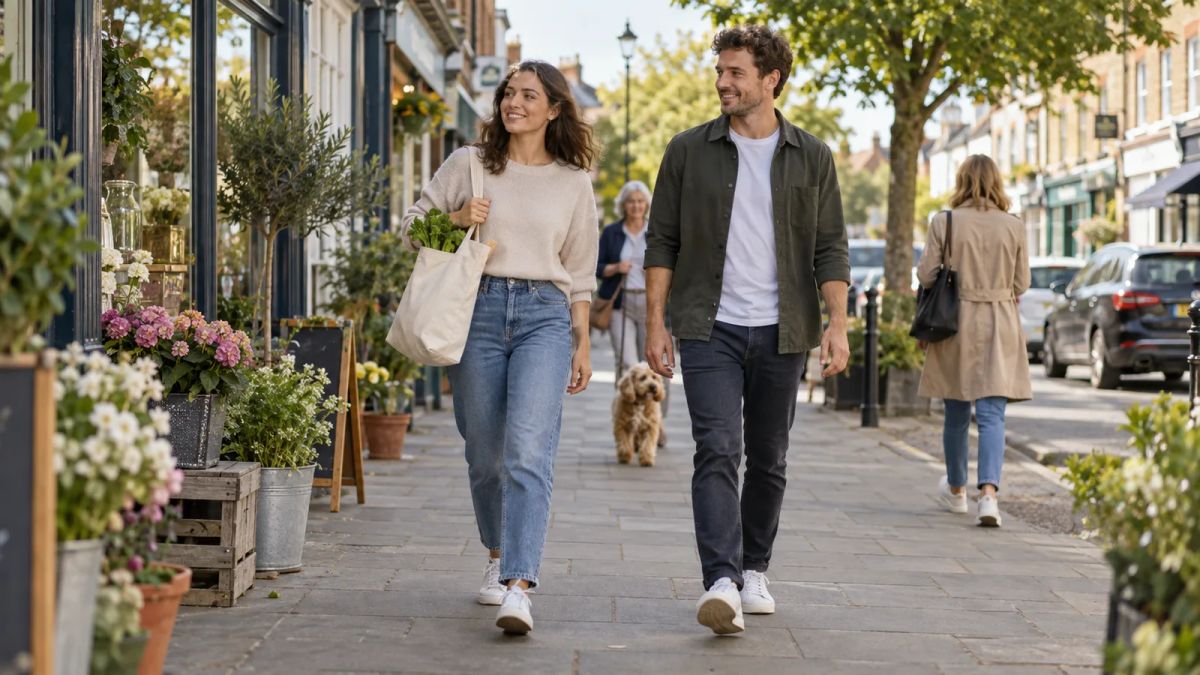
If an hour is out of reach, take twenty minutes. If walking alone feels lonely instead of restful, bring a friend, a podcast or a phone call, and let the gratitude and goals thinking happen out loud. If your area is short on green space, a lap of a well-lit block or a busy high street both count. Where you get out to counts for little. Getting out is the point.
Your circumstances get a say too. Shift work can rule out a bright morning walk, so an evening one becomes your version. A pram, a mobility aid, a wheelchair or a dog all fit inside this without any trouble. If you care for someone and can slip out for ten minutes while they nap, that ten minutes is a hot girl walk.
You can treat the whole thing as one item on a wider list of things that keep you steady, alongside the other self-care ideas that suit you.
A smaller version for low days, and starting again after a miss
On a flat, low-energy day, keep the thread alive with the smallest version there is. Step outside for five minutes, name one thing you are grateful for, and come back in. That's a complete walk on a hard day, and it stops the habit going quiet. A tiny walk you take beats a long one you keep putting off.
Missing a day, or a fortnight, breaks nothing. There is no streak to mourn and no lost ground to make up. The next ordinary afternoon you put your shoes on, pick a direction, and you have started again. No penance route, no stricter week to balance the gap. The walk waits for you and asks for nothing back.
See each walk bloom
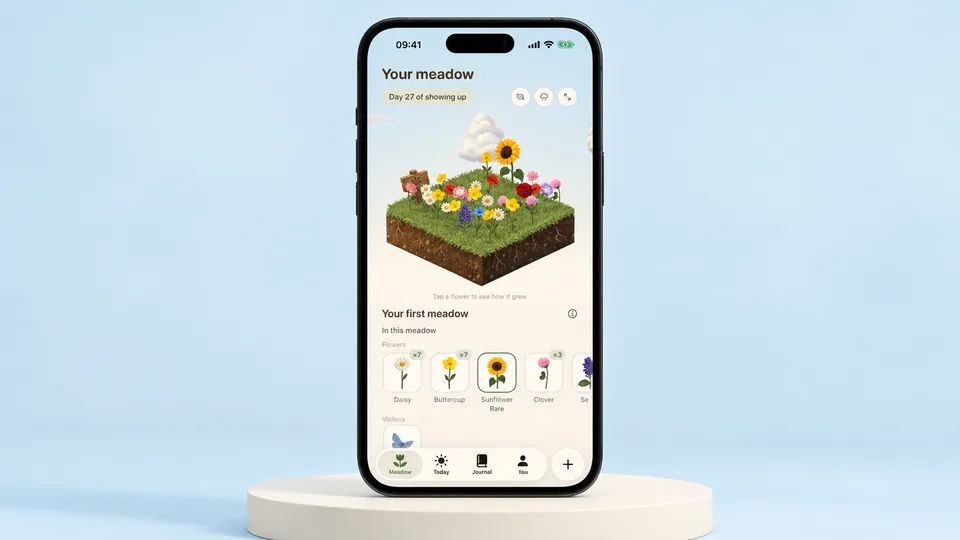
If watching the walks add up helps you keep going, a simple record does the job, and a paper calendar by the door is a fine place to begin.
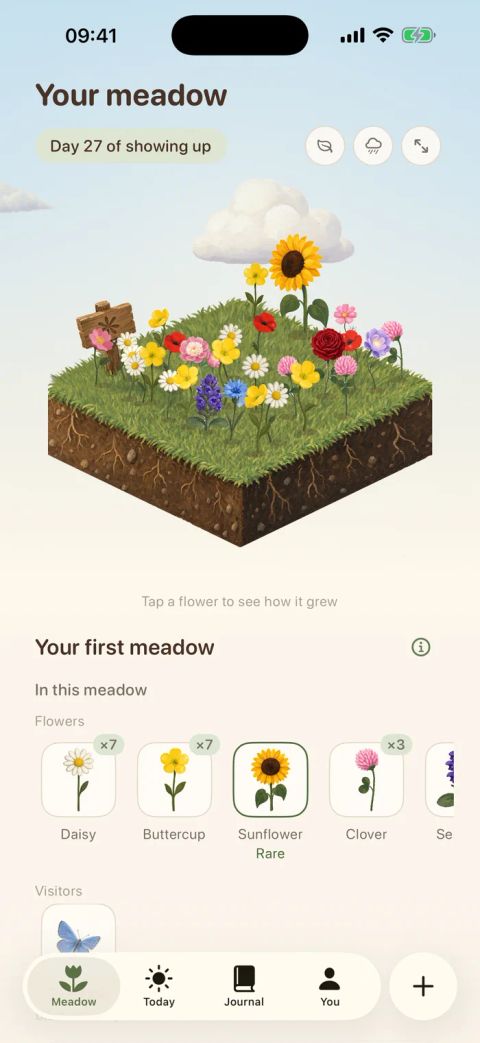
On your phone, Meadow fits the spirit of this walk almost exactly. It is a gentle movement and habit app for iPhone where you log a walk and note your mood, a daily win and a daily affirmation, which lines up neatly with the gratitude and confidence side of the practice. Each day you show up grows a wildflower, and rare flowers and little animal visitors turn up over time. There are no streaks, so a rained-off day resets nothing and your flowers never wilt. You can find it at Meadow.
Common questions
How far is a hot girl walk? The original is four miles, around an hour, but there is no minimum. Two miles, one mile or twenty minutes all work if you keep the mindset going.
Is it good for your mental health? Regular movement is linked with a lower risk of low mood, and time outside with a break from screens tends to help. It's a support, not a treatment, and persistent low mood is worth raising with your GP.
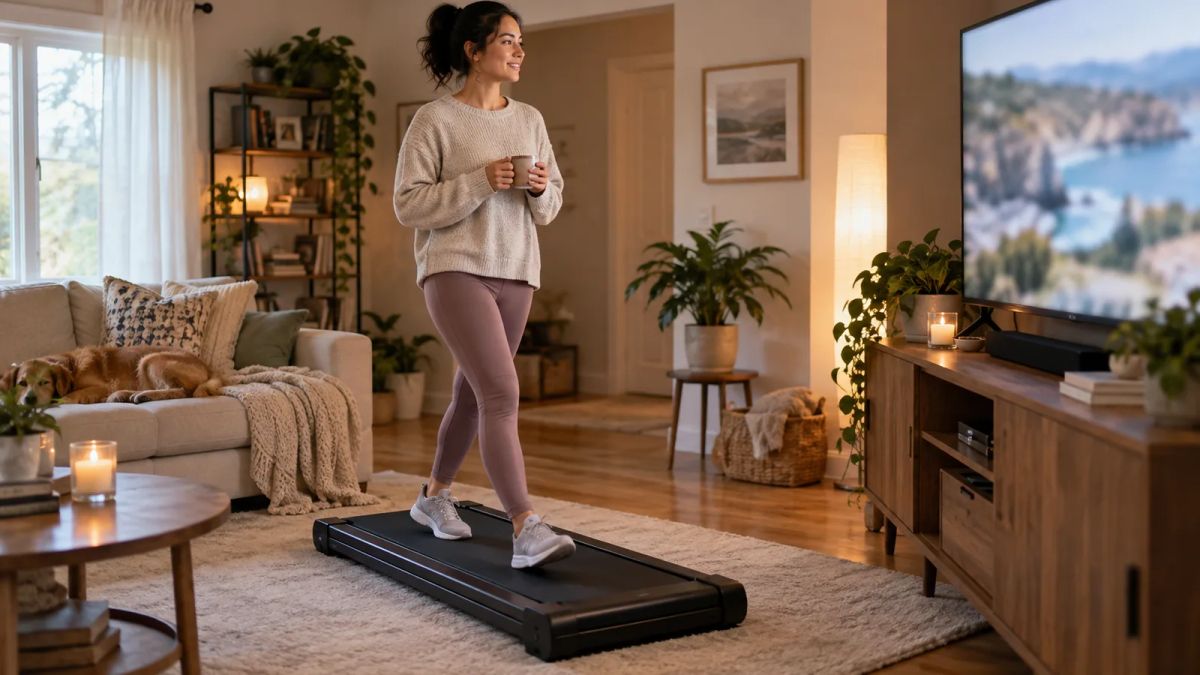
Does it have to be outdoors and alone? No. Outdoors and solo is the classic version, and both are optional. A treadmill, a friend or a podcast are all fair game if that is what gets you moving.
Is it about losing weight? The version worth keeping is about mood and headspace, not appearance or weight. You can walk purely because it makes the day feel better.
How fast should I walk? Brisk enough that you can talk but not sing, according to the NHS, with easy stretches whenever you need them.
One thing to do today
Pick a moment in the next day when you could be outside for even ten minutes, and walk it with one question in mind: what is one thing you are grateful for right now. That small version tells you more about whether the hot girl walk suits you than any amount of scrolling through other people's routes.
AUTHOR
Co-founder of Meadow.
Ash is co-founder of Meadow, a habit and movement tracking app that turns small acts of self-care into a growing wildflower meadow.
Little and often, with Meadow
Consistency, not intensity.
Meadow turns the movement you enjoy and the habits that help you feel good into a meadow of wildflowers. No streaks to break, and your flowers never wilt.
Download Meadow