The main types of yoga are mostly the same practice run at different speeds. What changes between them is how fast you move, how long you hold each shape, and how warm the room is. Match the pace and the setting to your body and your week, and the style takes care of itself.
This is a map of the styles you'll see on a timetable: what each one feels like, how hard it tends to be, and who it tends to suit. It also covers what the research supports and how to pick a first class without guessing. If you want the step-by-step of starting from scratch, our yoga for beginners guide covers that. This one helps you tell the styles apart.
What every style has in common
Under the different names, most yoga classes weave together the same three threads. The US National Center for Complementary and Integrative Health describes yoga as a practice of physical postures, breathing techniques and meditation, with styles that run from gentle to physically demanding.
The label on the class tells you the emphasis, not a different activity. A slow class holds a handful of shapes for minutes at a time. A fast one links shape to shape with the breath. Both are yoga. What changes is the tempo, the effort, and how much the teacher fusses over the fine detail of your alignment.
You're choosing a pace that suits you, and you can change your mind later.
Slower styles: Hatha, Yin and restorative
Hatha is the usual place to begin. You move from one posture to the next and hold each for several breaths while the teacher talks you through it. Cleveland Clinic calls a Hatha class a good place to start because it teaches the foundations and builds awareness of your breath and body. The effort is low and the instruction is constant, so nothing rushes you.
Yin slows right down. You settle into floor-based stretches and hold them for several minutes each, breathing into the stretch, working the deeper connective tissue around the joints rather than the big muscles. It suits anyone who wants more flexibility and doesn't mind stillness. It can feel intense in a quiet way, because the work is staying put.
Restorative is the most passive of the three. You use props, bolsters, blocks and folded blankets, to hold a few supported shapes for ten minutes or longer, so your body can let go with almost no effort. Cleveland Clinic describes it as the style to choose when you want a restful, healing experience. It's a good fit after a hard week, during recovery, or when sleep has been poor.
None of these will leave you sweating. That's the point of them.
Alignment and support: Iyengar and chair yoga
Iyengar is slow but strong, and it's precise to the point of obsession. Postures are held for longer stretches of time and propped with blocks, straps and chairs so you can find the exact shape without straining. Cleveland Clinic notes it works for all ages and skill levels, including people with injuries or physical limitations. If you like to understand what your body is doing and why, this is the style that spells it out.
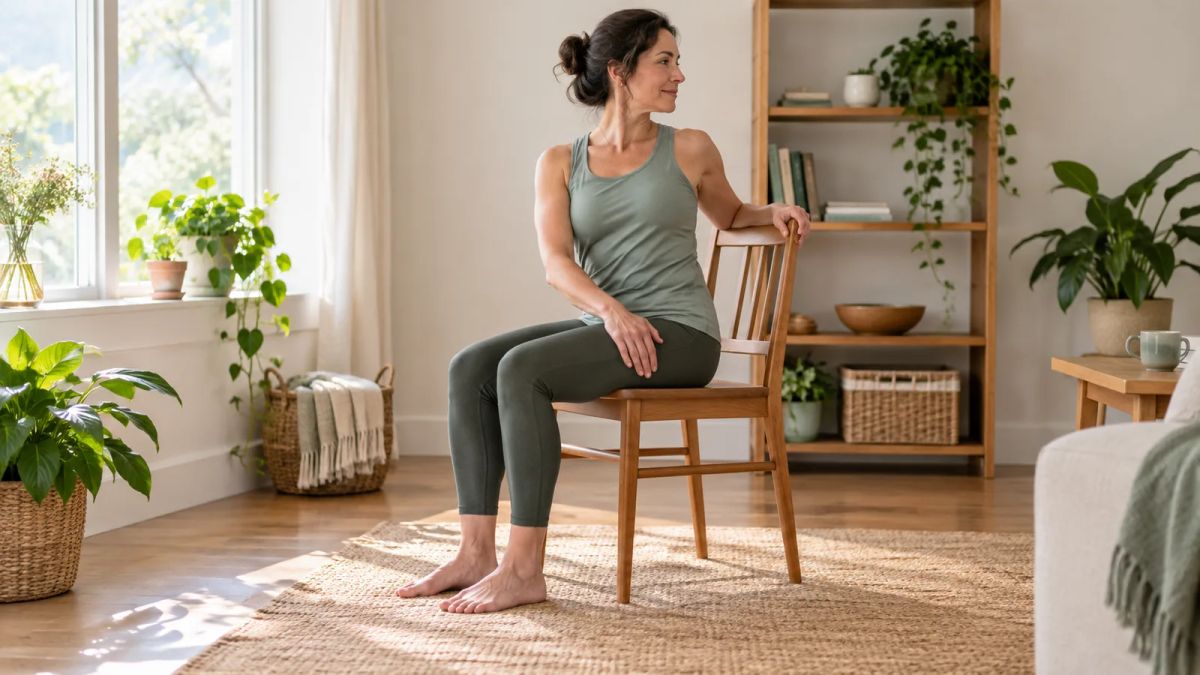
Chair yoga takes the floor out of the equation. You practise seated, or standing with a hand on the chair, which helps when getting down to a mat and back up again is the barrier. Harvard Health describes it as yoga performed while seated, well suited to anyone who finds balancing, standing for long, or getting up and down hard. It fits older adults, people easing back after illness, and desk-bound days. Our chair yoga guide walks through a full routine.
Faster, stronger styles: Vinyasa, Ashtanga and power
Vinyasa, often called flow, links posture to posture with your breath so the class moves as one continuous sequence. Cleveland Clinic calls it a good choice for people who want a more dynamic class, and points beginners towards a slow flow, which does the same thing at a kinder pace. Expect to warm up, and expect the shapes to come quicker than in a Hatha class.
Ashtanga is vinyasa with the sequence fixed. You work through the same set order of postures every time, which Gaiam describes as a sweaty, physically demanding practice. The repetition suits people who like to measure today against a steady benchmark. It asks a lot of a complete beginner, so most people start with a foundation class first.
Power yoga takes the flowing style and turns the effort up. Cleveland Clinic describes it as an athletic, full-body workout that still links breath and movement, aimed at people who want to build strength and endurance and burn some energy. Think of it as the gym end of the spectrum.
Yoga in a hot room: Hot and Bikram
Hot yoga is any class run in a deliberately heated room. Bikram is the strict version of it, a 90-minute run of set postures in a room heated to around 40C, or 104F, as Cleveland Clinic sets out. The heat loosens muscles and makes you sweat hard, and it leans on your body's ability to cope with the warmth.
This is the one style with a clear health caveat. Cleveland Clinic says hot classes are best for people in good health who already have some yoga experience. Drink plenty of water, don't push through dizziness, and give it a miss if you're pregnant, new to exercise, or managing a heart or blood pressure condition unless a doctor has said it's fine.
What the evidence says yoga can do
Yoga has been studied a fair amount, and the findings are encouraging without stretching to a cure-all.
Harvard Health reports that after eight weeks of practising at least twice a week, people showed greater muscle strength and endurance, better flexibility, and improved cardio-respiratory fitness, and that yoga helped lower blood pressure in people with hypertension. It's known for easing tension and anxiety too, which is why some cardiac rehabilitation programmes now build it in.
The NCCIH adds more. A 2020 review found yoga helped with perceived stress in every study it looked at. Most studies of balance in healthy people showed improvements. Yoga has helped with sleep across several groups, including older adults, and a 2019 review found a substantial benefit for anxiety.
Back pain is the claim to treat with care. The NCCIH puts it plainly: yoga is slightly better than no exercise for low back pain, and that small difference may not feel important to the person living with the ache. Worth trying, then, but not a fix.
These are averages across groups of people, not promises for any one body. Yoga also counts towards keeping active in general. The NHS lists it among the muscle-strengthening activities adults are encouraged to do on at least two days a week, alongside the aim of 150 minutes of moderate activity spread across the week. Whichever style you land on is doing more than one job.
If you're pregnant, new to exercise, older, or managing a health condition, have a quick word with your GP before you start, and tell the teacher so they can adapt the postures. Harvard makes the same point about checking with your doctor before you begin anything new.
How to choose your first class
Match the style to what you want from it, and to how your body feels this week.
- Want to learn the basics calmly? Start with Hatha, a slow flow, or a class billed for beginners. Cleveland Clinic's advice for newcomers is to begin with a basic class and find a teacher who suits your goals.
- Sore, stiff, or recovering? Iyengar and restorative give you support and time, and neither hurries you.
- Can't get up and down from the floor easily? Chair yoga keeps the whole practice within reach.
- Want a workout and a sweat? Try vinyasa or power once the shapes feel familiar, and treat hot yoga as a later step.
Read the class description instead of trusting the title. A clear account of the pace, who it's for, and whether postures are adapted tells you far more than the word "beginner". Have a word with the teacher beforehand, say you're new, and flag anything about your body they should know.
Go only as far as feels comfortable. A posture should feel like a stretch, never a sharp warning. The NCCIH advises newcomers to avoid extreme practices such as headstands, shoulder stands, the lotus position and forceful breathing, and notes that yoga injuries treated in A&E are more common in people aged 65 and over. That's a reason for care, not for staying away.
Keep the practice going

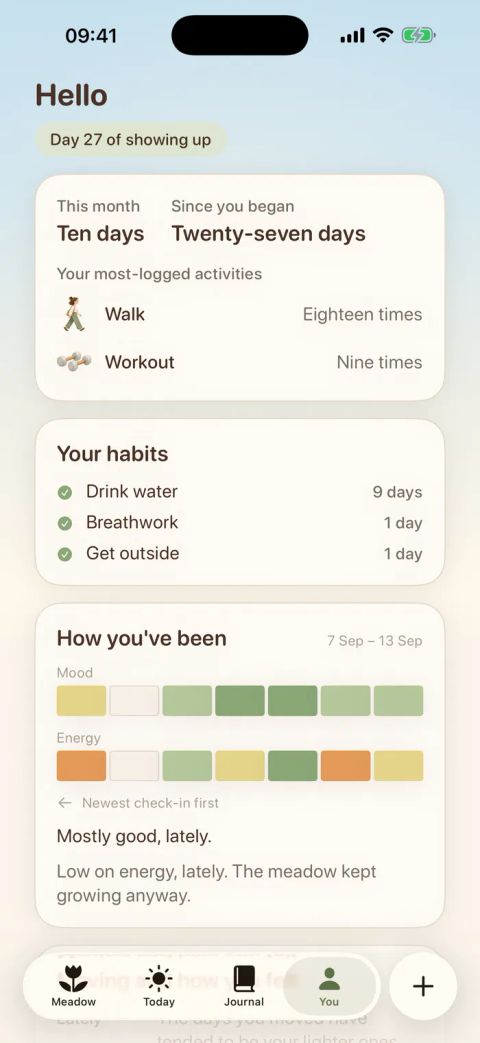
Whichever style you pick, the difference comes from turning up often, and Meadow is built around that. It's a movement and habit app for iPhone from Wildcard Wellness with yoga among its activities, so you can log a session after a cue you choose, note your mood and energy, and jot down one good thing from the day. Each day you show up grows a wildflower in your own meadow, with rare flowers and small animal visitors turning up as it fills in. There are no streaks, so a week you skip a class resets nothing and your flowers stay put until you're back.
Frequently asked questions
Which type of yoga is best for a complete beginner?
Hatha, slow flow and beginners classes are the usual starting points, since they move slowly and give you time to find each shape. Restorative and Iyengar suit you if you're stiff, recovering, or want plenty of support. Save vinyasa, power, ashtanga and hot yoga for once the basics feel familiar.
What's the difference between Hatha and vinyasa?
Hatha holds each posture for several breaths with detailed instruction, so it feels slower and calmer. Vinyasa, or flow, links the postures together with your breath so the whole class moves as one sequence. Hatha suits learning the shapes, vinyasa suits moving through them.
Is hot yoga safe?
For healthy people with some yoga experience, done sensibly, it can be. The heated room is demanding, so drink plenty of water and stop if you feel dizzy. Skip it, or check with your GP first, if you're pregnant, new to exercise, or managing a heart or blood pressure condition.
Which style is best for fitness or weight loss?
Power yoga and faster vinyasa give the closest thing to a workout, building strength and endurance as you move. Yoga counts towards the muscle-strengthening activity adults are encouraged to do twice a week, though it does most for you as part of a wider active routine rather than on its own.
How often should I practise?
A short session done often beats a long one done rarely. Two or three times a week is plenty to feel a difference over a few weeks, and a ten-minute morning yoga routine on the other days keeps the thread going.
Pick one style from this guide that matches how your body feels this week, find a beginners class in it near you or online, and book the next session you can get to.
AUTHOR
Co-founder of Meadow.
Ash is co-founder of Meadow, a habit and movement tracking app that turns small acts of self-care into a growing wildflower meadow.
See how far you've come
Your habits, moods and little wins, all in one place
Meadow keeps track of the walks, the water and the good days, so you can look back and watch your effort add up.
Download Meadow