The best morning routine app is the one that fixes the part of your morning that keeps falling apart. For one person that is getting out of bed at all. For another it is knowing what to do once they are up, or fitting six good intentions into forty rushed minutes before work.
So the roundup below is sorted by the problem each app solves, because the app that saves your morning depends on where yours goes wrong.
One thing to say plainly first. Little and Often is run by the Meadow team, so our own app appears further down. We have kept it to the job it does well, a gentle habit tracker for the small routine habits, and we say clearly where a full scheduler would serve you better.
Every app here has its platforms and price spelled out. Where a price shifts by region or plan we've said so, because there isn't one clean number.
Apps that walk you through the steps
These suit the morning where you know roughly what you want to do and still stall on the sofa.
Routinery
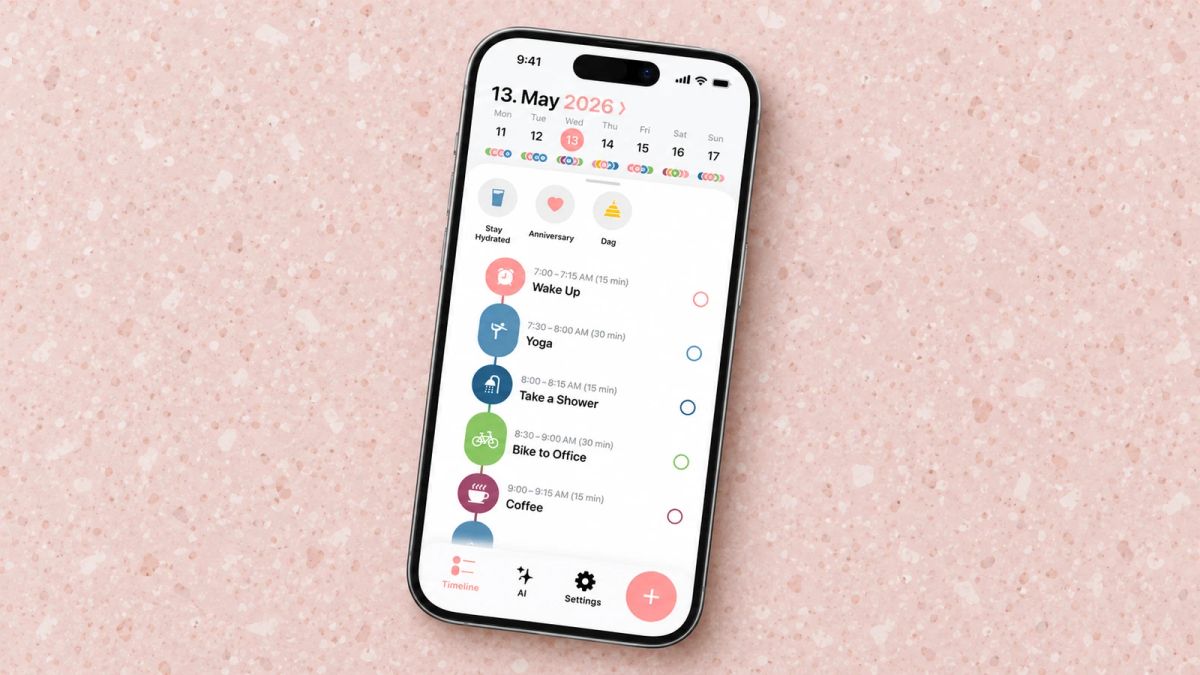
Routinery is built for the morning where you have a plan and cannot get moving. You load a routine, say brush teeth, stretch, make coffee, and the app runs each step on a timer with a voice cue, so you move through the sequence instead of staring at a list and drifting. It was an App Store App of the Day in 2025 and leans on the old "don't break the chain" idea to keep you consistent.
Routinery is free to download on iPhone, iPad, Mac and Android, with Premium subscriptions that vary by region and plan, commonly around $3.99 a month with annual and lifetime options above that.
Best for: people who freeze without a nudge and want each step timed. Not for you if: a clock counting down every task would wind you up more than it helps.
Fabulous
Fabulous starts smaller than most and adds to your morning slowly. It is built on behavioural science, was shaped with input from the Center for Advanced Hindsight at Duke University with the behavioural economist Dan Ariely as an adviser, and it begins by asking you to do one keystone thing, often drink a glass of water, before layering on more over the following weeks. The tone is warm and coaching-led.
Fabulous is free to download on iPhone, iPad, Apple Watch and Android, with premium at around $39.99 a year after a seven-day free trial, and prices can vary by region.
Best for: anyone who has failed by starting with a ten-step routine and wants to build up one habit at a time. Not for you if: you already know your routine and find the guided journeys slow.
Apps that plan the whole day around your morning
If the problem is not the morning in isolation but how it fits the day ahead, a planner does more than a routine timer.
Structured
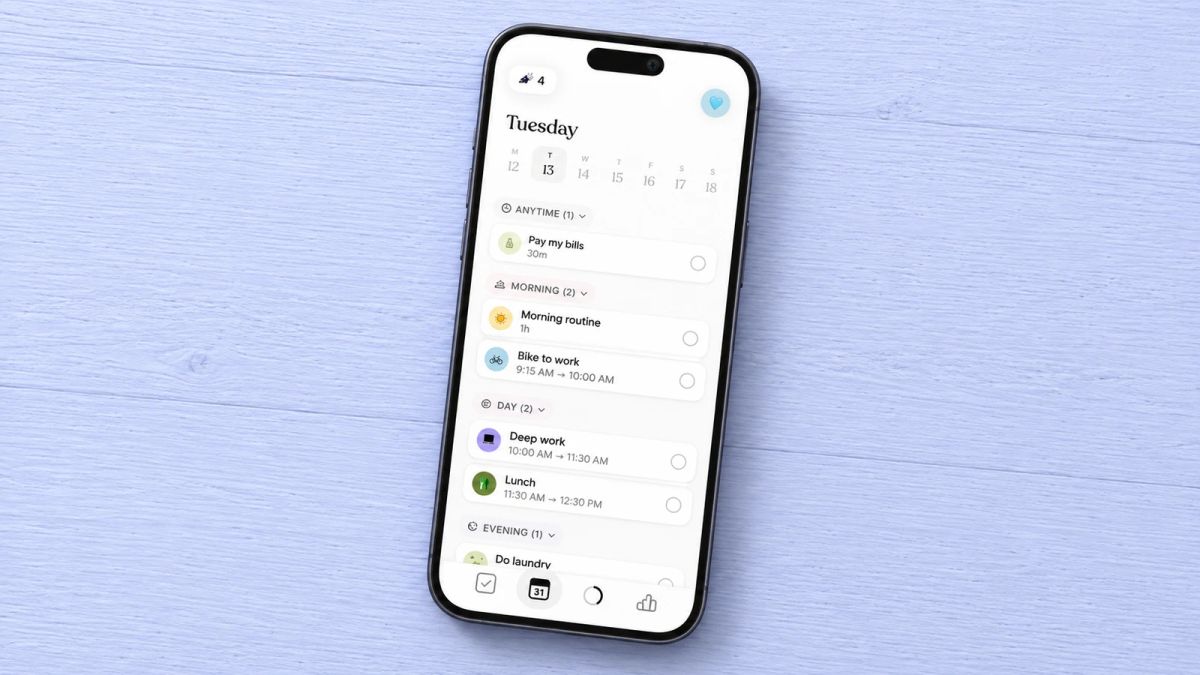
Structured shows your day as a single vertical timeline instead of a plain checklist. Morning tasks, calendar events and repeating routines sit in order down the screen, you drag them into place, and a built-in focus timer keeps you on one before the next. It is a favourite among people who think in time blocks, and it is often recommended as ADHD-friendly for exactly that reason.
Structured is free across iPhone, iPad, Mac and Apple Watch, with Structured Pro available on monthly, annual or a one-time lifetime plan, and prices vary by region.
Best for: people who want the morning to sit inside a clear plan for the whole day. Not for you if: a timeline of everything ahead feels like pressure before you have had coffee.
Sunsama
Sunsama is the serious end of morning planning, built for people whose morning is a work planning session in all but name. Each day it walks you through choosing what you will do, pulling tasks from your calendar, email and work tools, and setting a realistic amount for the day so the list stays finite. It takes its time each morning, and it's priced like a professional tool.
Sunsama works on the web, on Mac and Windows, and on iPhone and Android, and it costs $20 a month on the annual plan or $25 a month billed monthly after a fourteen-day free trial, with no free tier.
Best for: knowledge workers who want a deliberate morning planning ritual for the working day. Not for you if: you want a personal, non-work routine or a free option.
Apps for the hard part, getting up and settling in
Sometimes the routine is fine and the trouble sits either side of it, dragging yourself out of bed or finding a moment of calm once you are up.
Alarmy
Alarmy solves the morning that never starts because you turned the alarm off in your sleep. To silence it you have to complete a task, solving a sum, scanning a barcode you have set somewhere in another room, shaking the phone or doing a set number of squats, which forces you awake enough to stay up. It also has sleep sounds and bedtime reminders, since a good morning tends to start the night before.
Alarmy is free to download on iPhone, iPad and Android, with a premium tier that removes ads and adds more missions for around $5 a month or $59.99 a year after a seven-day free trial, and pricing varies by region.
Best for: heavy sleepers who lose the morning by snoozing straight through it. Not for you if: you wake easily and want gentle over a puzzle at 6am.
TIDE
TIDE is for the quieter end of the morning, the ten minutes before the day speeds up. It pairs a focus timer with nature soundscapes, short guided breathing such as the 4-7-8 pattern and brief meditations, so you can sit with a coffee and a breathing exercise, or start focused work without the noise. The same app winds you down again at night.
TIDE is free with core features on iPhone, iPad, Mac and Apple Watch, and a subscription at $11.99 a month or $59.99 a year opens the full library.
Best for: people who want a quiet, mindful start to the day. Not for you if: you need structure and reminders, where a planner does more.
The gentle habit side of a morning routine
Meadow: for the small habits without the pressure
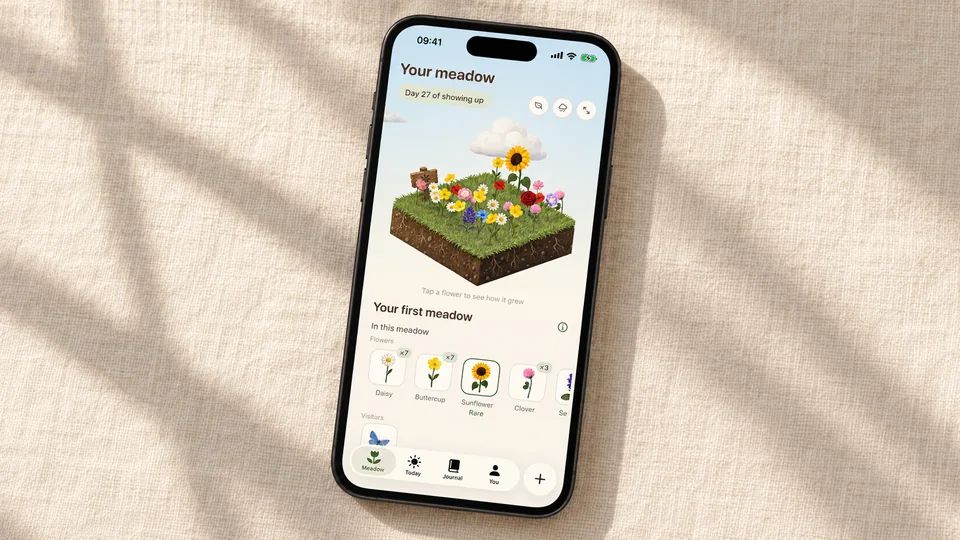
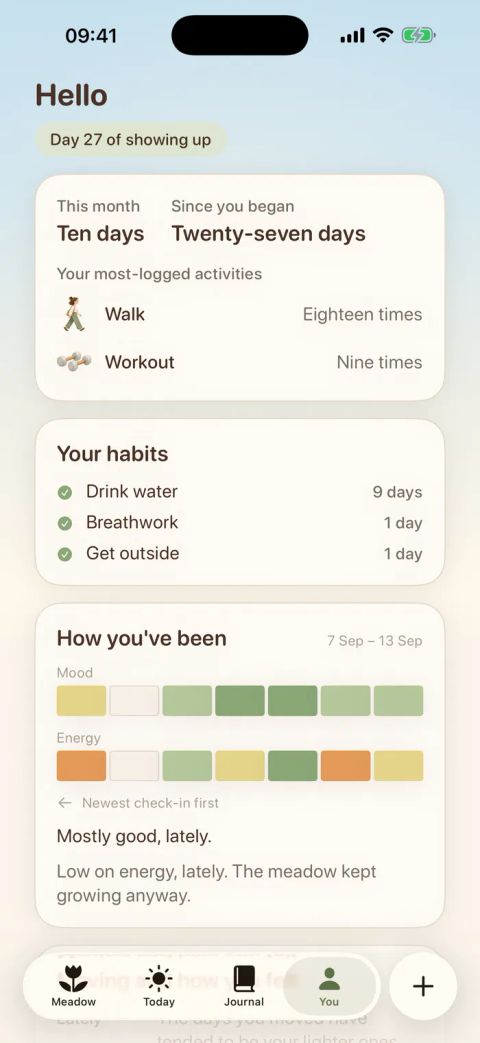
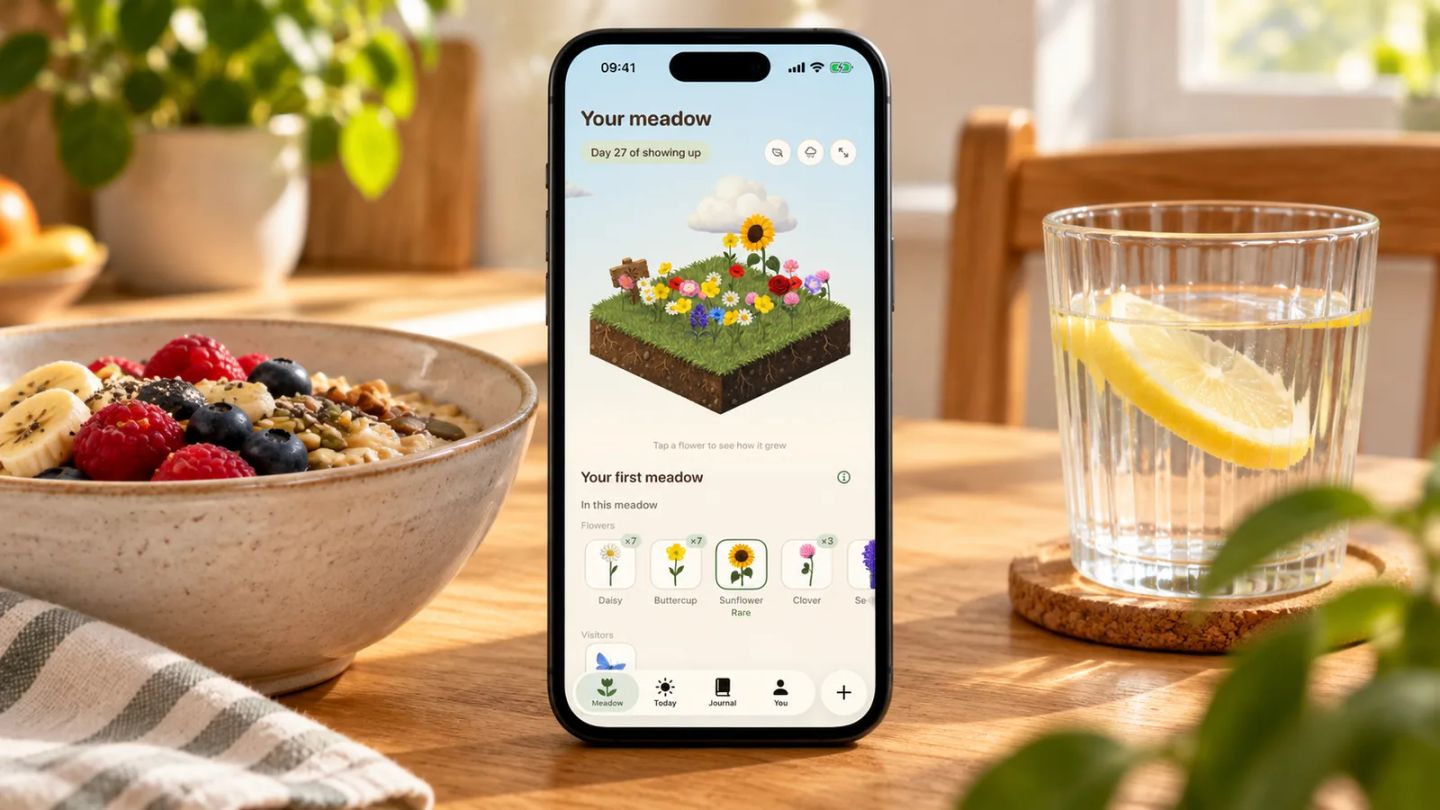
Here is the honest bit about our own app. Meadow is not a scheduler and will not run your morning on a timer. It is a gentle habit tracker for the handful of small things you want to repeat, drinking water, getting outside, a little movement you log with a timer, some breathwork or a quick mood and energy check-in. You can write a daily journal entry about one good thing too, and a wildflower blooms for each day you show up.
The reason it earns a place here is what happens when a morning falls apart, which every routine does sooner or later. There are no streaks, so miss a day and nothing resets. Your flowers never wilt, rare blooms and the odd animal visitor keep arriving, and a gap in the week stays a gap rather than a punishment that wipes out weeks of effort.
Little and Often is run by the Meadow team, so we will say it plainly: Meadow keeps the habit side of a routine kind on the days you slip, and it runs on iPhone.
Best for: tracking the small routine habits gently, especially if a broken streak is usually what makes you quit. Not for you if: you need timed steps or a full day planner, where Routinery or Structured fit better.
How to choose the one for you
Start with the exact moment your morning breaks, because that points straight at the app. Cannot get out of bed at all? Alarmy. Get up but drift with no plan? A guided app like Routinery, or Fabulous if you want to build up slowly. Want the morning to sit inside your whole working day? Structured for a visual plan, or Sunsama when planning the workload is the point. After a calmer, quieter start? TIDE. Trying to keep a few small habits going without the guilt of a broken streak? Meadow.
Then weigh the cost against how you will use it. Most of these are free to try, and several stay useful on their free tier, so there is no need to pay on day one. Alarmy, Structured, TIDE and Routinery all give you something workable for nothing, and Meadow and Fabulous run a seven-day trial before any charge. Sunsama is the outlier, with no free tier and a professional price, which makes sense only if a daily planning ritual for work is what you are buying.
Two ideas make any of these work better than the app alone. The first is attaching your new routine to something you already do, which the American Heart Association describes as one of the more reliable ways to make a habit stick, so tie the app's first prompt to an anchor you never skip, like the kettle going on. The second is that the tracking itself pulls its weight: a meta-analysis of 138 studies found that prompting people to monitor their progress towards a goal improved how often they reached it, across many kinds of goal. What counts is keeping that record at all, whatever tool holds it.
An app is a tool, not the routine itself. If you are still designing yours, our guide to building a morning routine covers the shape of a good first hour, the morning routine checklist gives you something to work from this week, and if you want to know what a good habit tracker should do before you pay for one, start there.
Before tomorrow morning, pick the single app that matches where your morning goes wrong, add one step tied to something you already do, and set up nothing else. One step you keep beats a perfect routine you download on Sunday and abandon by Friday.
AUTHOR
Co-founder of Meadow.
Ash is co-founder of Meadow, a habit and movement tracking app that turns small acts of self-care into a growing wildflower meadow.
See how far you've come
Your habits, moods and little wins, all in one place
Meadow keeps track of the walks, the water and the good days, so you can look back and watch your effort add up.
Download Meadow