Is 6,000 steps a day good? Yes, and it is a stronger target than its modest reputation suggests, above all if you are over 60. For a lot of older adults, most of the heart and longevity benefit walking can offer has already landed by the time you reach the 6,000 to 8,000 range, which makes 6,000 a sensible daily aim, not a stepping stone you have to rush past.
The fuller answer depends a little on your age and where you are starting from. It helps to see what the research found at 6,000, how the number compares with 7,000 and 10,000, who it suits best, and how to reach it without turning a walk into a task.
What 6,000 steps does for your health
The most useful evidence for this number looks at older adults specifically. A harmonised meta-analysis led by Amanda Paluch pooled eight studies covering more than 20,000 people with an average age in the low sixties. Reporting the work, ScienceDaily explains that adults over 60 who walked between roughly 6,000 and 9,000 steps a day had a 40 to 50 percent lower risk of a cardiovascular event than those managing about 2,000 steps.
That is a large difference for a habit as ordinary as walking. It also lands right at 6,000, which is part of why the number carries real weight for this age group.
A separate meta-analysis from the same researchers looked at early death from any cause. The UNC Gillings School of Global Public Health reports that across 15 studies and nearly 50,000 people, the risk of dying early levelled off at about 6,000 to 8,000 steps a day for adults 60 and over, and at about 8,000 to 10,000 for adults under 60. In the more active groups the reduction in death risk ran from 40 to 53 percent.
Read those two findings side by side and a clear picture emerges. If you are older, 6,000 steps sits at the front edge of the band where the benefit tends to flatten, so you are getting most of what extra walking has to give without needing to chase a bigger number.
A note on what these figures can and cannot promise. This is observational research, which means it shows that people who walked more tended to be healthier, without proving the steps alone were the cause. People who walk more often differ in other ways too. Treat the numbers as a strong, repeated signal rather than a personal guarantee.
How 6,000 compares with 7,000 and 10,000
For an older adult, the gap between 6,000 and higher targets is smaller than the round numbers suggest. Both Paluch analyses found the curve bending towards flat somewhere in the 6,000 to 8,000 zone, so the jump from 6,000 to 8,000 buys less than the jump from 2,000 to 4,000 did.
The picture shifts a bit for younger adults. In the longevity data the plateau for the under-60s sat higher, around 8,000 to 10,000, so if you are in your thirties or forties, 6,000 is a solid floor with a little more benefit still available above it. We look at the higher aim in 7,000 steps a day, which is the most studied single target and a good fit for most adults.
There is one honest exception worth keeping in view. For heart disease, the Paluch cardiovascular work found the risk kept easing as steps rose past 6,000, so someone already comfortable at higher counts has no reason to pull back. The famous 10,000 figure was a marketing number long before it was a health one, and the history behind it sits in 10,000 steps a day.
Who 6,000 steps suits best
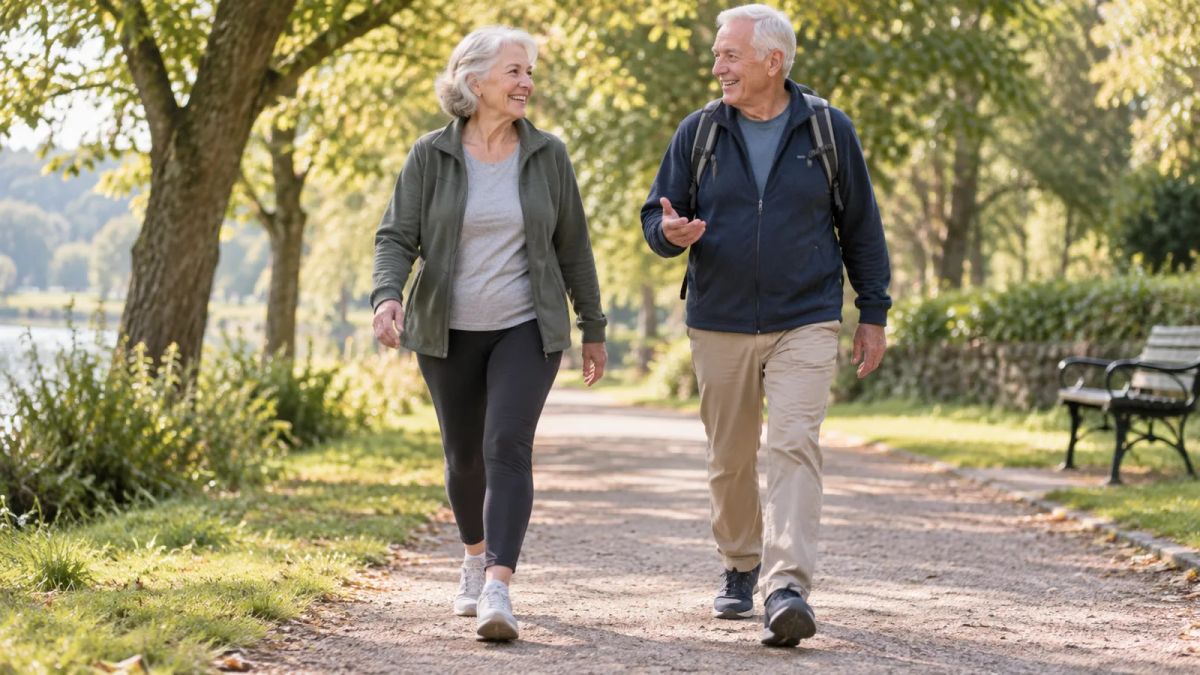
If you are over 60, returning to activity after a break, or spend most of the day at a desk, 6,000 is a target with real evidence behind it and a shape that fits an ordinary life. It is high enough to move the health needle and low enough to reach without rearranging your whole day.
It also suits anyone starting from a low base. The clearest message across all of this research is that the least active people have the most to gain. Someone at 2,500 steps who climbs to 4,000, then 5,000, then 6,000 is walking up the steepest part of the benefit curve, where each extra thousand steps does the most work.
There is a caveat that belongs with any step target. Walking pace turned out to matter far less than the total. Both the heart and longevity analyses found no decisive extra benefit from walking faster once the total number of steps was accounted for, so you can leave the brisk-only pressure aside and let steady, comfortable walking count.
One more point, and it is an important one for this age group. If you are coming back to exercise after a long gap, are pregnant, or live with a health condition or any concerns, have a quick word with your GP before you build up. A general figure cannot see your particular situation, and a short conversation can set a starting point that fits you.
How to reach 6,000 steps a day
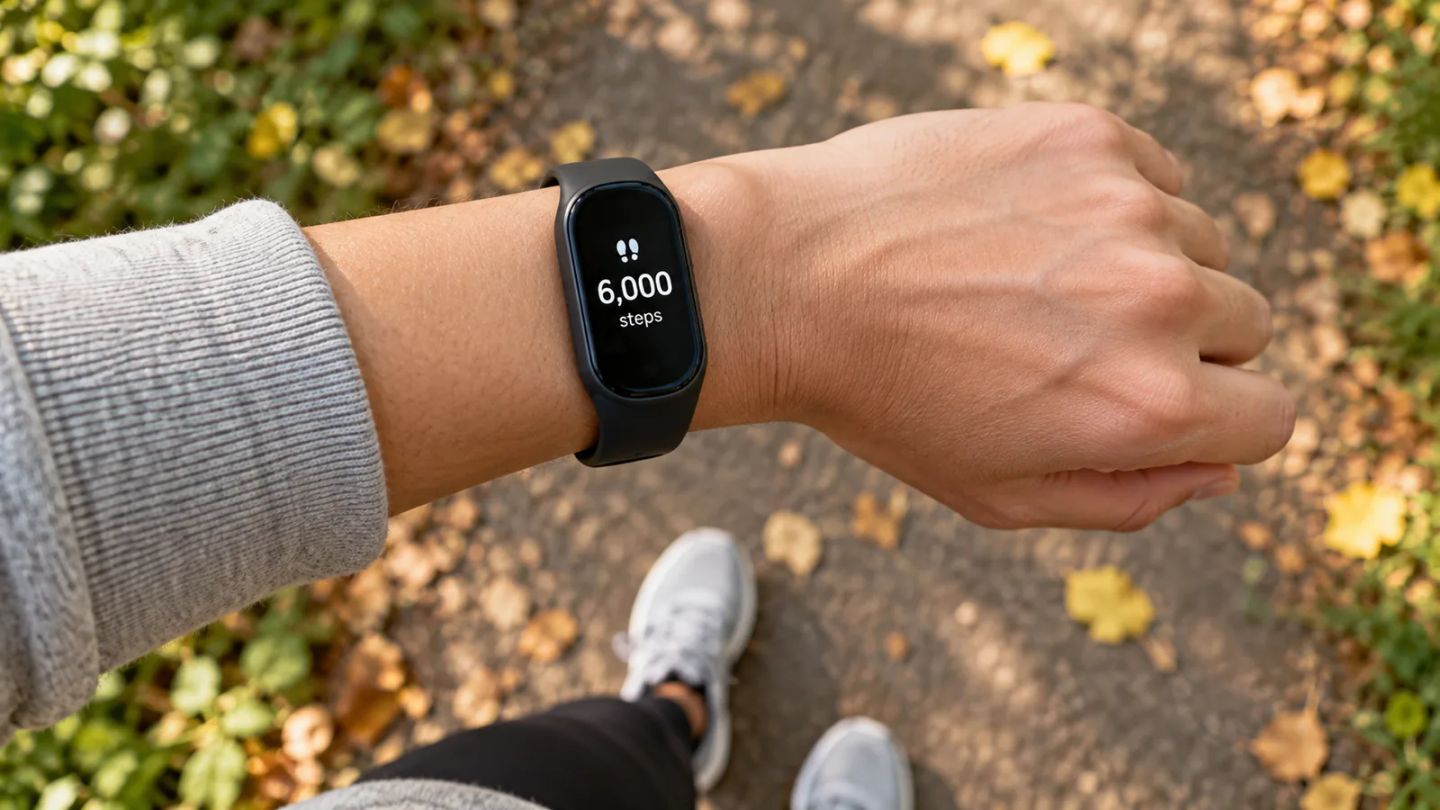
The target holds when it grows out of your real week, not an app default. Start by finding your baseline. If your phone counts steps, look back over a normal seven days and note your rough average across a busy day and a quiet one.
Then close the gap in stages instead of one leap.
- Add about 1,000 steps to your daily average and hold it there for a week or two until it feels normal.
- Once it settles, add another 1,000, and repeat until you are near 6,000.
- Anchor the extra steps to things you already do, so they need no fresh willpower.
That last step does most of the work. A loop of the block after lunch, getting off the bus a stop early, a walk to the postbox, pacing the kitchen while the kettle boils, a phone call taken on your feet. Around 10 unhurried minutes of walking adds roughly 1,000 steps for many people, which turns 6,000 into a handful of small errands stitched through the day.
If you find it easier to see the plan on paper, here is a simple four-week ladder you can copy. Fill in your own starting average, then aim a little higher each week.
Week 1 (baseline): ____ steps a day
Week 2: baseline + 1,000, most days ☐
Week 3: baseline + 2,000, most days ☐
Week 4: hold near 6,000, most days ☐
A worked example, for someone starting at about 3,500 steps:
Week 1: 3,500 a day ☑
Week 2: 4,500 a day ☑
Week 3: 5,500 a day ☐
Week 4: 6,000 a day ☐
Effort still counts alongside the tally. UK guidance for older adults leans on time, not steps, and the NHS suggests adults aged 65 and over aim for at least 150 minutes of moderate activity a week, plus activities that build strength and balance on two days, and break up long spells of sitting. Comfortable walking covers the moderate part, so a step counter and the clock are pointing at the same habit from different angles. The wider case for walking sits in the benefits of walking.
It helps to remember the number is a guide, not a verdict. The CDC notes that the amount of activity a person needs "varies greatly from person to person", which is the argument for a target you can hold over one off a poster.
Smaller on hard days, and starting again after a gap
Some days 6,000 will be out of reach, and that is worth a plan, not a wince. Keep a smaller version ready. If the day falls apart, walk to the end of the road and back, or step outside for three minutes. A short walk logged as a short walk keeps the habit alive in a way a blank day does not.
Miss a day, or a week, and the walking still counts when you pick it up again. There is no debt to clear by doubling your steps tomorrow. Take the next reasonable chance and carry on at whatever figure fits the day in front of you.
A kinder way to keep count

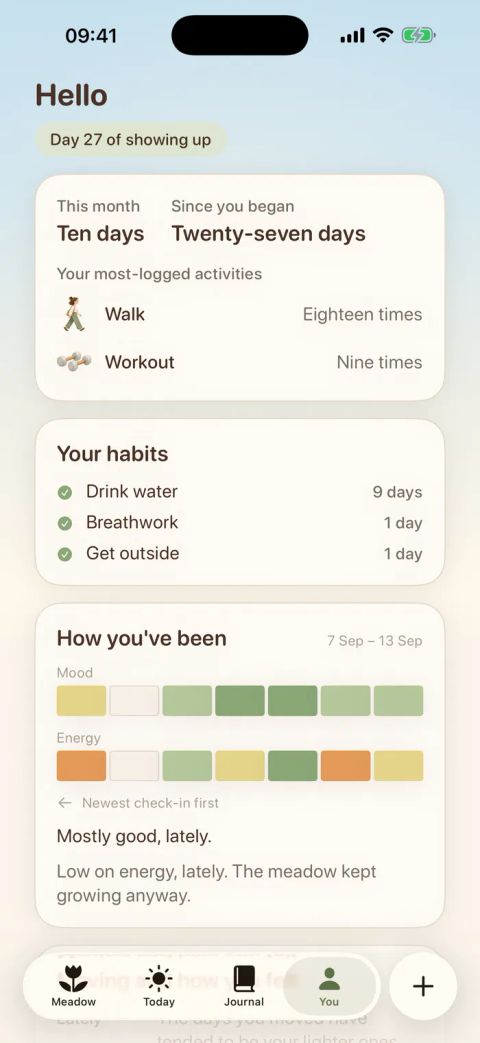
Marking each walk gives you something honest to look back on, which tends to help more than staring at a single daily total. A tick on a wall calendar does the job. If you like to see the days behind you rather than fixate on a number, Meadow turns each walk you log into a wildflower in your own meadow. It is a gentle habit app for iPhone from Wildcard Wellness, where you log movement you enjoy, tick off small daily habits like getting outside, and note your mood and a daily win. It is built for a habit measured over weeks, not perfect days, so there are no streaks and a missed day resets nothing and your flowers never wilt.
Common questions
Is 6,000 steps a day enough exercise?
For general health, above all if you are over 60, it does a lot, and the evidence linking it to lower heart disease and mortality risk is strong for that age group. It is not the whole picture. The guidelines also ask for strength and balance work on two days a week, because steps and strength cover different needs. Think of 6,000 as a strong aerobic base, not the entire job.
Is 6,000 steps a day good for over 60s?
It is one of the better targets an older adult can aim at. In the research on adults over 60, most of the reduction in heart and mortality risk had appeared by the 6,000 to 8,000 range, so 6,000 sits inside the healthy band, not short of it. If you can add more comfortably, some outcomes keep improving, but 6,000 is a genuine achievement, not a near miss.
How long does it take to walk 6,000 steps?
Most people cover roughly 1,000 steps in around 10 minutes of walking, so 6,000 steps works out at about an hour of movement across a day. That total rarely happens in one go. It builds from short walks, errands and moving around the house.
Do the steps need to be brisk to count?
Every step counts towards your total, and the studies found the total mattered more than pace once it was accounted for. Brisk minutes still add value a raw count cannot measure, which is why UK guidance leans on 150 minutes of moderate effort, so a mix of gentle and brisk walking is fine.
Is 6,000 or 10,000 steps better?
More steps do bring further gains for some outcomes, heart disease among them, so 10,000 is not wrong. For overall health in older adults, though, the extra benefit above the 6,000 to 8,000 band is modest, and a target you hit most days beats a bigger one you keep missing. A wider look at the options sits in how many steps a day for good health.
For your first step this week, check your typical daily count, then set an aim about 1,000 steps above it and hold it there until it feels ordinary. Six thousand becomes reachable one small nudge at a time, starting from your own week, not a number off a screen.
AUTHOR
Co-founder of Meadow.
Ash is co-founder of Meadow, a habit and movement tracking app that turns small acts of self-care into a growing wildflower meadow.
See how far you've come
Your habits, moods and little wins, all in one place
Meadow keeps track of the walks, the water and the good days, so you can look back and watch your effort add up.
Download Meadow