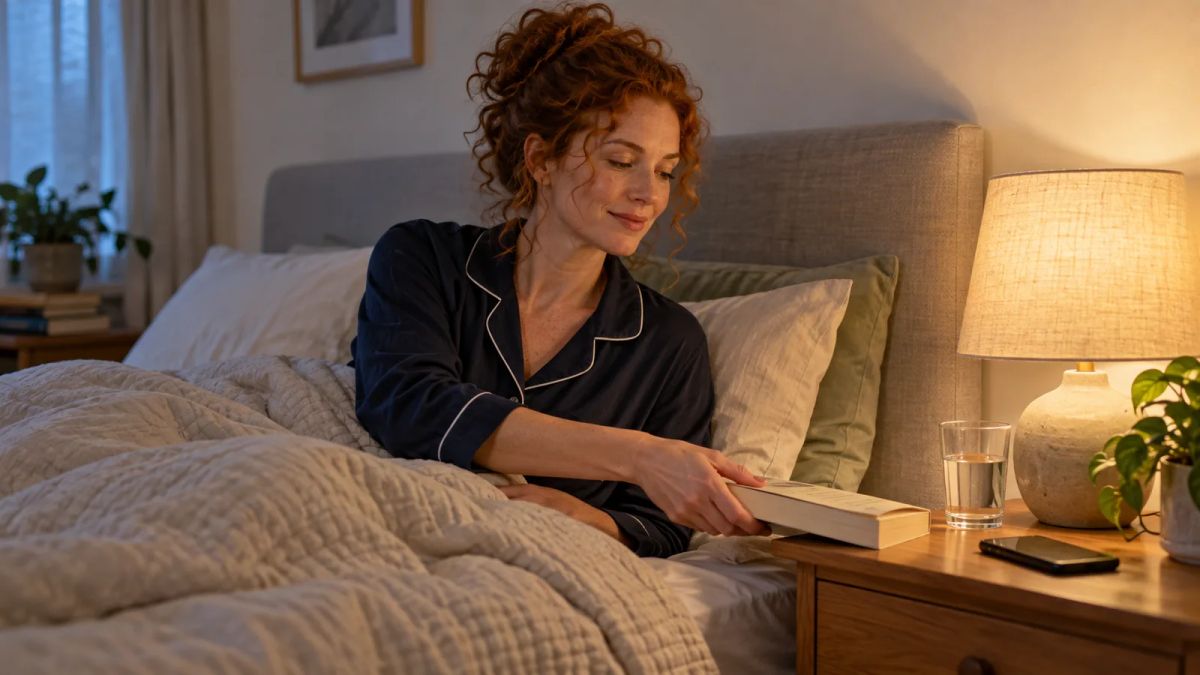
Getting a few minutes of daylight soon after you wake up is one of the easiest ways to feel more awake through the day and sleep better that night. Light is the main signal your body uses to work out what time it is, and morning is when that signal does the most.
It won't rescue a broken night on its own. Done most mornings, though, it tips your whole day in a better direction, and the science behind it is steadier than a lot of morning-routine advice.
Think of it as the first item in your morning routine, and one that quietly pays off again at bedtime. Here we'll look at what morning light does inside your body, what the evidence does and doesn't say about energy and mood, how much you need, and simple ways to get it on an ordinary weekday.
What morning light does to your body clock
Your body runs on a roughly 24-hour cycle called the circadian rhythm. It decides when you feel alert, when you feel sleepy, when hormones rise and fall. The Sleep Foundation calls light "one of the strongest regulators of the body's internal clock, helping determine when you feel alert and when you feel sleepy".
Light hitting your eyes in the morning tells that clock the day has started. Melatonin, the hormone that builds up overnight and makes you drowsy, drops away. As the Sleep Foundation puts it, "in the morning, as exposure to light increases, melatonin production stops and body temperature rises, promoting wakefulness".
Timing is the clever part. Morning light and evening light pull the clock in opposite directions. The CDC's guidance for shift workers spells it out: "bright morning light causes a phase advance (getting sleepy earlier in the evening and waking up earlier in the morning)", while evening light does the reverse. Light in the hour or so around your usual wake-up can shift your clock about an hour earlier per day.
That is the knock-on effect worth caring about. A dose of daylight this morning helps you feel alert sooner today and helps you feel sleepy at a sensible hour tonight. The CDC notes that "getting some bright light during the middle of the day can improve daytime alertness as well as sleep at bedtime".
The energy and mood side, and what we don't know
The body-clock part is well established. The direct "morning light gives you energy" claim is softer, and it's worth being straight about where the evidence is strong and where it's thin.
Some of it comes down to cortisol. Cortisol rises sharply in the first hour after you wake, and that rise is part of what helps you feel switched on. In one small study, eighteen sleep-deprived teenagers who got short-wavelength morning light for 80 minutes showed a bigger cortisol rise than those kept in dim light, and the researchers suggested morning light "may be a simple, yet practical way to better prepare adolescents for an active day". It's a tiny study in one group, so treat it as an early clue and no more.
Alertness studies are a mixed bag too. A trial of 44 healthy men found people felt less sleepy after morning light exposure, though the exact type of light, bright or dim, blue or red, "did not turn up significant" in the way the researchers expected. Getting light seemed to help. Fussing over the perfect kind of light did not.
Mood has the clearest link, and it shows up most in winter. When the mornings are dark, Harvard Health explains, the brain can "produce too much of the sleep hormone melatonin and reduce serotonin, the feel-good brain chemical that affects mood", which leaves you flat and low on energy. Morning light works against both. For people with seasonal affective disorder, light exposure is a mainstay of treatment, and plenty of people notice a lift from it.
Morning daylight reliably sets your body clock, which supports steadier energy and better sleep. It may also nudge alertness and mood more directly, especially in darker months. Neither claim makes it a cure for tiredness that has other causes, and if low energy or low mood is dragging on, that's a conversation for your GP.
How much light, and when
You need less than the internet often implies, and you can't overdo the everyday version.
Aim for somewhere between a few minutes and about half an hour, ideally in the first hour or two after waking. Harvard's advice for light treatment is to "get in some light time soon after you awake, ideally before 10 a.m." and to build up to around 30 minutes, though it notes you "don't have to do it all at once". That figure is for a light box indoors. Outdoors, daylight is far stronger, so a shorter spell does a similar job.
Here is the number that reframes the whole thing. A bright office runs at maybe 500 lux. Step outside and direct sun reaches "up to 10,000 lux", around twenty times brighter. Your kitchen ceiling light, however bright it feels, isn't in the same league.
This is why a grey day still counts. Even an overcast morning outdoors is far brighter than anything you'll get with the lights on indoors, so a walk in drizzle beats sitting by the window with a lamp. On a dull day you might want the longer end of that range. On a clear one, five or ten minutes goes a long way.
Two sensible cautions. You never need to look at the sun, and you shouldn't. Light reaching your eyes from the general brightness of the sky is enough, so face out at the world, not up at the sun. And you don't have to strip off your glasses or contacts. Normal lenses let plenty of light through.
Ways to fit it into a normal morning
The trick is to bolt daylight onto something you already do in the morning, so it doesn't become one more task.
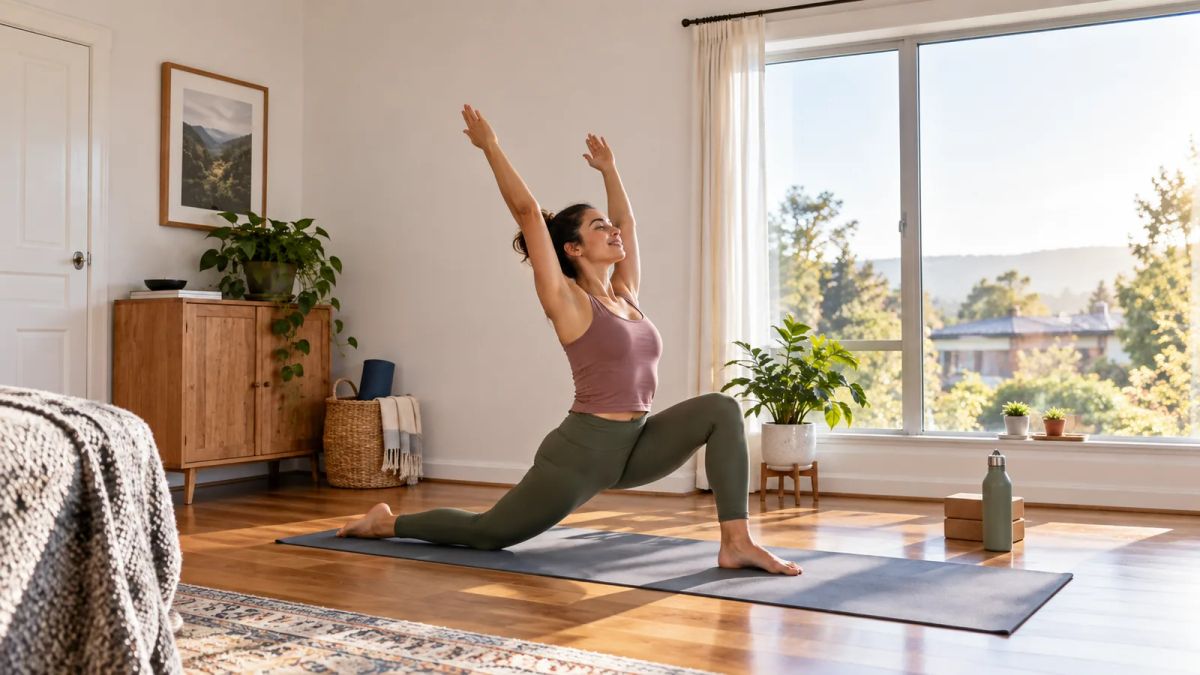
- Take a short walk. Ten minutes round the block does two jobs at once, daylight plus movement, and morning is a fine time for the health benefits of walking to start stacking up.
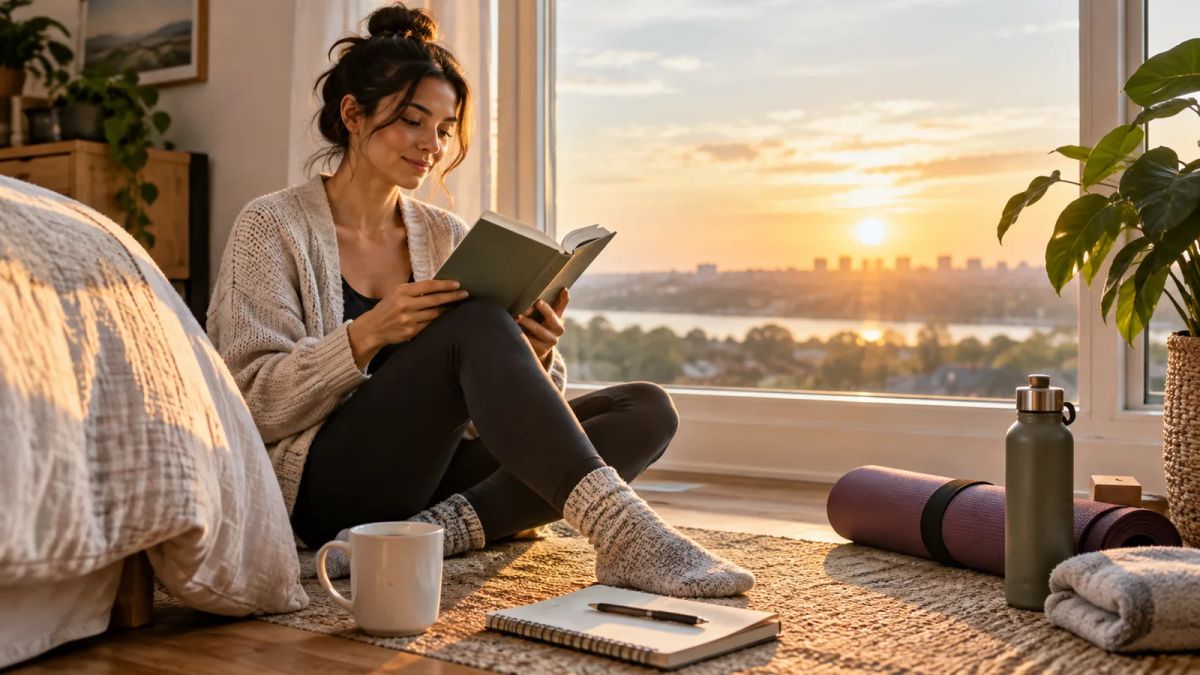
- Have your first coffee or tea outside, or on a doorstep or balcony. Same drink, better spot.
- Eat breakfast by the brightest window you have, or better, step out with it. Through glass is weaker than open air, but it beats a dim corner.
- Fold it into the commute. Walk to the station, get off a stop early, or park further away and finish on foot.
- Do a school run, dog walk or bin run and let it double as your light for the day.
On a rushed morning, shrink it. Standing outside for two minutes while the kettle boils still lands some daylight on you, and a small dose beats none. If you fall out of the habit for a week, there's nothing to restart and nothing lost. You pick it up again the next morning the weather lets you.
Somewhere to keep the habit going
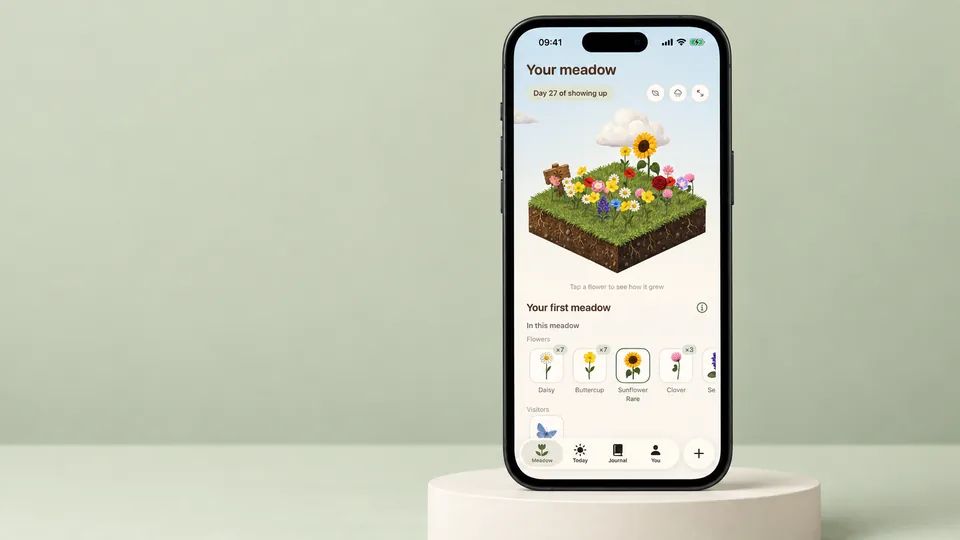
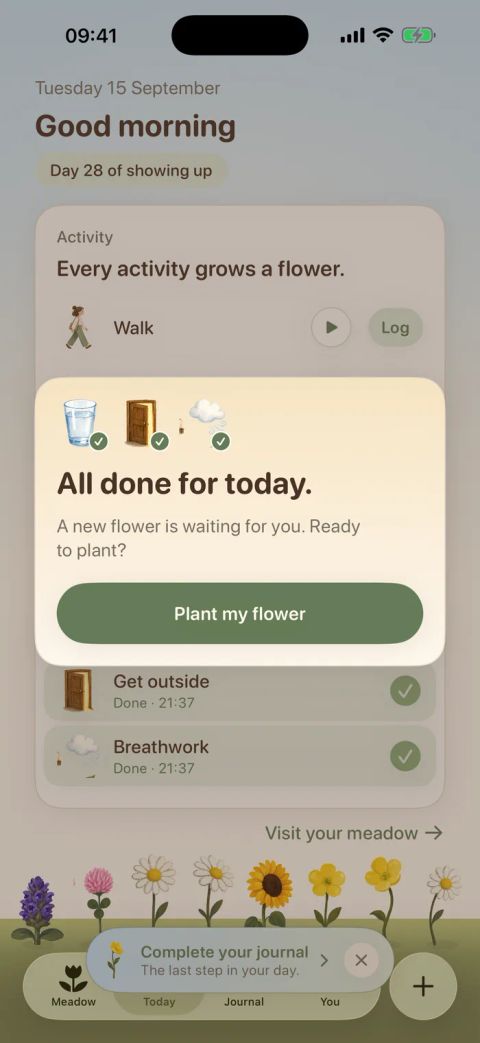
Once getting outside is part of the morning, it helps to have a spot to log it. Meadow is a gentle habit app for iPhone where you can tick off small daily habits like getting outside and log a short morning walk, then note your mood and energy so you can see how the daylight is landing over time. Each day you show up grows a wildflower in your own meadow, with rare flowers and little animal visitors turning up as it fills in. There are no streaks, so a run of dark, rushed mornings resets nothing and your flowers never wilt.
When to take extra care
Morning daylight is safe for almost everyone, but a few situations call for a word with your GP first.
If you're thinking about a light box rather than natural daylight, check in before you buy. The NHS advises speaking "to a GP before trying light therapy" because "it might not be suitable if you have certain eye conditions or are taking some medicines that increase your sensitivity to light". The same caution about light-sensitising medicines applies to time in the sun.
If your low mood follows the seasons, or low energy has hung around for weeks, see your GP. The NHS suggests booking in if you "think you might have seasonal affective disorder". Bright light in the morning can be part of the answer, but it works best alongside proper support, not instead of it.
Common questions
Does it have to be sunny? No. Cloud cuts the intensity but outdoor daylight still dwarfs indoor lighting, so a dull morning outside does the job. You may want a few more minutes than you would on a clear day.
What if I wake before the sun comes up? In deep winter or on early shifts, get bright indoor light on straight away and step outside once daylight arrives, even if that's on a break. A 10,000-lux light box is the backup plan, with a GP's nod first.
Does light through a window work? Weakly. Glass and the angle cut the amount of light reaching you, so it's better than a dim room but well short of being outdoors. Open the door and stand on the step if you can.
How soon will I notice a difference? Some people feel steadier within days. For others it's a couple of weeks of most-mornings daylight before sleep and energy settle. The change builds slowly, so give it a fortnight before you judge.
Do I need to take my sunglasses off? For a short everyday dose, letting light reach your eyes helps, so you can skip the sunglasses for a few minutes. Never stare at the sun to do it, and keep prescription glasses or contacts on as normal.
Tomorrow, take your first drink of the day outside and stand in the daylight for five minutes before you do anything else. That's the whole habit to begin with, and the evening version looks after itself when you build an evening routine to match.
AUTHOR
Co-founder of Meadow.
Ash is co-founder of Meadow, a habit and movement tracking app that turns small acts of self-care into a growing wildflower meadow.
Every little bit counts
Five minutes counts. So does a dance in the kitchen.
Log the movement you enjoy and the small habits that help you feel good, and watch them bloom into something you can see.
Download Meadow