Wall Pilates works for the things Pilates has always been good at: a stronger core, steadier balance, better posture and a bit more flexibility, provided you keep it up. What it will not do is melt fat off your stomach in 28 days, whatever the app adverts imply.
The honest answer sits in the middle. This is a real, useful form of low-impact movement with decent evidence behind it, wrapped in marketing that promises more than any exercise can deliver on its own.
Here is what the trend claims, what the research on Pilates shows, who this suits, and how to give it a fair go without buying the hype.
What wall Pilates is
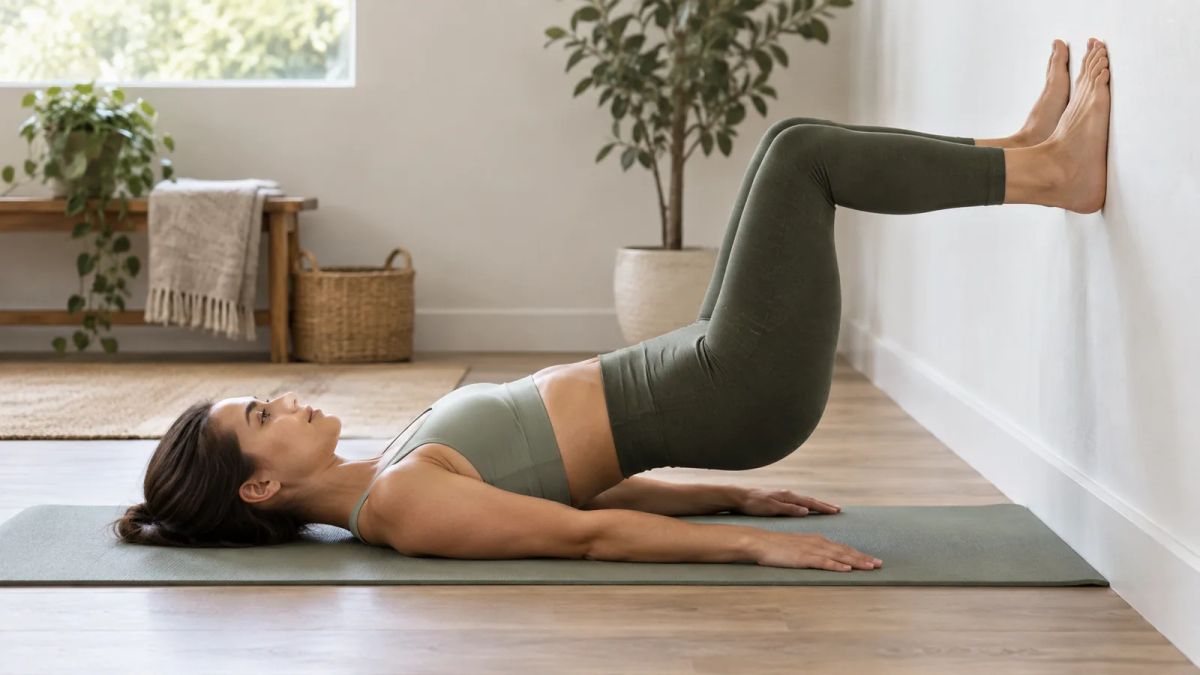
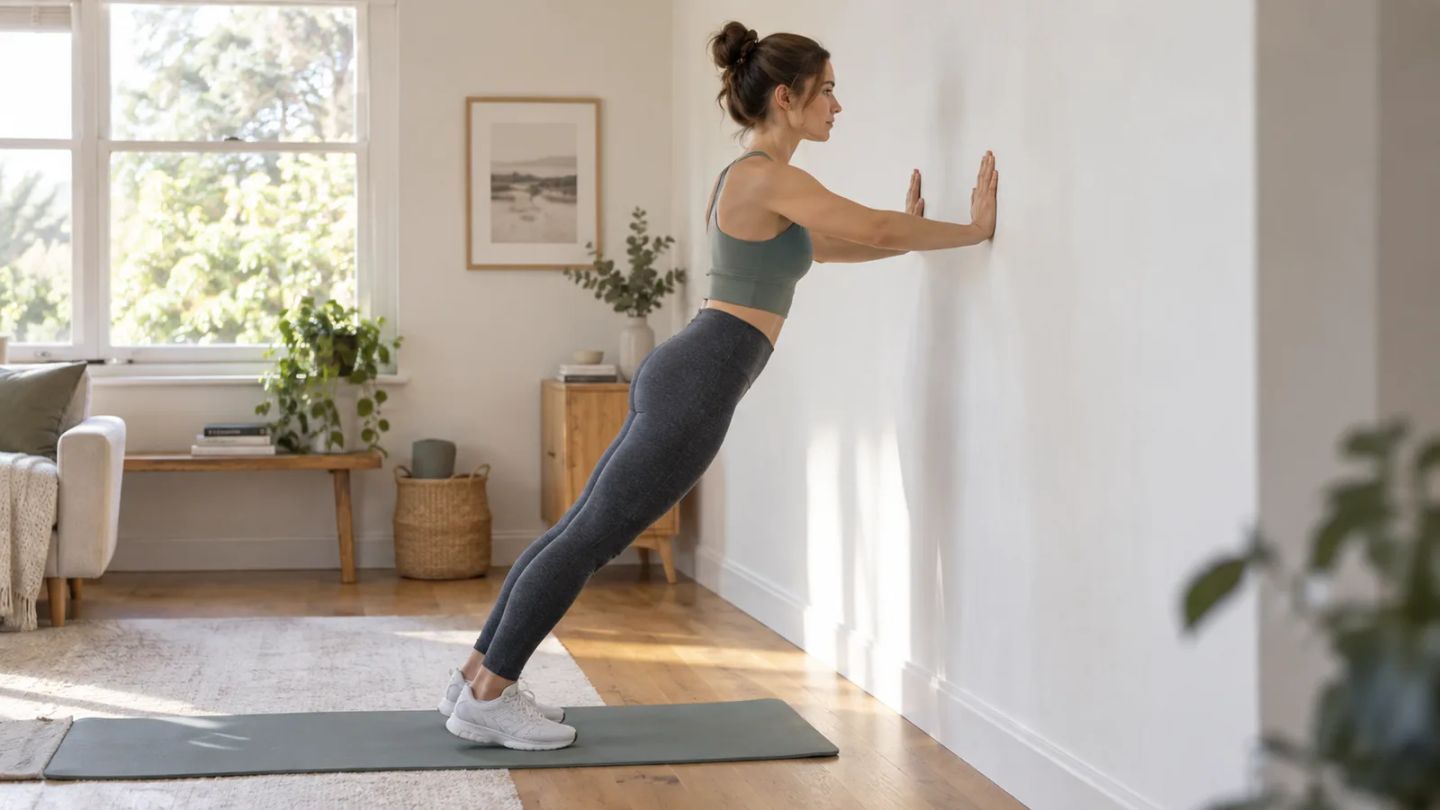
Wall Pilates is ordinary mat Pilates done with a wall as a prop. You press your feet, hands or back against it, and the wall gives you three things: something to push against for a little resistance, a surface to steady yourself on for balance work, and clear feedback on your alignment so you can feel when your spine or hips drift out of line.
None of that is new. Joseph Pilates was using walls and springs a century ago. What is new is the packaging.
The "28-day wall Pilates challenge" you have seen on TikTok and in the App Store is a marketing format, not a separate discipline. It bundles short daily videos, usually ten to thirty minutes, into a four-week plan with a chart to tick off. The wall is the hook. The daily-streak structure is the sell.
What the trend promises
Scroll the challenge apps and the before-and-after reels and you get a fairly consistent pitch: a flatter stomach, visible toning, weight loss and a "snatched" waist, all in under a month, all from the floor of your living room.
Some of that is reachable. A lot of it is oversold. Worth separating the two before you commit four weeks to it.
What the evidence supports
Most research studies "Pilates" in general, not the wall variation specifically, so treat the wall as a sensible way to do Pilates, not a magic upgrade with proof of its own. With that caveat, the findings are encouraging.
Core strength. Pilates is built around the deep muscles that stabilise the spine and pelvis, the ones that sit under the six-pack and hold your middle steady when you move. Harvard Health describes it as movement meant to improve balance, flexibility and strength, especially in the core, which it defines as the muscles in the back, sides, pelvis and buttocks that stabilise the centre of the body. A stronger centre makes ordinary things easier, from standing up out of a chair to carrying shopping without your lower back complaining.
Posture. Both Harvard Health and Cleveland Clinic list better posture and body awareness among the reliable benefits. Pilates trains you to notice where your body is in space and to hold it in better alignment, which is why people who sit at a desk all day often feel the difference first. If your shoulders round forward and your neck juts out by 4pm, this is the kind of practice that tends to help.
Balance and mobility. This is where the evidence is strongest, especially for older adults. A 2023 systematic review and meta-analysis pooled 20 randomised controlled trials with 930 participants and found Pilates significantly improved balance in older people, with a moderate overall effect and the clearest gains in dynamic balance. Better balance lowers the risk of falls. Cleveland Clinic makes the same point, noting Pilates can boost mobility, reflexes and coordination.
Flexibility. Pilates moves your joints through a full range under control, and improved flexibility shows up across the research as one of its more consistent results.
The pattern is clear. Wall Pilates builds strength, stability, posture and mobility, done consistently over weeks, not days.
Where the claims overreach
The weak spot in the marketing is fat loss.
Weight loss is driven mainly by what you eat, not by any single workout. The CDC is blunt about the mechanics: getting to and staying at a healthy weight requires both regular physical activity and a healthy eating pattern, and most weight loss comes from eating fewer calories, while activity is what helps you keep the loss off. A review of lifestyle programmes found much the same thing: during the weight-loss phase, calorie restriction does most of the work, not movement volume.
Wall Pilates is low to moderate intensity by design. It burns some calories, but far fewer than a brisk walk, a jog or a proper strength session. On its own it is not a fat-loss programme, and no amount of ab work "targets" belly fat, because spot reduction is not how the body sheds fat.
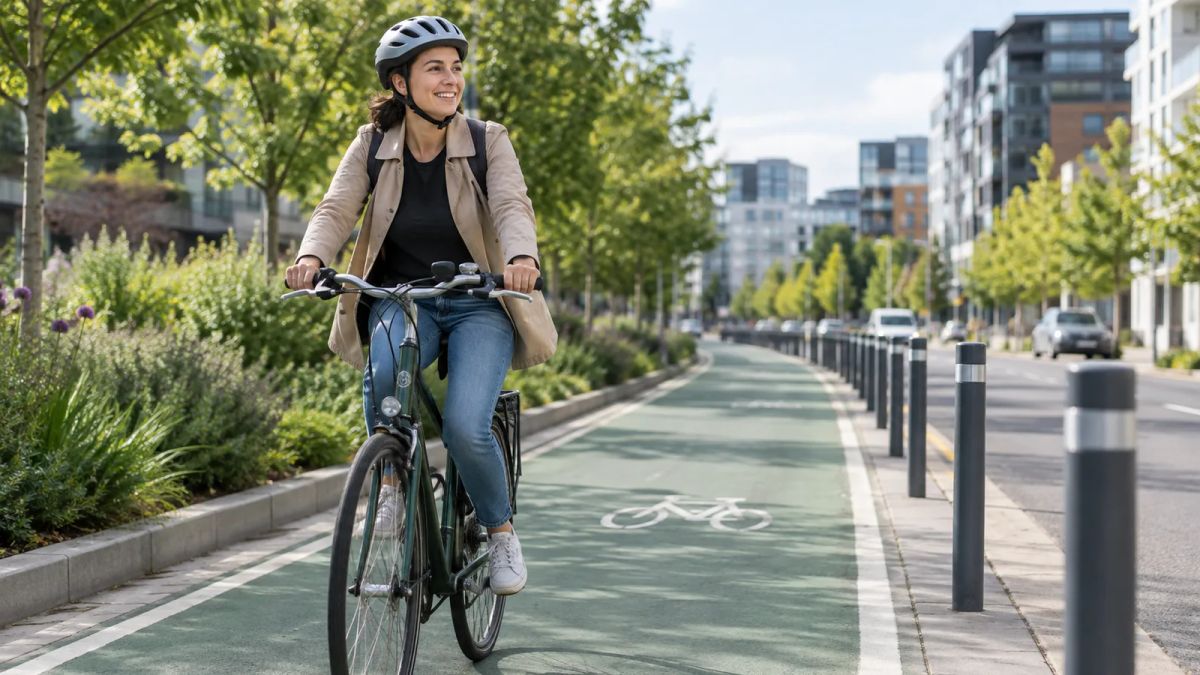
That does not make it pointless for body composition. Building a bit of muscle and moving daily both support a healthy weight over time. The honest framing is that wall Pilates can be part of a plan that changes your body, alongside eating well and some cardio. It is not the whole plan by itself. If fat loss is your main aim, pairing it with regular walks does more than either alone, and our guide to the benefits of walking covers how to build that base.
Who wall Pilates helps most
This format suits some people better than others.
It is a strong fit if you are new to exercise, short on space or kit, coming back from a break, working a desk job that wrecks your posture, or want low-impact movement that is kinder to sore joints. Harvard Health highlights that Pilates is low-impact, which makes it more comfortable and accessible if you have joint pain or mobility concerns. The wall adds support, so beginners and older adults can attempt moves they could not manage unaided.
It is less of a fit if you are already training hard and want a big cardiovascular or strength stimulus. In that case wall Pilates works as an add-on for mobility and core control, not your main event.
How to try it sensibly
Open our free Wall Pilates Starter Week (PDF). Save or print the one-page plan, with session checkboxes and space for notes. No sign-up needed.
You do not need an app subscription or a 28-day streak to start. You need a wall, a bit of floor and a plan you can stick to.
Aim for two or three sessions a week rather than daily. Muscles adapt on rest days, and a schedule you can keep beats a punishing one you abandon by day nine.
Put form first. The wall is there to give you feedback, so slow down and use it. Quality reps with a stable spine do more than rushed ones, and rushing is where low-impact movement starts to cause niggles.
On a stretched day, shrink the session instead of skipping it. One short wall roll-down and a set of wall-supported squats is a complete tiny version. Keeping the thread going beats a longer session you skip. Building that kind of consistency is a skill in itself, and our piece on tiny habits goes deeper on making a small version stick.
Miss a day, or a week, and pick it back up at the next session. Nothing resets. A gap does not undo the strength you have built.
Here is a sensible starter week you can copy or print:
Wall Pilates starter week (2 to 3 sessions, ~15 min each)
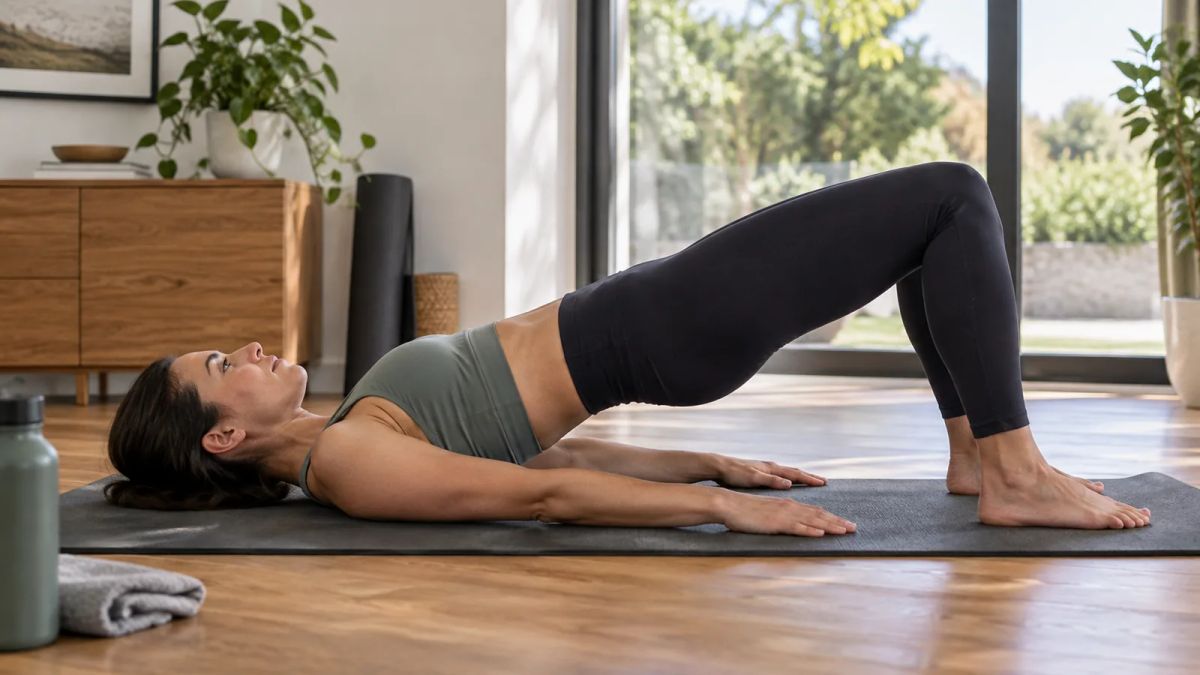
Mon ☐ Full session: wall roll-down, wall squats, wall bridge, standing wall push-up
Wed ☐ Full session: wall squats, wall marching, side leg lifts, wall roll-down
Fri ☐ Short version if busy: wall roll-down + wall squats only
Other days ☐ A short walk, and rest when you need it
If you want the step-by-step moves themselves, our companion guide to wall Pilates exercises walks through each one with form cues.
One safety note. Pilates is gentle, but it is still exercise. Harvard Health advises checking with your doctor before starting any new form of movement, and says certain exercises may not suit you if you already have back pain or a spine problem. If something hurts in a sharp or lasting way, stop and get it looked at. If you are pregnant, recovering from an injury or managing a health condition, take advice from a GP or a qualified instructor first.
A place to keep the routine going
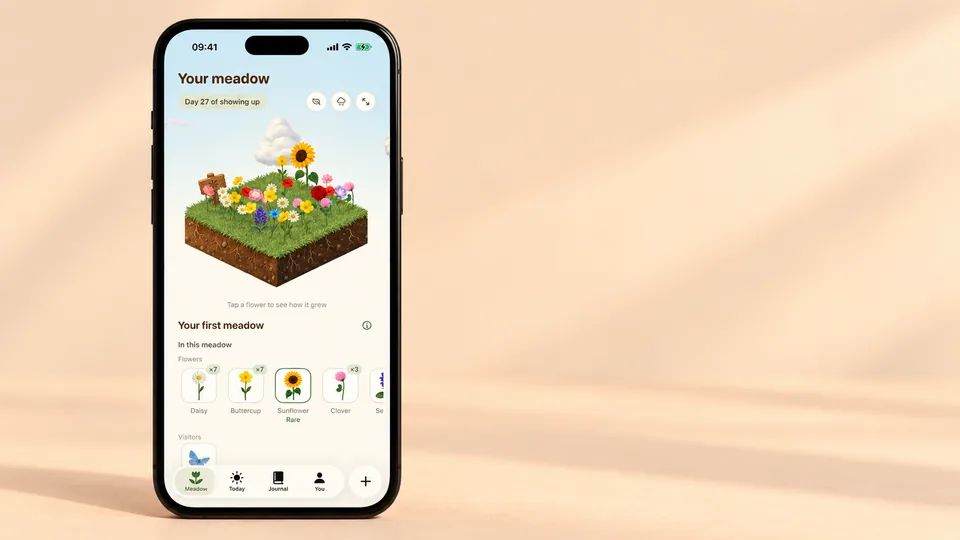
The daily-streak design of most challenge apps is where a lot of people fall off. Miss a day, break the chain, feel like you have failed, quit.
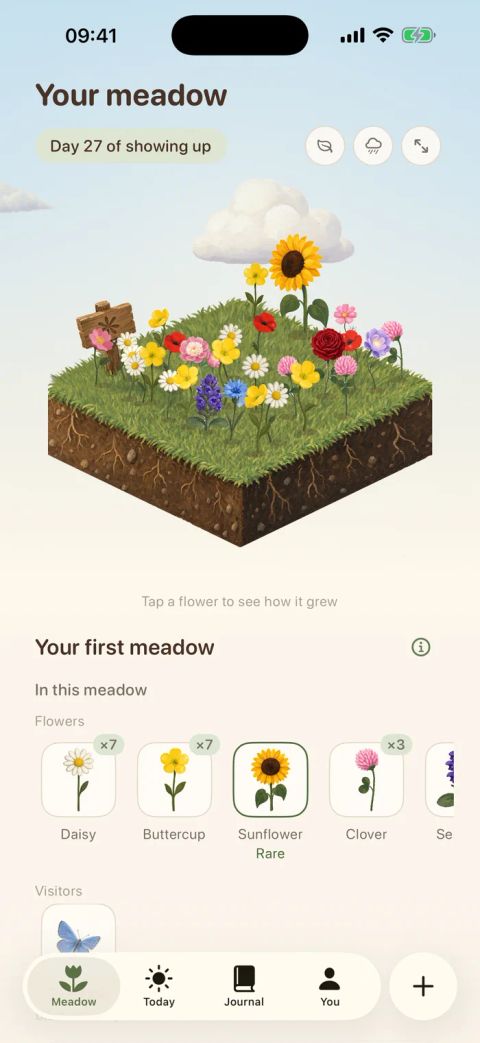
Whether or not the scales move, the wall Pilates that helps is the wall Pilates you keep doing, and Meadow is made to help you keep coming back. It is a gentle movement and habit app for iPhone. You log the movement you enjoy with a timer, a bit of wall Pilates, a walk or some yoga, tick off small daily habits, and note your mood, energy and a daily win. Every day you show up grows a wildflower, and there are no streaks, so a missed day resets nothing and your flowers never wilt.
Frequently asked questions
Does wall Pilates work?
For core strength, posture, balance and flexibility, yes, when you do it consistently over weeks. For fast fat loss on its own, no. The evidence supports the strength and mobility benefits far more than the transformation claims in the adverts.
Can wall Pilates help you lose belly fat?
Not directly. You cannot spot-reduce fat from one area, and weight loss depends mainly on eating in a calorie deficit. Wall Pilates can be part of an active routine that supports a healthy weight, but pairing it with cardio and sensible eating does the heavy lifting.
How often should you do wall Pilates?
Two or three sessions a week is plenty to see benefits, with rest days in between. Daily is fine if you keep the intensity gentle, but it is not required, and a schedule you can maintain beats a strict one you drop.
Is wall Pilates good for beginners and older adults?
It is one of the better starting points. The wall adds support and feedback, the impact is low, and the balance benefits are best evidenced in older adults. Check with your doctor first if you have any spine or joint concerns.
How long until you see results?
Expect small changes in how you move and feel, steadier balance, easier posture, a little more flexibility, within a few weeks of regular practice. Visible changes in muscle tone take longer and depend on your overall diet and activity, not the 28-day clock the apps put on it.
Is wall Pilates better than regular Pilates?
It is not better or worse, it is a variation. The wall makes some moves more accessible and gives useful alignment feedback. Reformer or equipment-based Pilates can add more resistance if you want to progress. Pick whichever you will keep doing.
Start with one 15-minute session this week: a wall roll-down, ten wall squats and a set of wall bridges. That is enough to feel what it does, and enough to decide whether it earns a regular slot in your week.
AUTHOR
Co-founder of Meadow.
Ash is co-founder of Meadow, a habit and movement tracking app that turns small acts of self-care into a growing wildflower meadow.
Little and often, with Meadow
Consistency, not intensity.
Meadow turns the movement you enjoy and the habits that help you feel good into a meadow of wildflowers. No streaks to break, and your flowers never wilt.
Download Meadow