A healthy daily routine is a small set of actions you repeat most days, dropped into the spots where your life already has room for them. There's no single right one, and the version that helps is the one you'll still be doing after the novelty wears off.
Most guides hand you someone else's perfect day and hope it fits yours. This one starts from your day instead.
The first hour and the last hour have their own guides on this site. Here we take the whole day, from the moment you wake to the moment you wind down, and look at the anchors worth having, how to build them around your own energy, and how to keep the thing going when a Tuesday falls apart.
Why a routine earns its keep
A routine does something dull and useful. It takes choices you'd otherwise weigh up half-awake and turns them into a path you can follow without deciding.
That saves more than time. Katherine Arlinghaus and Craig Johnston, writing on the importance of creating habits and routine, describe one of the quiet benefits as helping people "develop a structure to their day such that fewer decisions need to be made." When the next move is already settled, you spend nothing settling it.
Those spared decisions add up, because deciding is tiring. A study of more than 1,100 parole rulings found judges granted release about 65 per cent of the time at the start of a session, and close to zero by the end, before the rate jumped back to 65 per cent after a food break. The researchers put the slump down to the mental drain of choosing, hour after hour. You are not deciding parole, but the same fatigue shows up in you by mid-afternoon, when the fridge and the sofa start winning arguments they'd have lost at nine.
A routine keeps a few of the day's good choices off that list entirely. Arlinghaus and Johnston also note that having one improved people's time management, gave their days more structure, and offered some protection against the anxiety that comes with an uncertain, shapeless day.
The perfect day is a trap
Search for a daily routine and you'll meet a lot of 5am alarms, cold plunges and hour-long morning blocks. Those are one person's constraints dressed up as a rule. A parent of a toddler, a shift worker and a freelancer with a quiet flat do not share a schedule, and pretending they should is how good intentions collapse by the second week.
A useful routine has two parts. There are a few anchors most healthy days share, and there's the shape you give them, which is yours alone. Get the anchors in and let the rest bend.
The anchors worth having
You don't need all of these on day one. Read them as a menu, pick the one your day most obviously lacks, and build out slowly.
Wake and sleep at steady times
Of everything here, this is the one with the widest reach, because it sets up the rest. The CDC advises adults aged 18 to 60 to get 7 or more hours of sleep a night, and to help that along by "going to bed and getting up at the same time every day." A steady wake time in particular pulls the whole day into a rhythm. The hour on the clock matters far less than the fact that it's roughly the same one each day, weekends included.
Some movement, somewhere
The UK's NHS suggests adults do at least 150 minutes of moderate activity a week plus strengthening work on two days, and it's happy for you to break that into short sessions across the week. So the aim isn't a daily workout. It's movement that finds a home in your day, whether that's a walk to the station, ten minutes of stretching, or a dance round the kitchen. A short one pays off fast: Harvard Health notes that even a 20-minute stroll can clear the mind and lower stress hormones like cortisol.
Meals at roughly regular times
Regular meals do quiet work in a routine. They mark the day into sections, they keep energy steadier than a long fast broken by a mid-afternoon crash, and they're an easy peg to hang other habits on. Drinking is part of this too. The NHS suggests 6 to 8 cups or glasses of fluid a day, sipped through the day, and yes, tea and coffee count. If your water habit keeps slipping, tying a glass to each meal is a start.
A real break or two
Breaks are not the reward for finishing the day. They're part of how you get through it. Left to run flat out, attention sags in the early afternoon, and a pause with some food and a short walk resets it better than pushing on through the fog.
A wind-down
The last stretch of the evening decides a lot about the night. A short, repeatable wind-down, dimmer lights, off the screen, something calm, tells your body the day is closing. This one has its own guide, so we'll keep it brief here.
Build around your energy, not the clock
Here's where the routine becomes yours. Your alertness isn't flat across the day, it rises and falls on a roughly 24-hour cycle, and the pattern isn't the same for everyone.
A review of circadian rhythms in attention describes a common shape: attention sits low first thing, climbs towards late morning, dips after lunch, and picks up again in the afternoon and early evening. The review also notes that "morning type persons show better performance in the morning than in the evening, while evening type persons show better performance in the evening." A morning lark and a night owl are working with different clocks, and neither is doing it wrong.
The move is to match the work to the window. Put the task that needs your sharpest head, the hard email, the thinking, the workout you keep dodging, in your peak. Save the low-stakes admin, the tidying, the easy calls, for the trough. If you don't know your peak yet, watch yourself for a week and notice when the good ideas turn up.
A day that flexes
Here's a whole day built from anchors and pinned to moments, not clock times, so it survives a late start or a long meeting. Take it as a sketch, not a script.
A day built from anchors. Adapt freely, and drop anything that doesn't fit.
On waking, a glass of water and a few minutes of daylight before you reach for the phone.
Late morning, when your head is clearest, the one task that needs it most.
Around midday, a proper meal and a short walk away from the desk, so the afternoon dip lands softer.
Early afternoon, the low-effort work, batched together while your focus is elsewhere.
Late afternoon, a second small window of movement or a break outside.
Evening, a meal at a roughly regular time, then the wind-down that closes the day.
Decide the shrunken version now, while things are calm, so you're not making the call when you're already behind. On a wrecked day, the whole thing can collapse to three lines: a glass of water on waking, one short walk, lights down early. That still counts as keeping the routine.
And you will miss days. A broken night, a sick child, a shift that ate the lot. Missing one doesn't undo anything, so there's no streak to mourn and nothing to rebuild from scratch. Pick it up at the next natural chance, usually the following morning, with no attempt to make up the gap. The ordinary version goes back in its usual spot, and that's enough.

Keep it kind, or you won't keep it
The design is the easy half. Living with it through frazzled, ordinary weeks is where most plans come apart, and a couple of habits take the pressure off.
Tie each new anchor to something you already do. James Clear calls this habit stacking, and the shape is plain: "after I do a current habit, I will do the new one". "Drink more water" floats off. "After I put the kettle on, I fill a glass" tends to stick, because the kettle turns up every day and good intentions don't.
Add slowly, too. One anchor bedded in before the next beats six started at once and dropped by Friday. Arlinghaus and Johnston are blunt that trying "too much change, too fast" tends to end without much to show for it. Our guide to sticking with a routine goes deeper on the coming-back part, which is the part that decides whether a routine lasts. If low mood or exhaustion is dragging on for weeks, not days, that's worth raising with your GP.
A place to see the whole day add up
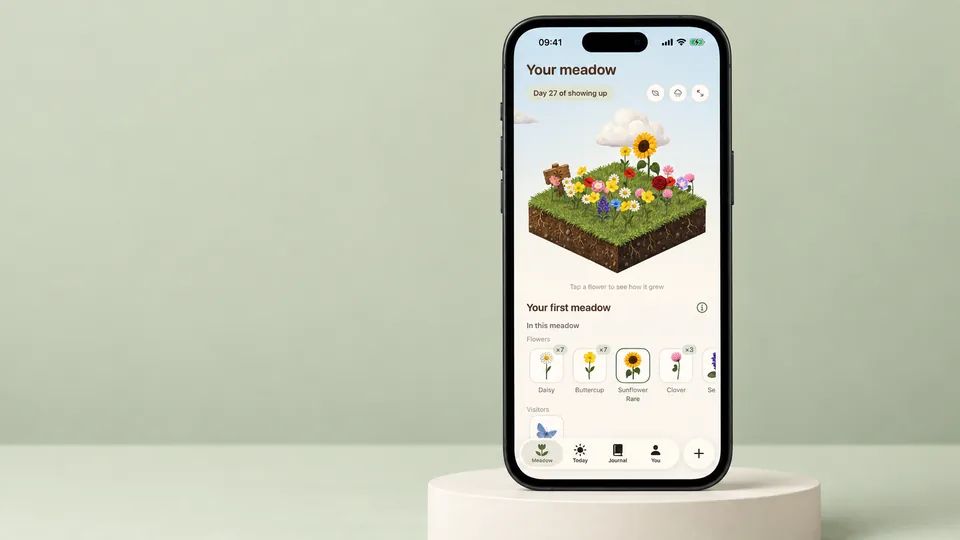
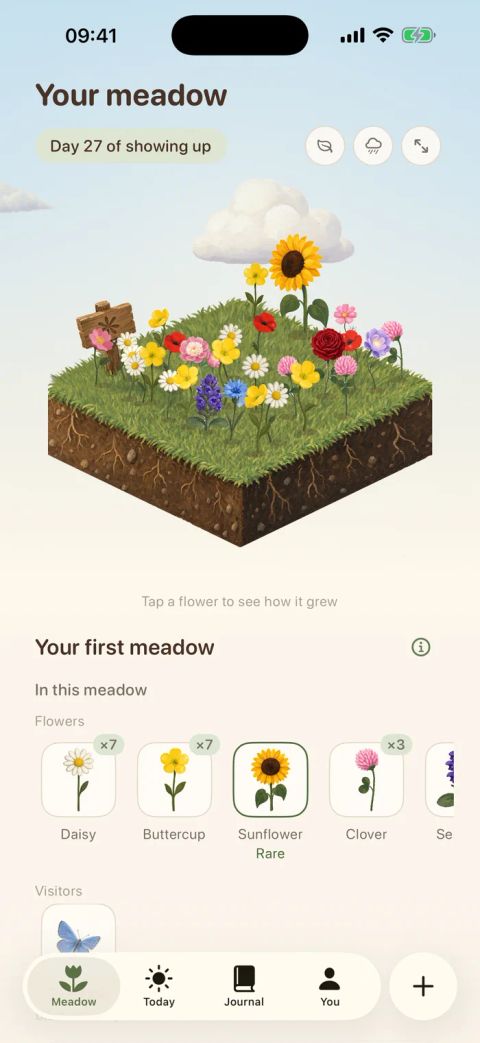
When a routine spreads across the whole day, one spot to log it keeps the parts from slipping your mind. Meadow is a gentle habit app for iPhone from Wildcard Wellness where you log the movement you enjoy, tick off small daily habits like drinking water or getting outside, and note your mood and energy, with room for a daily win and an affirmation. Each day you show up grows a wildflower in your own meadow, and rare flowers and little animal visitors turn up as it fills in. There are no streaks, so an off day resets nothing and your flowers never wilt.
Common questions
What does a healthy daily routine look like? A steady wake and sleep time, some movement, meals at roughly regular hours, a break or two, and a short wind-down. Beyond those anchors there's no fixed picture, because a good routine is shaped around your work, your body clock and the people you live with.
How do I start when my days are unpredictable? Anchor to events, not clock times. "After lunch, a walk" holds up on a chaotic day in a way that "1pm walk" doesn't. Start with one anchor tied to something fixed, like a meal or the school run.
Is it bad not to have any routine? Not bad, but a shapeless day asks you to decide everything from scratch, and that's tiring and a little anxiety-making. Even one or two anchors give the day something to hang on.
How long until it feels normal? Longer than you'd hope, and it varies a lot from person to person and habit to habit. Treat the first few weeks as practice, not a test you can fail.
Tonight, pick the one anchor your day most obviously lacks, and write a single sentence for it: after I do something you already do tomorrow, you'll do one small new thing. That sentence, decided in advance, is where the whole routine starts.
AUTHOR
Co-founder of Meadow.
Ash is co-founder of Meadow, a habit and movement tracking app that turns small acts of self-care into a growing wildflower meadow.
Little and often, with Meadow
Consistency, not intensity.
Meadow turns the movement you enjoy and the habits that help you feel good into a meadow of wildflowers. No streaks to break, and your flowers never wilt.
Download Meadow