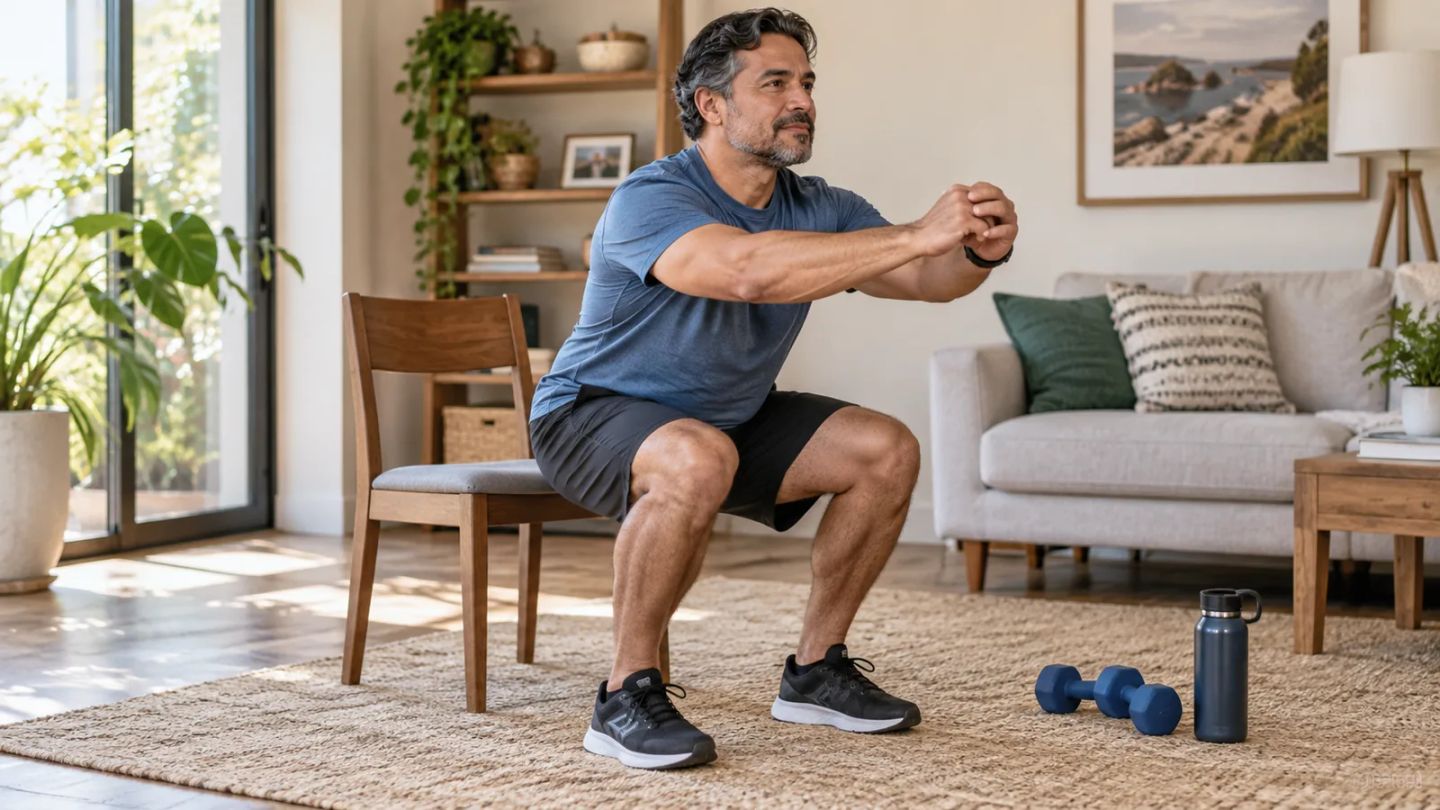
Starting to exercise at 40 works much like it does at any age, with a couple of adjustments for how your body recovers and how quickly stiff joints complain. The better news is that it pays off nearly as much as a lifetime of activity. In a study of more than 300,000 adults, people who'd been inactive for years and then got moving in their forties and fifties had about a 35% lower risk of dying early than those who stayed inactive.
So the window hasn't closed. Forty is a fine place to begin, and your body still responds to the work.
What changes is the approach, not whether it works. This guide covers why the early gains come so fast, how to start without hurting yourself, how to balance cardio, strength and a bit of mobility, why recovery takes longer now, and a first month you can follow without a gym. If you're starting from a complete standstill and want the basics first, our general guide to how to start exercising sits alongside this one.
The gains are still large at 40
The worry that stops most people is the sense that they've left it too long. The evidence says otherwise.
That study of 300,000-plus adults found the people who only got active in midlife ended up roughly level with lifelong exercisers on their risk of early death, which is about as encouraging as research gets on this. The World Health Organization is blunt in the same direction: any amount of physical activity is better than none, and all of it counts, at any age.
There's a quiet advantage to starting unfit, too. When your body has the most to gain, it responds quickest, so the first few weeks tend to show up faster than they would for someone already halfway fit.
What shifts after 40
A few things change in your forties, and knowing them helps you train around them instead of into them.
Muscle starts to slip. Harvard Health puts the drift at as much as 3% to 5% per decade after age 30, faster the longer it's left. Bone thins along a similar line. Joints and tendons take longer to warm up and stay a touch stiffer through the day. And recovery, the repair that happens between sessions, stretches out.
None of that is a reason to go easy forever. The same Harvard review found men aged 50 to 83 doing resistance training added an average of 2.4 pounds of lean muscle. The machinery still works. You feed it slightly differently, that's all.
Start smaller than feels sensible
The classic mistake at any age is doing too much on day one, aching for three days, and quietly stopping. At 40 that ache lingers a little longer, so the mistake costs a bit more.
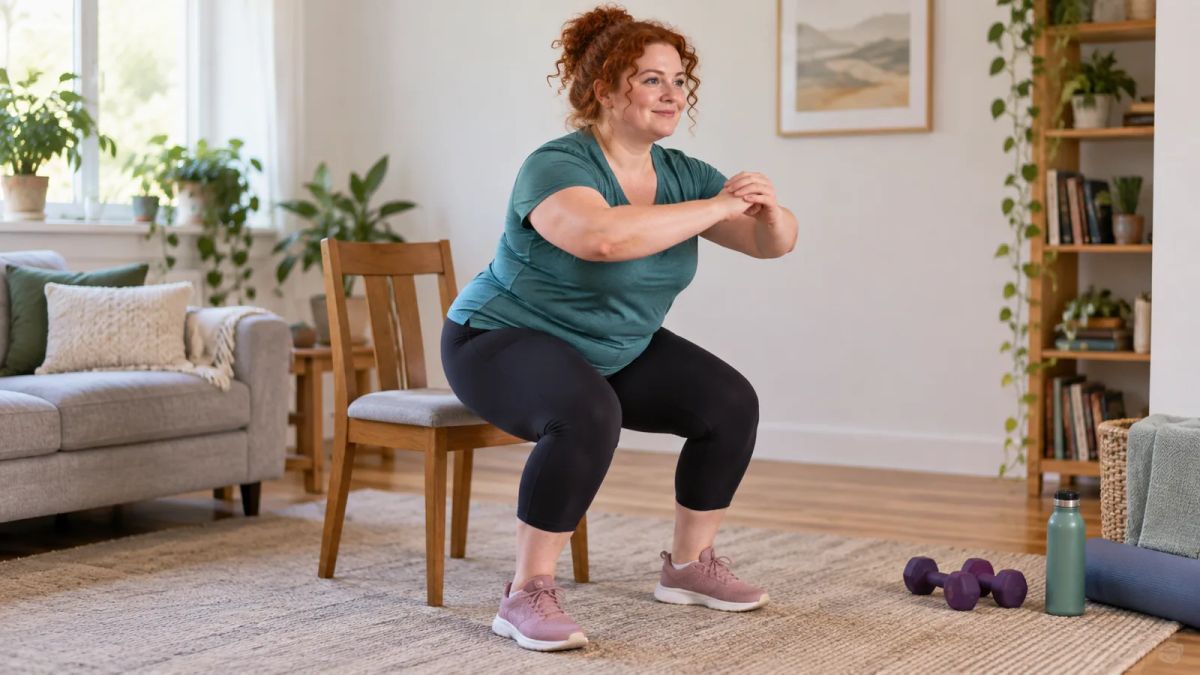
Begin with something you'd happily do on a bad day. A ten-minute walk after lunch. Five minutes of stretching while the kettle boils. Two sets of standing up from a chair without using your hands. If a session ever feels like a big decision, it's too big, so shrink it until saying yes is easy.
Build up over weeks, not days. Add a little time or a little effort once the current amount feels comfortable, and expect the odd flat week where you hold steady instead of pushing on. Some stiffness a day or two after new activity is normal and passes. Sharp pain during a movement, or an ache that hangs around for days, means you went too far, so back off and let it settle.
Balance three things, not one
Most advice for the over-40s leans hard on strength, and strength does earn its place here. A body that keeps moving well past 40 needs three things though, and they take surprisingly little time between them.
Cardio keeps your heart and lungs working and does the most for everyday stamina. The target worth growing towards is the standard one: the CDC recommends 150 minutes of moderate activity a week plus muscle-strengthening on 2 or more days. Moderate means a brisk walk where you're a bit breathless but can still talk. Walking, cycling and swimming all count, and you can break the 150 minutes into ten-minute pieces across the week.
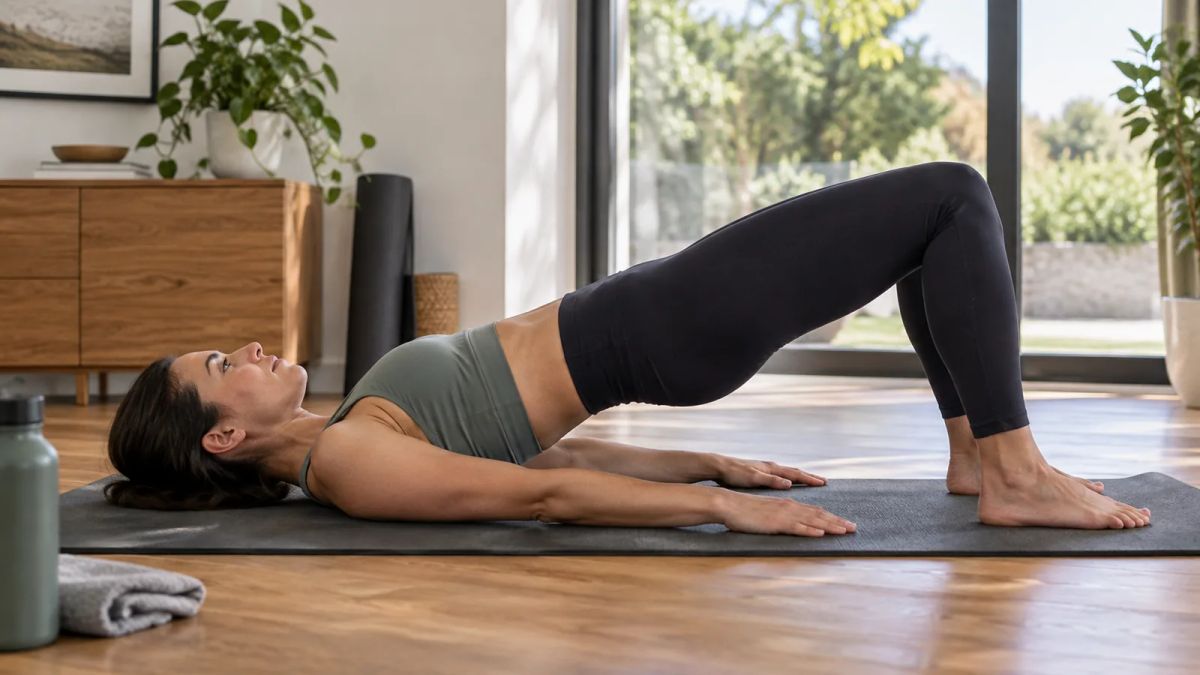
Strength is the part that pushes back against the muscle and bone loss above. Two short full-body sessions a week, using your bodyweight and a pair of light dumbbells, is plenty to start. Our guide to strength training for beginners over 40 has a seven-move home routine you can lift straight from.
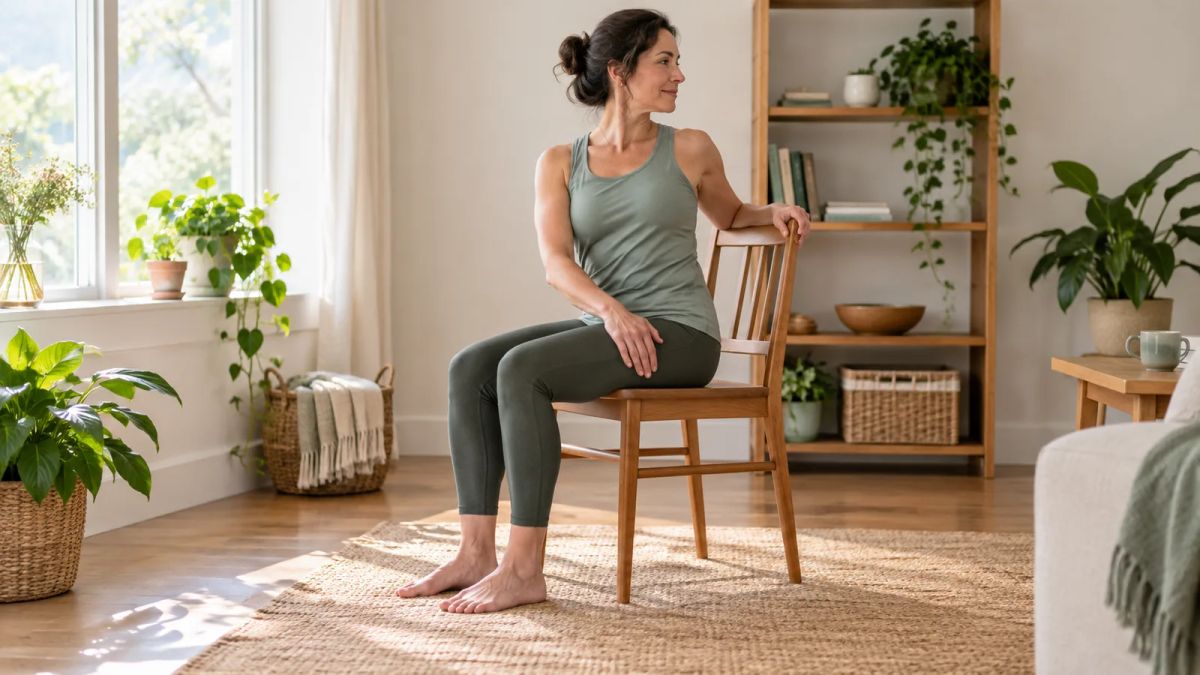
Mobility is the one people skip and the one stiff 40-something joints notice most. A few minutes of easy range-of-movement work for the hips, shoulders and ankles keeps you moving comfortably and cuts the odds of tweaking something. If your joints or fitness make high-impact work unappealing, a low-impact workout gives you cardio and strength without the pounding.
You don't need all three every day. A week might be three short walks, two twenty-minute strength sessions, and five minutes of mobility on a couple of mornings. That's most of the guideline met, in pieces that fit around a job and a life.
Give recovery the time it now needs
Here's the adjustment beginners over 40 get wrong most often. They train the same muscles day after day, expecting the bounce-back they had at 25.
A review of resistance training in older adults is clear that the time to recover and adapt is greater than in younger people, even though the capacity to get stronger is much the same. So leave at least a day between strength sessions that work the same muscles. Two well-recovered sessions beat four rushed ones.
Sleep does most of the repair work, so guard it where you can. Warm up before anything vigorous, five minutes of easy movement so you're not asking cold joints to work hard. And treat rest days as part of the plan, not a failure of it. The same review calls resistance training a safe and effective way to slow age-related muscle loss when you give the body room to adapt.
Somewhere to watch the effort add up

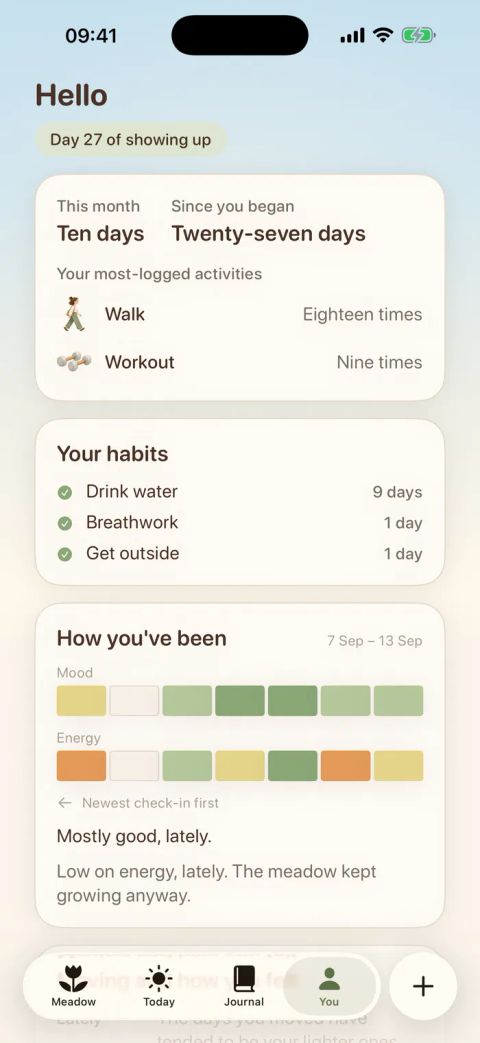
Some weeks you'll manage all three parts and some weeks a single walk, and Meadow is built for exactly that uneven rhythm. Meadow is a movement and habit app for iPhone that turns each day you show up into a wildflower. You log a walk, a strength session or a few minutes of mobility with a timer, tick off small daily habits, and note your mood and energy, and your own meadow fills in over time, with rare flowers and little animal visitors appearing as it grows. It's made for consistency, so there are no streaks. A week off while a niggle settles resets nothing you've grown, which suits the stop-start way most people ease into moving again at 40.
Your first month, mapped out
Open our free printable: Your first month of movement (PDF). Save or print it to use alongside this guide. No sign-up needed.
A rough map takes the daily "what should I do today" question away. Here's a first month that builds only when the last week felt steady. Every session is short on purpose.
Week 1: Two 10-minute walks and one short strength session of a single set. Learn the shapes and let your body meet the work.
Week 2: Three 10-minute walks and two strength sessions of two sets. Add five minutes of mobility on one morning.
Week 3: Stretch one walk to 20 minutes, keep the two strength sessions, do mobility twice.
Week 4: Build towards 150 minutes of walking across the week, keep two strength sessions, mobility twice, and nudge one strength move up a notch.
Build your own version by deciding these in advance, so a busy week already has an answer:
My anchor (something I already do every day): ________
My movement (small enough for a bad day): ________
My bad-day version (when everything's gone wrong): ________
That bad-day version is the one that keeps the whole thing alive. Decide now what counts when you're tired and behind, maybe a walk to the end of the road and back, and a rough day turns into a small win instead of a miss.
You will miss some. Everyone does. When you do, don't wait for Monday. Do the smallest version at the next chance you get, because a week off is a pause, and the only version that fails is the one you never come back to.
When to check with your GP first
Most people over 40 can start walking and gentle movement safely today. Some should have a word first.
The NHS advises you to speak to your GP before you begin if you haven't exercised for some time, or if you have a medical condition or concern. That's worth doing if you're coming back after a long gap, carry a lot of extra weight, are pregnant, or have a heart or lung condition, joint problems or high blood pressure. Stop and get medical advice if activity brings on chest pain, dizziness, faintness or unusual breathlessness. Those aren't part of getting fit and shouldn't be pushed through.
Common questions
Is 40 too late to get fit? No, and the research is unusually clear on it. Adults who started exercising in their forties and fifties after years of doing nothing ended up with a risk of early death close to people who'd been active all along. Starting unfit even has an edge, because the first gains come quickest when there's the most room to improve.
How often should I exercise at 40? Aim for something on most days, with two of those including strength work and the rest built around walking or another cardio you like. Frequent small doses are easier to keep up than three big sessions you dread. Build the frequency first and the length later.
Do I need to lift weights, or is walking enough? Walking is a brilliant start and covers your cardio, but it doesn't hold on to muscle and bone the way resistance work does, and that's the thing most worth protecting after 40. You don't need a gym for it. Bodyweight moves and a pair of light dumbbells at home will do.
How long until I see results? Stamina improves within a couple of weeks, so the walks that felt hard soon get easier. Strength and shape take longer, usually a couple of months of twice-weekly sessions before the change is obvious. The habit itself clicks at no fixed point, so judge yourself by whether you're still turning up.
What if I've got an old injury or dodgy knees? Work around it, not through it. Low-impact movement like walking, swimming or cycling is often kind to cranky joints, and strengthening the muscles around a joint tends to ease it over time. Take anything sharp or new to your GP or a physiotherapist before you push on.
Choose your first week now. Two short walks and one round of standing up from a chair ten times without using your hands, spread across the next seven days. Write the days where you'll see them, then do the first walk tomorrow. Everything else builds from there.
AUTHOR
Co-founder of Meadow.
Ash is co-founder of Meadow, a habit and movement tracking app that turns small acts of self-care into a growing wildflower meadow.
See how far you've come
Your habits, moods and little wins, all in one place
Meadow keeps track of the walks, the water and the good days, so you can look back and watch your effort add up.
Download Meadow