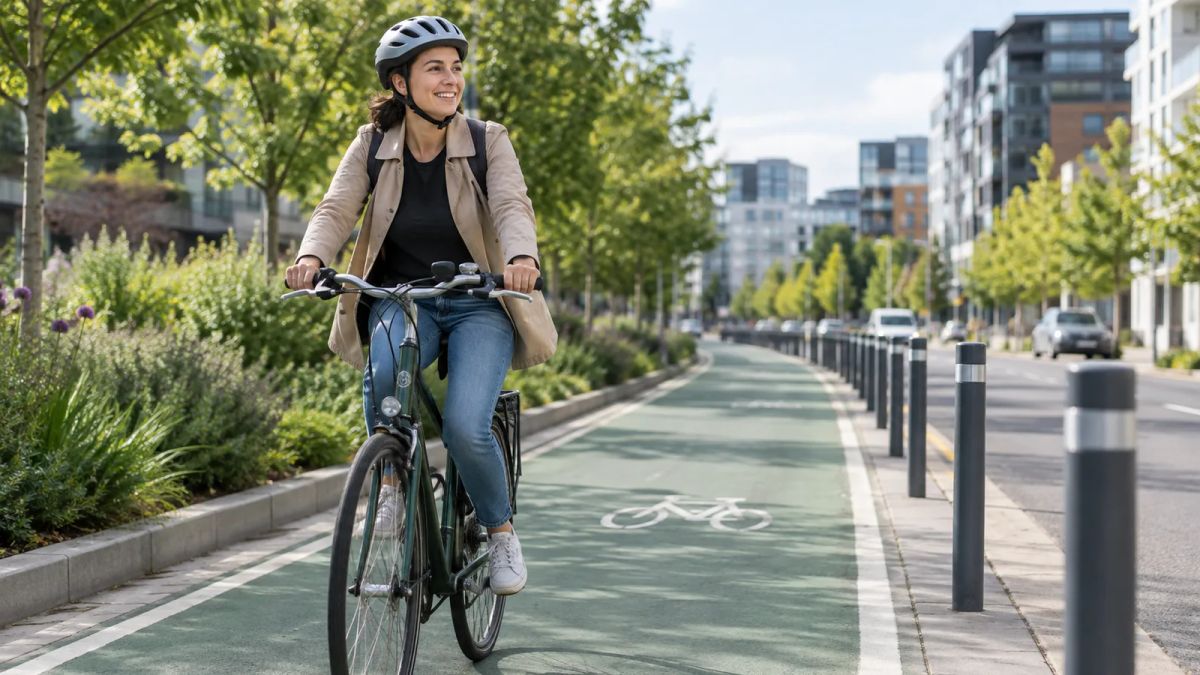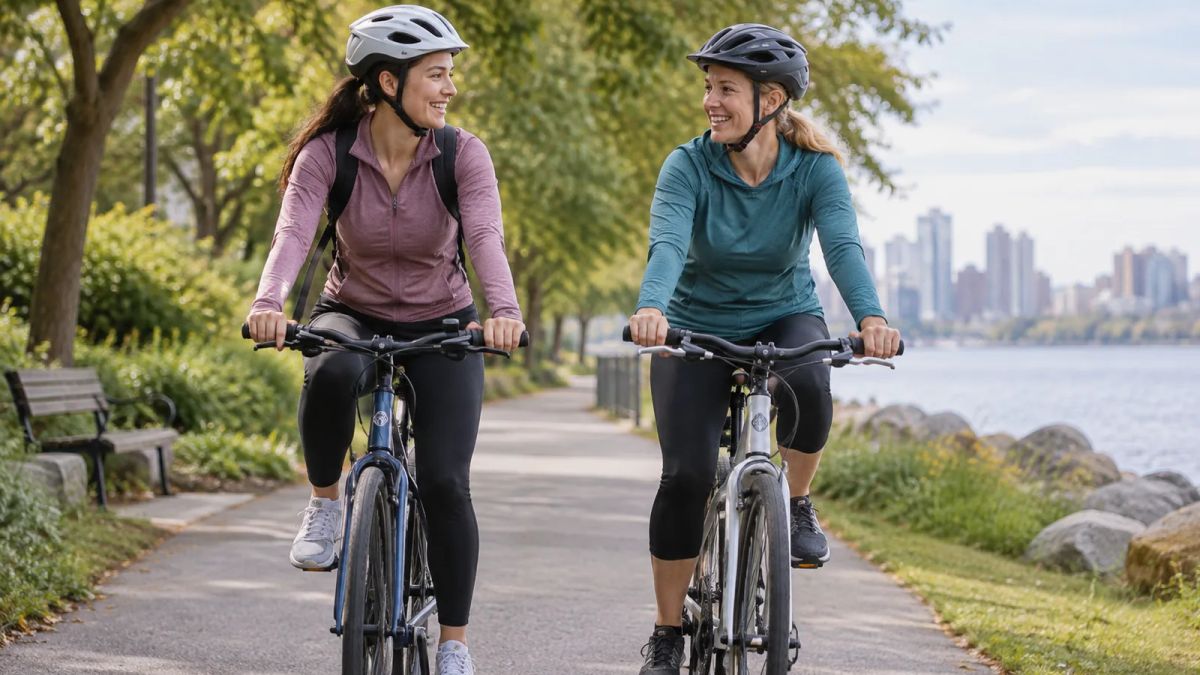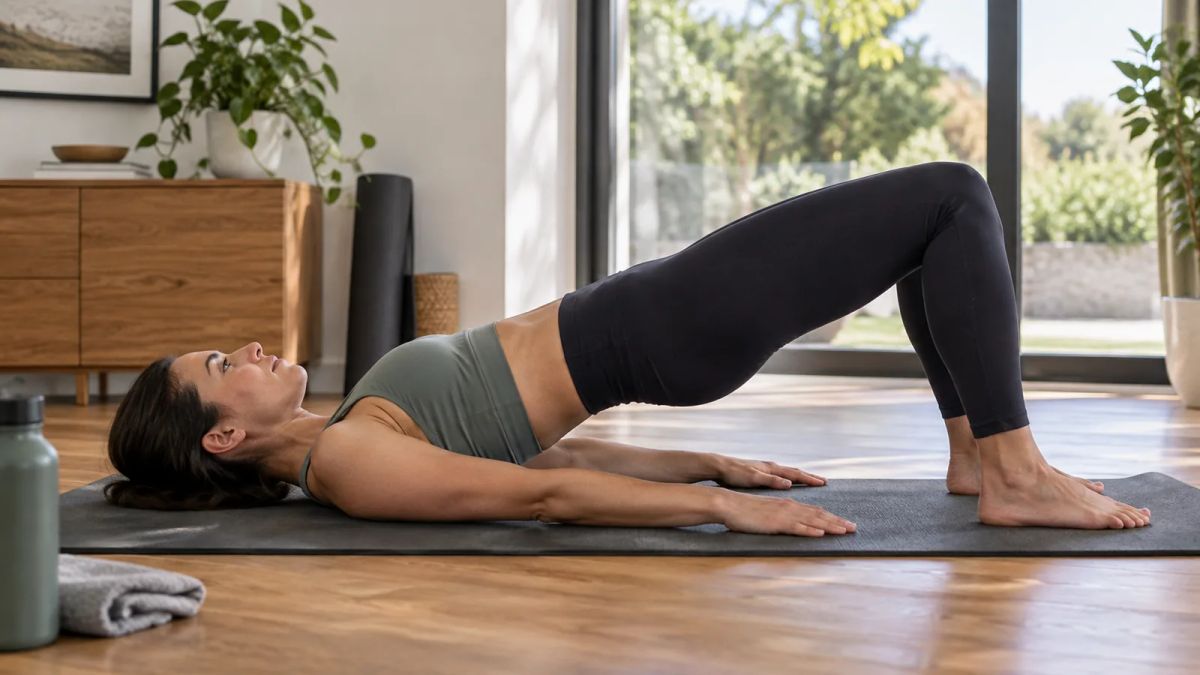
You can start today, and the first step can be as small as standing up during the advert break or walking to the front gate and back. Movement counts long before it looks like a workout, and beginning from exactly where you are now is the point, not a compromise on the way to something better.
Carrying more weight does change how some movements feel. Your knees, hips and ankles take a bigger load, you might get out of breath sooner, and a chair or a bit of wall to hold might be welcome. None of that means you're doing it wrong. It means you pick activities that suit your body today and build from there.
This guide keeps the focus on comfort, capability and small wins. Weight might change or it might not. Either way, moving your body does you good, and you deserve to feel decent while you do it.
Start far smaller than feels sensible
The most common mistake is starting too big. A punishing first week almost always ends in sore joints, a flat mood and a quiet decision to stop.
Begin with something you could do even on a tired day. Five minutes. One flight of stairs. A slow lap of the garden or the block. If five minutes feels like plenty, five minutes is your workout, and you've already started.
The CDC points out that the exact amount of activity a body needs varies a great deal from person to person, so there's no universal number you're failing to hit. Do what you can this week. Add a little next week if it feels right.
If you want the full beginner's version of this, we've written a companion piece on how to start exercising from scratch that goes deeper on habit-building.
Move in ways that are kind to your joints
Low-impact movement means both feet, or your body, stay supported so there's no hard pounding through the joints. It's the sensible place to begin, and there's good evidence behind it.
A 2025 analysis in the BMJ pooled 217 trials and more than 15,000 people and found that lower-impact aerobic activity, walking, cycling and swimming, came out best for easing knee pain and improving how people move, as reported by Harvard Health. So the gentle options aren't a watered-down version of real exercise. They're some of the most effective things you can do.
Here's where to look first.
Walking
Walking asks for no kit and no gym. You can do it from your front door, at your own pace, for as long or short as suits you.
Start with a distance you know you can manage and turn back before you're worn out. If a single stretch feels like too much, split it. Three short walks across a day add up the same as one longer one. Our guide to the benefits of walking has more on why such an ordinary activity does so much.
Water
Water is the great equaliser for larger bodies. Its buoyancy holds you up, so movements that ache on land become easier and more comfortable in a pool.
The Arthritis Foundation notes that this support is ideal for older adults and people who are obese, because you move with less strain and a better range of motion. Try walking widths in the shallow end, or an aqua class where nobody can see much below the surface anyway. Many pools run quieter adult sessions if a busy pool feels off-putting.
Chair-based and seated strength
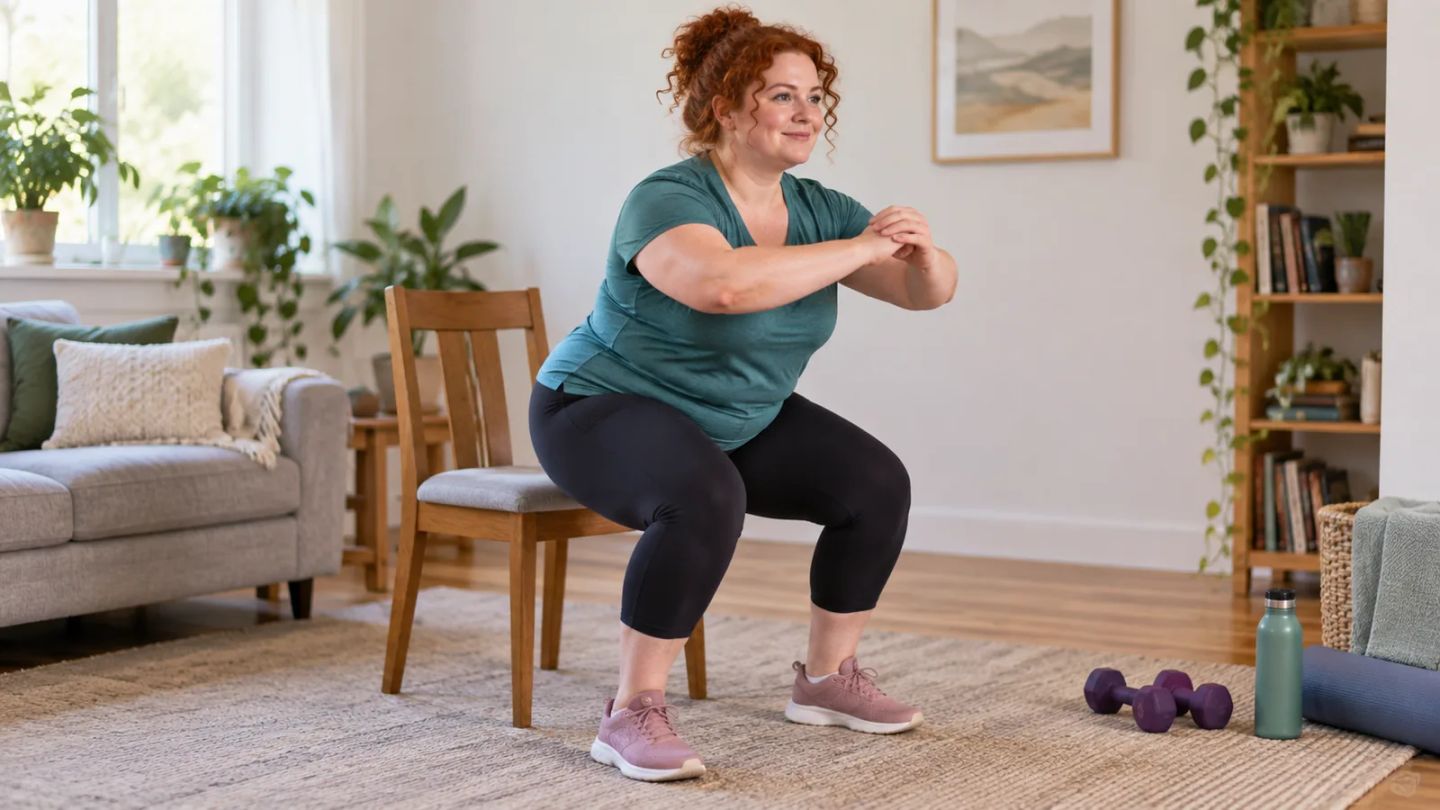
You can build real strength sitting down. Seated exercises suit anyone easing back in, and they take the balance worry out of the picture.
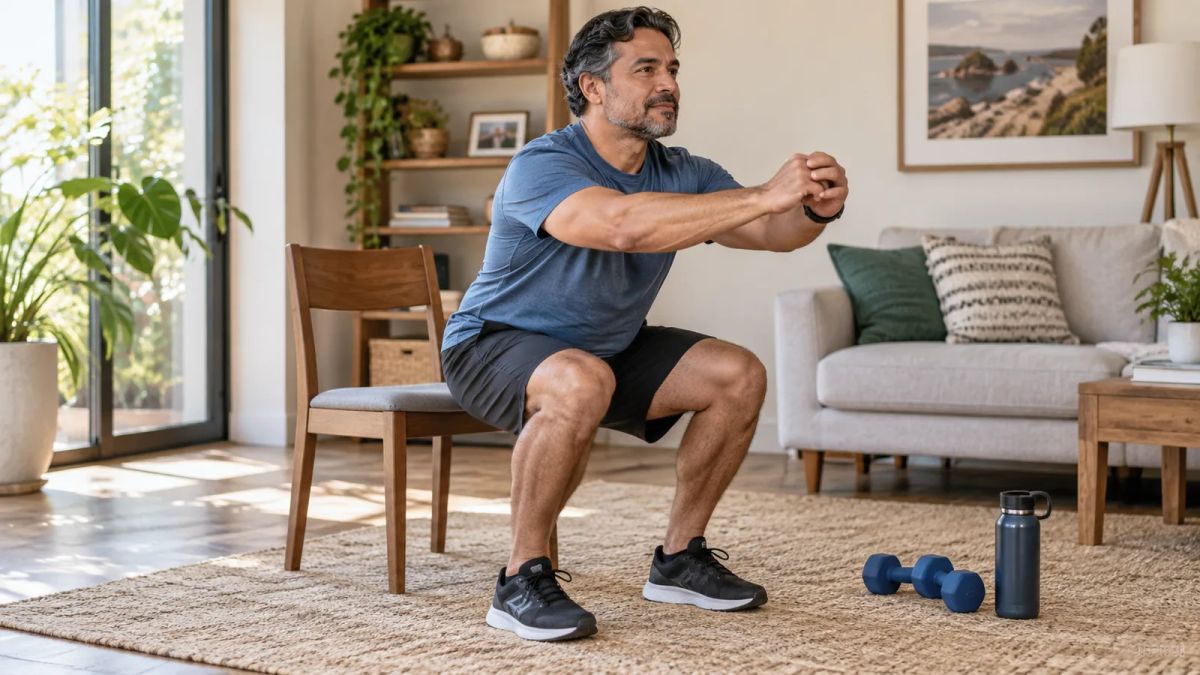
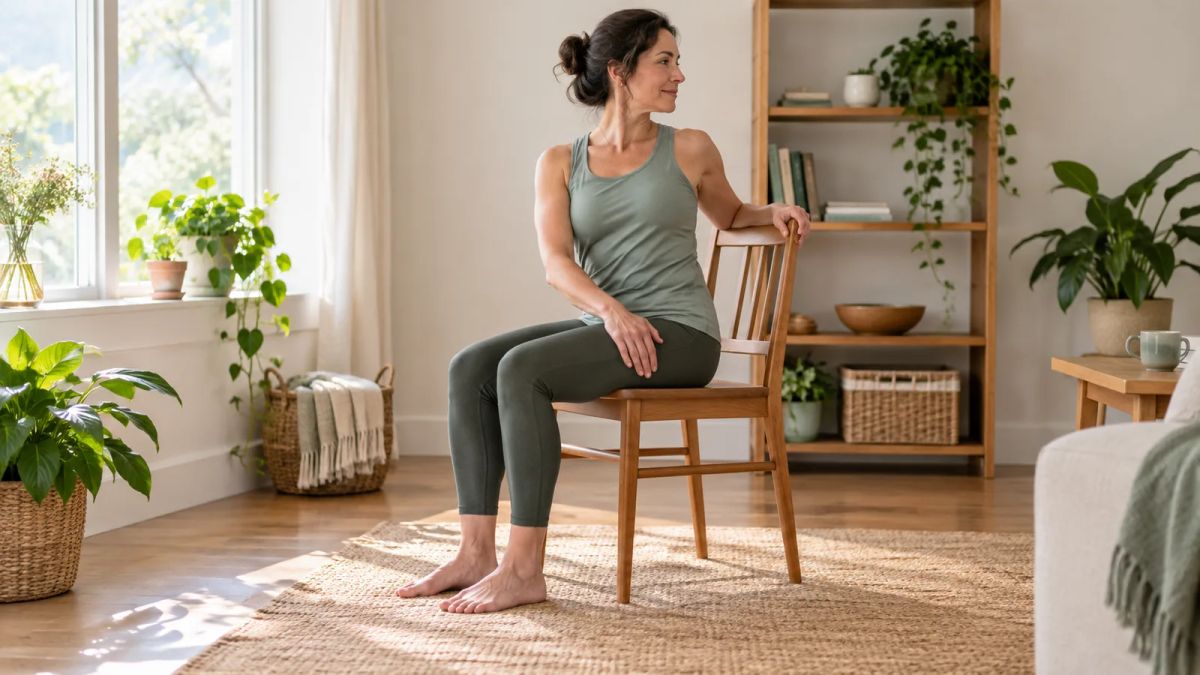
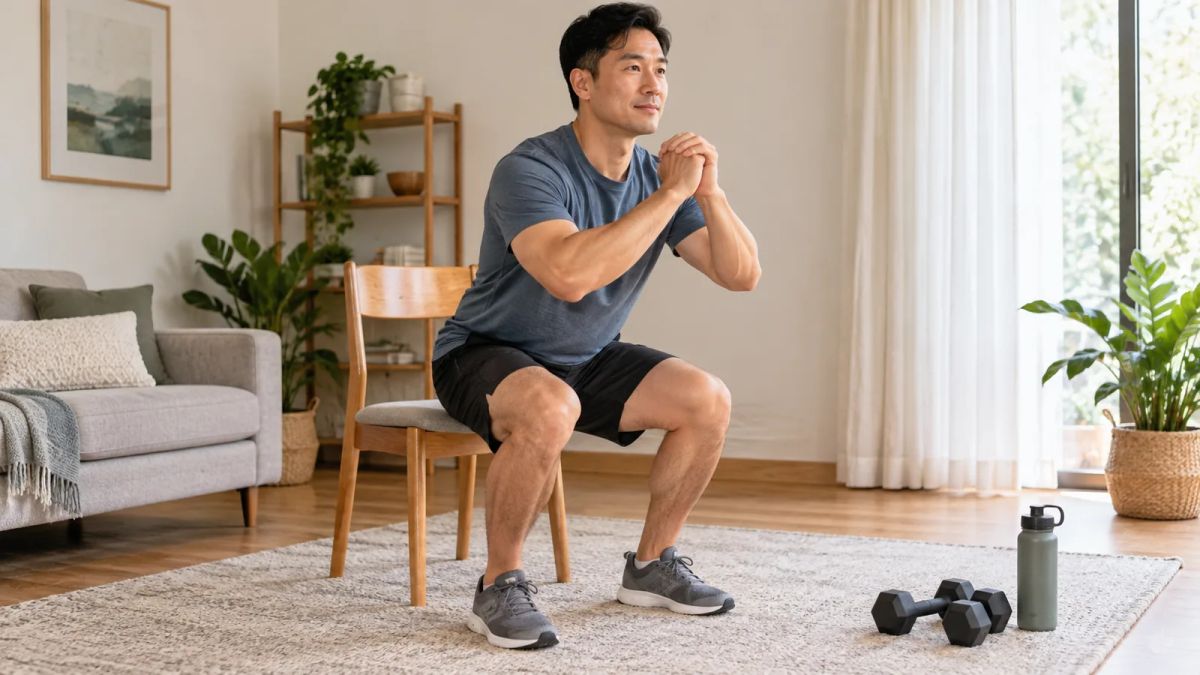
The NHS suggests a solid chair without wheels or arms, feet flat on the floor and knees at right angles. From there you can do sit-to-stands from the chair, arm raises with or without a tin of beans, marching your feet, and gentle trunk turns. A short seated round most days quietly builds the leg and core strength that makes everything else feel easier. If you'd like a fuller routine, our low-impact workout walks through more moves you can scale up or down.
Make yourself comfortable
Discomfort is one of the biggest reasons people quit, and most of it is fixable.
Footwear comes first. A supportive pair of trainers with decent cushioning takes some of the load off your knees and ankles and makes a walk feel far better than doing it in worn-out shoes.
Chafing is common when thighs or arms rub, and you don't have to put up with it. The American Academy of Dermatology advises applying petroleum jelly to problem spots like the feet or thighs to prevent the rubbing that leads to sore skin. Snug shorts or leggings with no inner-thigh seam help too, and moisture-wicking fabric beats cotton once you warm up.
Getting out of breath quickly is normal when you're starting, and it isn't a sign of failure. A useful gauge is the talk test. If you can hold a conversation but couldn't sing, you're at about the right effort. If you can't get a sentence out, ease off and let your breathing settle. Slowing down is part of the workout, not the end of it.
Build confidence away from the gaze of a gym
Plenty of people never start because the gym feels like a stage. That feeling is real and widely shared, and you can sidestep it entirely.
You can do everything above at home, in a pool, or on a quiet street. There's no rule that says movement only counts on a treadmill in front of mirrors.
If you do want a class or a trainer, look for size-inclusive ones. The American Council on Exercise now trains fitness professionals in a weight-neutral, body-positive approach designed to help larger-bodied people feel included and keep moving for the long term, without weight loss as the goal. A trainer who works this way will meet you where you are and adapt every move to your body. Health at Every Size classes take the same line, so nobody's comparing sizes across the room.
Bring a friend if that helps, or go alone and put your headphones in. Whatever gets you moving with a bit more ease is the right choice.
Count the wins that don't show up on the scale
Weight can be a slow, unreliable and frankly stressful way to measure progress, especially early on. So look elsewhere for proof that this is working, because plenty of it will show up first.
You might notice stairs feel less brutal, that you sleep a little sounder, or that your mood lifts on the days you move. Your resting breath steadies. You can carry the shopping further before you need a rest. You feel more at home in your own body. Those are real changes, and they arrive whether or not the number budges.
Keeping half an eye on these wins tends to keep people going, so it's worth jotting them down somewhere you'll see them.
Somewhere to notice the days you move
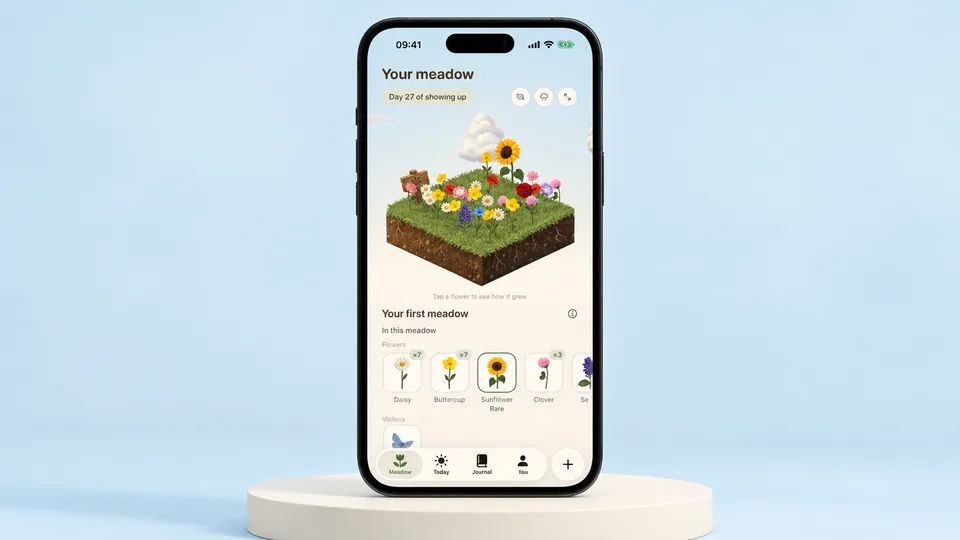
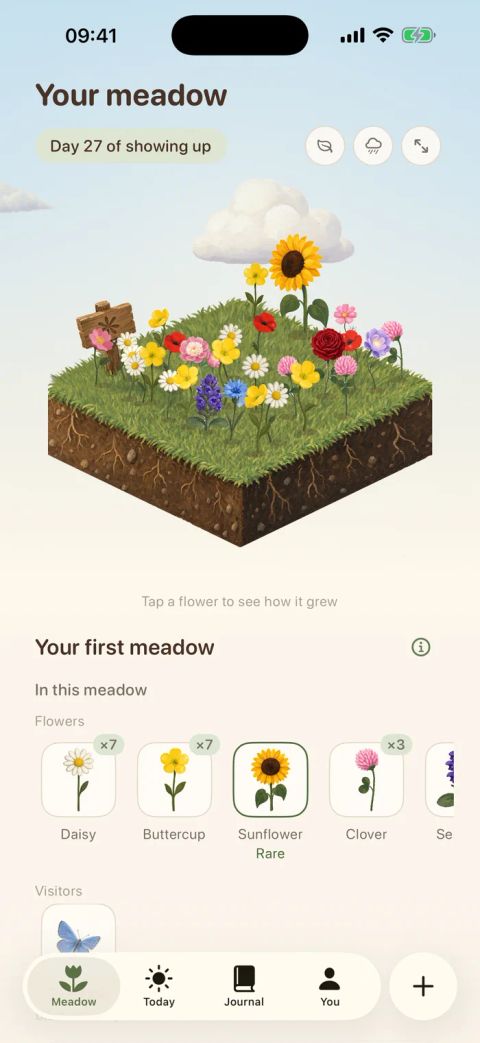
Some days go to plan and some don't, and a habit app that shrugs off a missed day can make the difference between stopping and starting again. Meadow is built for exactly that. You log a short walk or a few minutes of movement, tick off a small daily habit like getting outside, and note your mood and energy, and a new wildflower blooms for each day you show up.
There are no streaks to break. Miss a day, a week or a month and nothing wilts or resets, so a sore knee or a hard week costs you nothing. Over time your meadow fills in, which is a kinder record of consistency than any set of scales. You can find Meadow here.
A gentle first month, mapped out
Open our free printable: A gentle first month (PDF). Save or print it to use alongside this guide. No sign-up needed.
Here's a plan you can follow or bend to fit. It builds slowly on purpose. If a week feels like too much, repeat it before moving on. There are no bonus points for rushing.
Week 1. Move for five minutes a day, most days. A short walk, a few sit-to-stands, or a slow pool width. The only aim is to turn up.
Week 2. Stretch your daily movement to about ten minutes, or add a second five-minute bout later in the day. Keep the effort easy enough to chat through.
Week 3. Add one session of seated or standing strength, so two of your days include a few sit-to-stands, arm raises and marches. Everything else stays as it was.
Week 4. Nudge your longer sessions towards fifteen minutes and notice which activity you look forward to. That's the one to build your routine around.
Keep a simple note of it somewhere. A blank version and a filled example might look like this.
This week's aim: _______________
Hard-day version: _______________
Missed a day? _______________
This week's aim: a 10-minute walk after lunch, most days
Hard-day version: stand up, stretch, and walk to the kitchen and back
Missed a day? Nothing lost. Pick it up again tomorrow.
The hard-day version is the part that saves the habit. On a low-energy day you don't skip, you shrink. One walk to the end of the hall still counts and still keeps the thread going. And if you do miss a day, the fix is quick: start again the next day. One miss is nothing. It's a second and third skipped day in a row that quietly ends a routine, so the aim is to avoid missing twice.
When to check with your GP first
This part is worth taking seriously. If you haven't exercised for a long time, or you have a health condition, the NHS advises speaking to your GP before you begin, so your plan fits your health and fitness.
See a GP first if you have heart problems, chest pain, uncontrolled blood pressure, diabetes, joint conditions, or you're pregnant or recently had surgery. And stop and seek advice if any activity brings on chest pain, dizziness, a racing or uneven heartbeat, or breathlessness that feels wrong to you. A GP or physiotherapist can point you towards what's safe for your body, and often towards supported local schemes you didn't know existed.
None of this is a reason to wait. For most people it's a short conversation that lets you start with more confidence.
Common questions
What's the best exercise to start with if I'm obese?
The best one is the one you'll do again. Walking and water-based movement top most lists because they're low-impact and easy to scale, but a seated routine at home counts every bit as much. Pick whichever you can picture yourself doing this week.
How long until I see results?
Fitness changes like steadier breathing and easier stairs often show up within a few weeks. Weight is far less predictable and depends on many things, so it's a poor early scorecard. The CDC is clear that how a body responds varies widely, so judge progress by how you feel and function.
How much should I be aiming for eventually?
The general target for adults is 150 minutes of moderate activity a week, spread across the days, plus strengthening on two days, according to the NHS. That's a destination, not a starting line. Build towards it over weeks and months.
Do I need to lose weight before I can exercise?
No. You start where you are, and movement is worth doing for its own sake, whatever your size and whether or not your weight changes.
It hurts. Should I push through?
Ordinary muscle tiredness is fine. Sharp joint pain, or pain that lingers, is a signal to ease off and, if it keeps happening, to get it checked. Comfort adjustments like better shoes, shorter bouts and water-based sessions often solve it.
Starting is the hard part, and you've now got a small, kind first step to take. Pick one five-minute activity from this guide and do it today. That's the whole job for now.
AUTHOR
Co-founder of Meadow.
Ash is co-founder of Meadow, a habit and movement tracking app that turns small acts of self-care into a growing wildflower meadow.
Little and often, with Meadow
Consistency, not intensity.
Meadow turns the movement you enjoy and the habits that help you feel good into a meadow of wildflowers. No streaks to break, and your flowers never wilt.
Download Meadow