Motivation to exercise rises and falls on its own, and no one keeps it topped up all the time. So staying motivated is less about summoning more willpower and more about picking movement you like, making it your own choice, letting it become part of who you are, and building a setup that carries you on the flat days.
That's the honest version. The people who are still active in ten years aren't the ones who feel fired up every morning. They've arranged things so the feeling doesn't have to show up for the walk to happen.
Here.s how motivation works, and how to keep moving when it dips.
Why motivation comes and goes
Motivation is a feeling, and feelings move around. Yours runs high when you're rested, a bit inspired, and the weather's kind. It sinks on a wet Tuesday when you're tired and behind on everything. That swing is normal, not a character flaw.
Victoria's Better Health Channel puts it plainly: motivation levels fluctuate in everyone, and even exercise fanatics find it hard to get going sometimes. Their advice is to expect the dips and treat them as life getting in the way, not as proof you've failed.
If your whole plan leans on feeling motivated, it works on your good days and falls over on the rest, and the rest are most days. The way through is to stop waiting for the feeling and start building reasons to move that don't depend on it. Those reasons come from four places: enjoyment, choice, identity, and a system.
Find movement you'd choose anyway
The activity you pick shapes your motivation more than any pep talk. A swim you look forward to beats a run you dread, because you'll come back to the thing that doesn't feel like a punishment.
There's good evidence behind this. A review of 66 studies on self-determination theory and exercise found that more self-directed, enjoyment-led reasons for moving were linked to sticking with activity over the long run, while doing it purely to hit a target or change how you look tended to predict short-lived starts. The Better Health Channel reaches the same conclusion in one line: if you don't enjoy your activity, it won't be sustainable.
So the useful question isn't which workout burns the most calories. It's which one you'd pick on a free evening.
Give yourself permission to shop around. Try a dance class, a hill walk, a swim, a bit of yoga, cycling with a podcast on. Drop the ones that feel like a chore and keep the ones you half-look-forward to. Variety helps here too, because the same route every day for a year gets stale, and a bored brain reaches for the sofa. If you're coming back after a long gap and don't know where to begin, our guide to how to start exercising has a gentle first week you can copy.
Make it your own choice
Motivation lasts longer when the exercise feels like something you chose, not something you're being made to do. That sense of it being yours has a name in the research. It's autonomy, and it's one of the reasons enjoyable, self-directed activity keeps people coming back while nagging and shoulds wear off.
The same review found that feeling capable at your activity, what psychologists call competence, was one of the stronger predictors of staying active. That points at something practical. Pick a version you can do well now, so most sessions leave you feeling a bit more able rather than defeated, and let the challenge grow as you do.
This is where chasing a number on the scales can quietly backfire. An outside goal can get you moving this week, but once the effort feels like a duty owed to that number, the drive tends to leak away. Let the doing become its own reward, so the activity earns its place in your week because you like how it feels, not because a distant target is watching. Our companion guide to exercise motivation digs into that shift from outside pressure to inside pull.
Become someone who moves
James Clear, who wrote Atomic Habits, makes the case that the habits that stick are tied to who you believe you are. His advice is to start by deciding the type of person you want to be, then prove it to yourself with small wins.
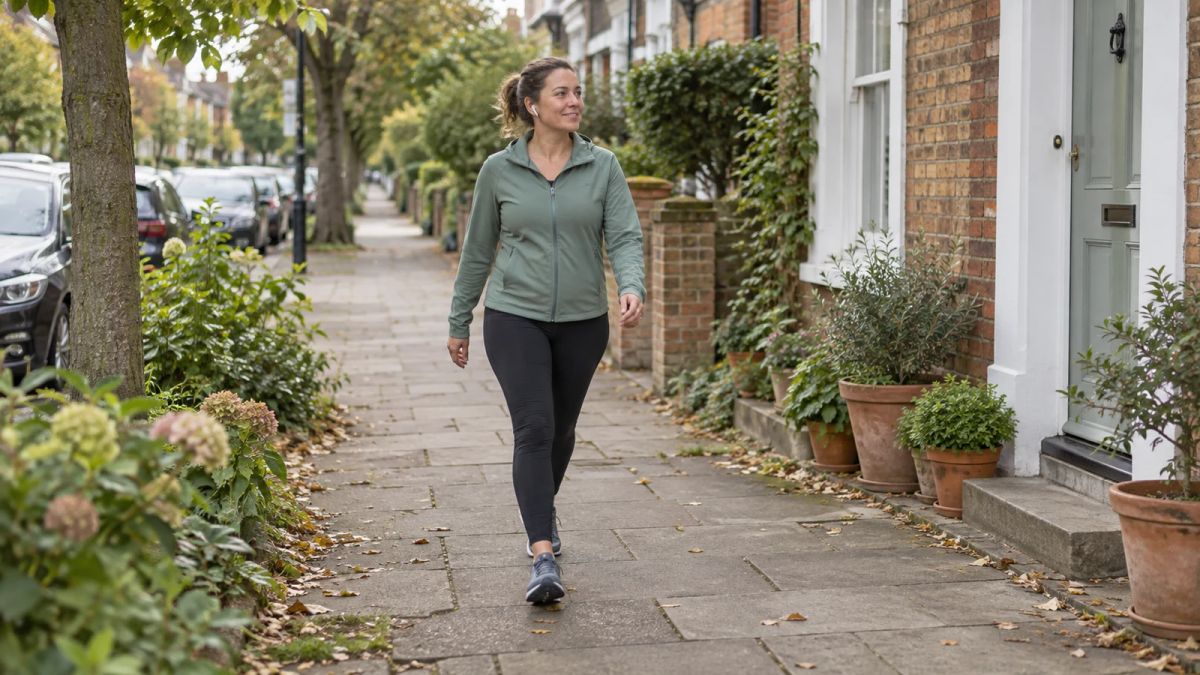
The shift is quiet, and it changes a lot. Instead of "I'm trying to get fit", you tell yourself "I'm someone who moves", and a ten-minute walk stops being a chore to grind out. It becomes a small piece of evidence that the description is true. Each time you show up, you add to the pile.
Once "I'm active" starts to feel true, the behaviour follows the belief, and you're not forcing yourself any more. You're acting like yourself. This is why skipping the grand target can help. You don't need to run a marathon to be a runner. You need to lace up often enough that the identity settles in.
Build a system so you don't rely on the feeling
Even with enjoyable movement and a solid sense of who you are, some mornings the motivation won't turn up. That's the day the system earns its keep, because it lets you move without having to decide first.
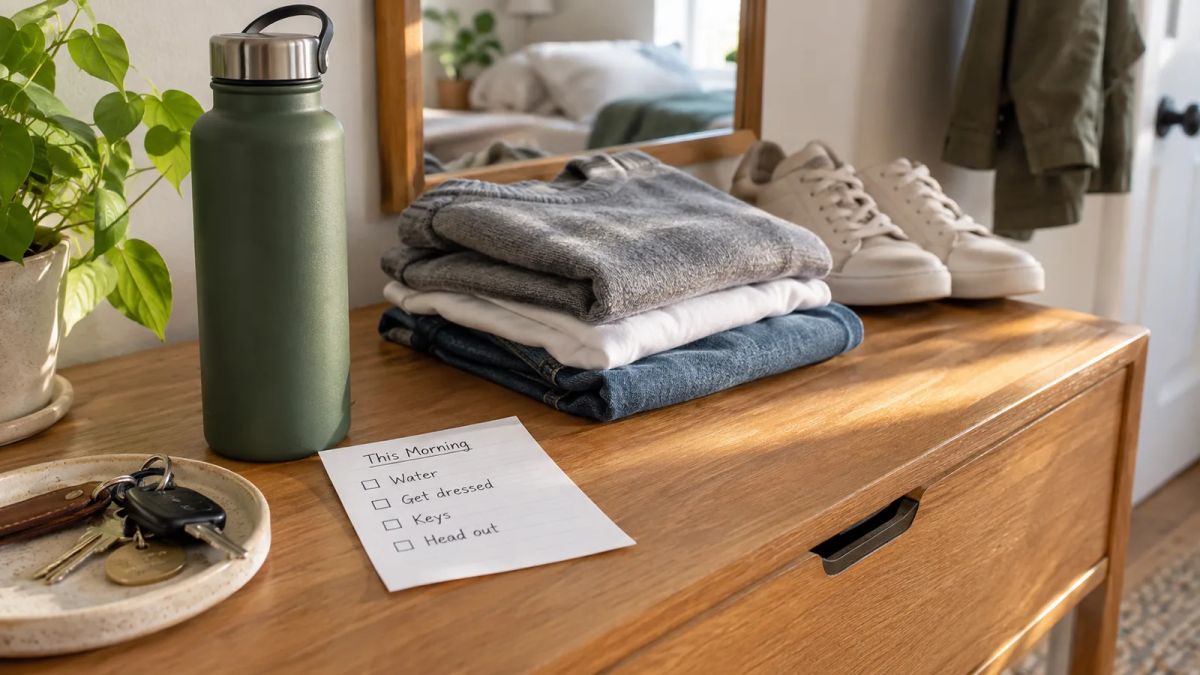
Three things make up a decent system. Tie the movement to a moment you already have, so an existing habit does the reminding. Keep a smallest version, tiny enough to do on a bad day. Mark the days you move, because a visible record pulls you back. That last one isn't wishful thinking. A meta-analysis of 138 studies found that prompting people to keep an eye on their progress towards a goal improved how often they reached it. Watching the thing is part of doing the thing.
Fill in these four lines once, and you've made the decisions in advance so a flat Tuesday can't unpick them.
My movement: ________ (something I'd half-look-forward to)
My cue: after I ________ (a moment I already have every day)
My smallest version: ________ (doable on my worst day)
How I'll mark it: ________ (a tick, a calendar, an app)
Here's one filled in, so you can see the shape of it.
My movement: a brisk walk with a crime podcast
My cue: after I drop the kids at school
My smallest version: once round the block
How I'll mark it: a cross on the kitchen calendar
Keep it where you'll see it. For a fuller walk-through of anchoring workouts to a cue and protecting the slot in a busy week, our companion piece on how to stay consistent with exercise goes step by step.
Watch your progress bloom
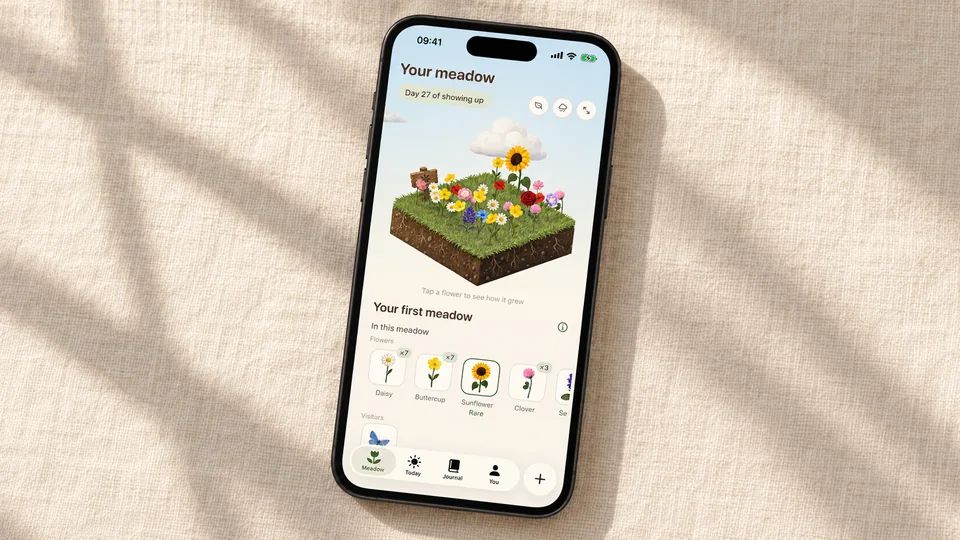
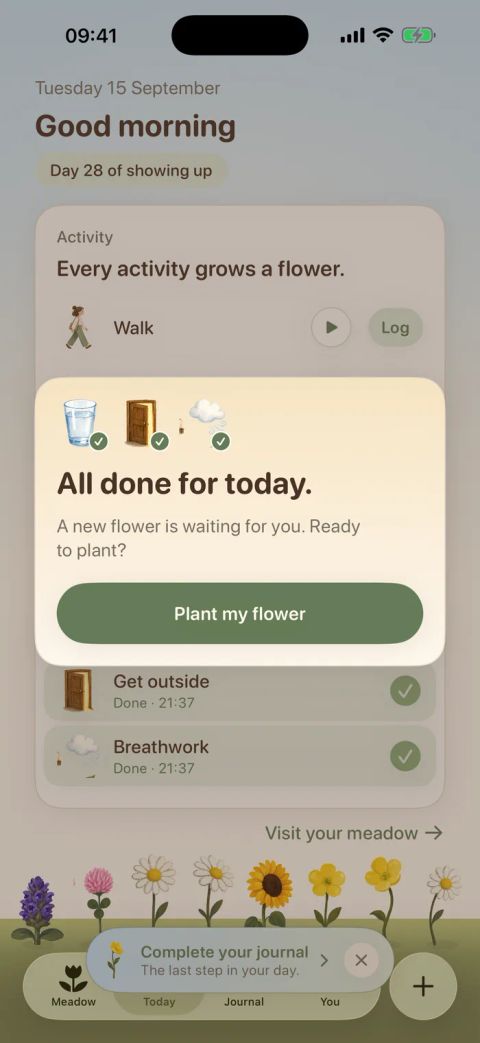
Motivation tends to follow visible progress, and Meadow turns each day you move into something you can watch grow. It's a gentle movement and habit app for iPhone. You log a walk or a few minutes of movement with a timer, tick off small daily habits, and note your mood, energy and a daily win, and every day you show up a new wildflower opens in your own meadow, with rare flowers and small animal visitors appearing as it fills in. There are no streaks, so a rained-off day resets nothing and the flowers you've grown never wilt. That suits the way motivation ebbs and flows, because it rewards the days you turn up without punishing the ones you don't.
When the motivation disappears for a week
You'll have weeks where nothing happens. A cold, a deadline, a stretch where the whole idea feels pointless. The people who stay active aren't the ones who never stop. They're the ones who restart and refuse to make a drama of the gap.
The damage rarely comes from the missed sessions themselves. It comes from the story afterwards, the "I've blown it now" that turns one skipped week into three months on the sofa. So decide your bad-week move in advance, the one you can manage with a headache and a full inbox, and do it at the very next chance. A walk to the end of the road counts. Don't wait for Monday, because there's nothing special about Monday except how long it makes you wait.
One health note before you push on. If you have a health condition, an injury, or you've been inactive for a long time, it's worth a word with your GP before you start, and build up slowly. The general aim for adults is around 150 minutes of moderate activity a week plus strengthening on two days, though any movement counts and a gentle start is the point.
Common questions
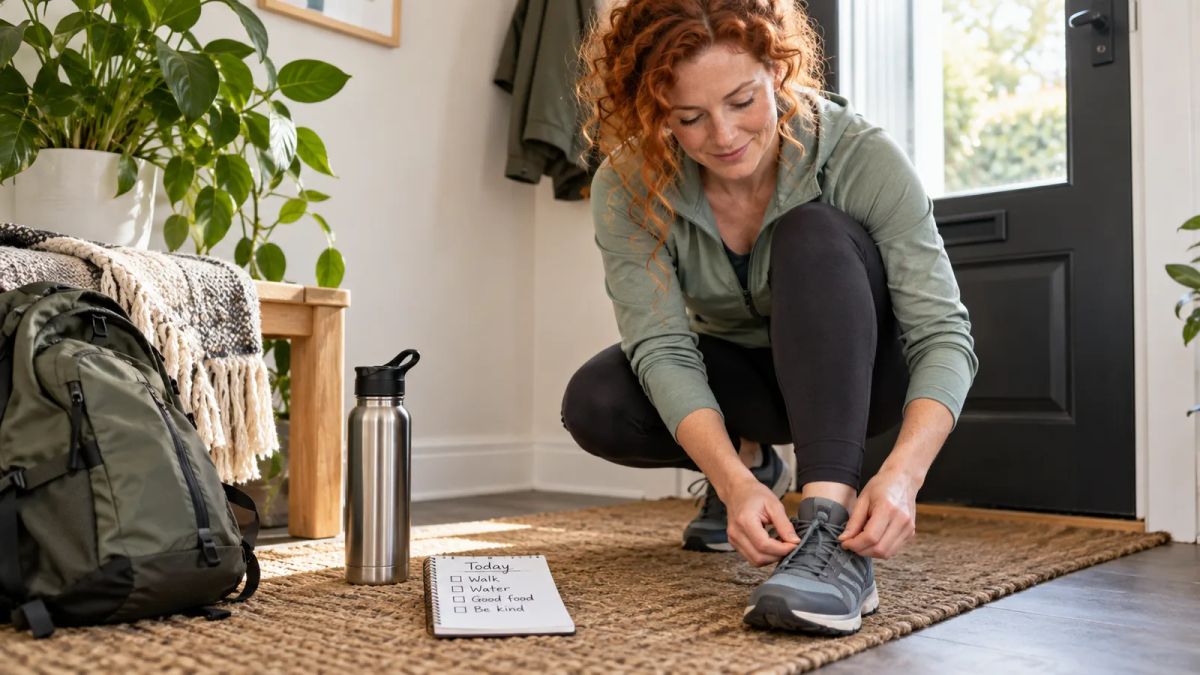
How do I stay motivated when I don't feel like exercising? Don't try to feel like it. Do the smallest version instead and let that be a win. Shoes on, out the door, to the end of the road. Low motivation is exactly when the tiny version earns its place, because it asks almost nothing of you and keeps the thread going.
Why does my motivation vanish after a few weeks? The buzz of a new plan is the outside kind of motivation, and it fades. If nothing takes its place, the whole thing sags. Give the enjoyable side room to grow, pick activities you'd choose anyway, and lean on your cue and your record to carry the weeks once the novelty's gone.
Does exercising with a friend help? For a lot of people, yes. A set time to walk or train with someone turns the session into something you look forward to, and it's harder to bail on a person than on a plan. It won't suit everyone, so treat it as one option among several.
What if I've lost all motivation to exercise? Start smaller than feels sensible and rebuild from there. One two-minute walk after your morning coffee, marked on a calendar, is a real beginning. Motivation often follows action rather than the other way round, so the movement tends to come first and the feeling catches up.
Right now, fill in the four-line plan above with a real activity, a real cue and a version small enough for your worst day. Then do the smallest version once, today, before the feeling has a chance to fade.
AUTHOR
Co-founder of Meadow.
Ash is co-founder of Meadow, a habit and movement tracking app that turns small acts of self-care into a growing wildflower meadow.
Every little bit counts
Five minutes counts. So does a dance in the kitchen.
Log the movement you enjoy and the small habits that help you feel good, and watch them bloom into something you can see.
Download Meadow