Finch and Fabulous turn up together a lot, usually side by side in a search for the self-care app that'll finally stick. Both want to help you build small daily habits. Both have a following in the millions. Both are free to download. That's roughly where the similarity stops. If you're weighing up Finch vs Fabulous, you're choosing between two different ideas of what a self-care app should do for you.
Finch gives you a bird. You raise a little pet by looking after yourself, and it grows as you tick things off. Fabulous gives you a coach. It walks you through structured routines built on behavioural science, one step at a time. One is soft and playful. The other is organised and instructive. Neither is better in the abstract, so the useful question is which fits the way you behave on a slow, tired Tuesday.
Here's an honest side-by-side across the things that decide it: how each one works, what you do daily, what it costs, which phone you need, and who each one suits.
Two different ideas of self-care
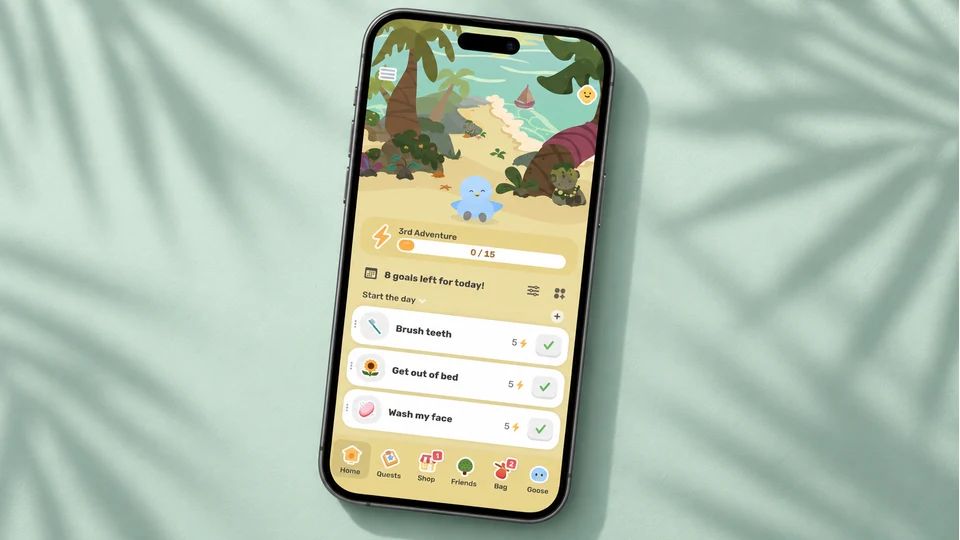
Finch's whole approach rests on a gentle trick. You don't tend the app for its own sake, you tend it for the bird. Complete a breathing exercise, log your mood or finish a small goal and your pet earns energy, then heads off on a tiny adventure while you get on with your day. The care you give yourself becomes care you're giving something else, which is a surprisingly effective nudge for people who find it easier to show up for others than for themselves.
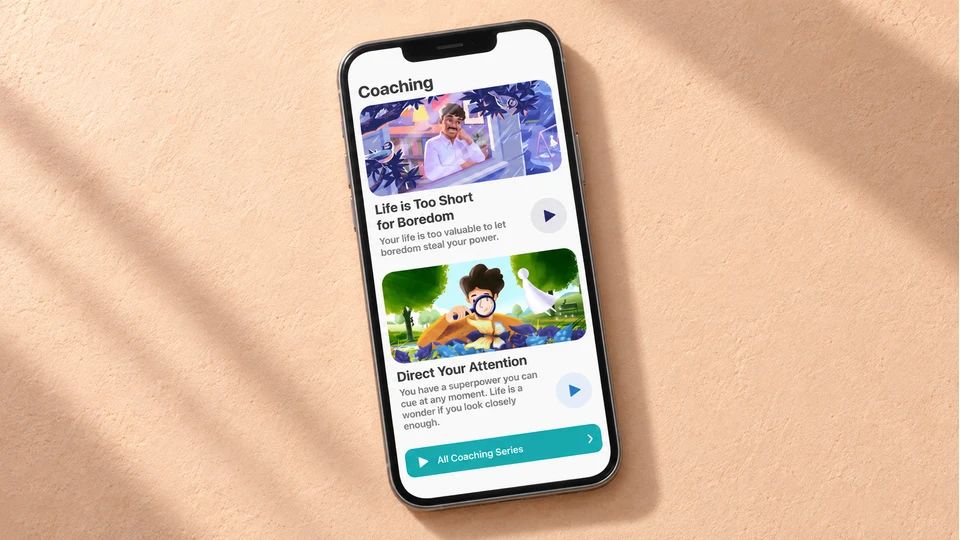
Fabulous comes at it from the opposite direction. It was incubated at Duke University's Center for Advanced Hindsight, and it leans hard on habit science, in particular the idea of stacking a new habit onto an existing one. You pick a "journey", a themed course like a calmer morning or better sleep, and it feeds you one small action at a time, wrapped in coaching, affirmations and reminders. So in the Fabulous vs Finch decision, the split is emotional warmth against structured instruction.
That difference shows up most on a bad day. Finch tends to meet a rough patch with softness. Fabulous tends to meet it with a plan.
What you do each day
Day to day, Finch feels like checking in on a friend. You set a short list of things you want to do, a walk, a glass of water, a few minutes of breathing, and you tap them off as you go. Around that sit mood tracking, guided breathing, journaling, reflections and little quizzes, plus a fair amount of collecting and dressing up your bird. It's light, and you can be done in two minutes.
Fabulous asks a bit more of you and gives more structure back. A typical day is a sequence: a morning routine to start well, a focus or movement block, an evening wind-down. The coaching content is the real draw, short lessons and pep talks that explain why a habit works and how to keep it going. There are meditations, soundscapes and a community area too. It's less about a quick tap and more about following a guided path.
In short, Finch is a companion you check in with. Fabulous is a programme you follow.
What each one costs
Both apps are free to download, and both make their money from a subscription. The detail matters here, because it's where a lot of the frustration lives.
Finch is generous with its free tier. The core self-care tools, journaling, mood tracking, breathing and the daily checklist stay free with no ads, and the optional Finch Plus subscription is mostly cosmetic and extra content, things like outfits, more customisation and additional exercises. At the time of writing Finch Plus runs at roughly a few pounds a month or less over a year, though prices shift by region and over time, so check the current figure in the app. You can use Finch properly without ever paying.
Fabulous is where you'll want to read the small print. The download is free, but the journeys, the coaching and most of the library sit behind a premium subscription, and the free version is thin on its own. Pricing has been reported around forty US dollars a year with a seven-day trial, though the app also offers monthly, quarterly and lifetime options, and figures vary between the website and the app stores. Treat it as a paid app if you want the parts people rave about.
The billing is worth flagging plainly, without exaggerating it. On review sites like Trustpilot, Fabulous draws a fair number of complaints about unclear pricing, unexpected charges and a subscription that's easier to start than to stop. Cancellation is handled through the Fabulous website rather than always through your phone's usual settings, and the app doesn't offer refunds. Plenty of people pay happily and rate it well, so this isn't a warning to avoid it. It's a reason to know exactly what you're signing up for and to set a reminder before any trial ends.
Which phone you're on
Both apps run on iPhone and Android, so this one rarely decides it. Two small notes. Fabulous has started rolling out a desktop version for Mac and Windows, so it's the pick if you want self-care on a laptop as well as a phone. And some of Fabulous's features differ between iOS and Android, with certain exercises appearing on one and not the other, so it's worth checking your own store listing before you commit.
Who Finch is for, and who Fabulous is for
Finch suits you if softness is what keeps you coming back. If guilt-based tracking makes you delete the app, if you want emotional warmth over instruction, and if you'd rather care for a cute companion than complete a course, Finch is the friendlier home. It's also the clear winner if you want something you can use fully for free.
Fabulous suits you if you want to be told what to do. If a vague intention like "sleep better" never turns into action for you, the step-by-step journeys and the coaching can be the scaffolding that finally makes it concrete. You have to be willing to pay for the good stuff, and you have to be the sort of person who finds a coaching voice motivating instead of a bit much.
If neither quite lands, both have their own crowds of alternatives worth a look. We round up the calmer, pet-and-plant options in apps like Finch, and the more structured, coaching-style tools in Fabulous app alternatives.
The downsides worth knowing before you commit
No app is all upside, and both have real weak spots.
- Finch can start to feel like one more obligation. A few reviewers, including a writer for Slate, have found that a bird "missing" them nudges into guilt, and that they spent more time fussing over the app than doing the self-care it was meant to support.
- Finch's tone is deliberately sweet, and for some people it tips into twee. If cute isn't your language, it can wear thin fast.
- Fabulous keeps its best features behind that subscription, and the billing complaints above are common enough to take seriously.
- Fabulous can also feel like a lot. The steady stream of coaching, prompts and routines is the point for some and pressure for others, and it's harder to dip in for two minutes.
Finch vs Fabulous: the verdict
For most people looking for a self-care app they'll keep, Finch is the easier one to recommend. It's kind, it costs nothing to use well, and its gentle design forgives the days you fall off, which is exactly when most people quit. It won't organise your life, and if you want a plan you'll outgrow it.
Fabulous is the stronger pick for a narrower group: people who want to be coached, who respond to structure and science, and who don't mind paying for it. Go in clear-eyed about the subscription, and cancel deliberately if it isn't for you.
The honest truth is that the best app is the one still open on your phone next month, and that depends far more on how you react to a missed day than on any feature list. If a broken habit makes you want to give up entirely, pick the one that treats an off week as normal. Our guide to how to be consistent digs into why some habits stick when others don't.
Calm without a pet to keep alive
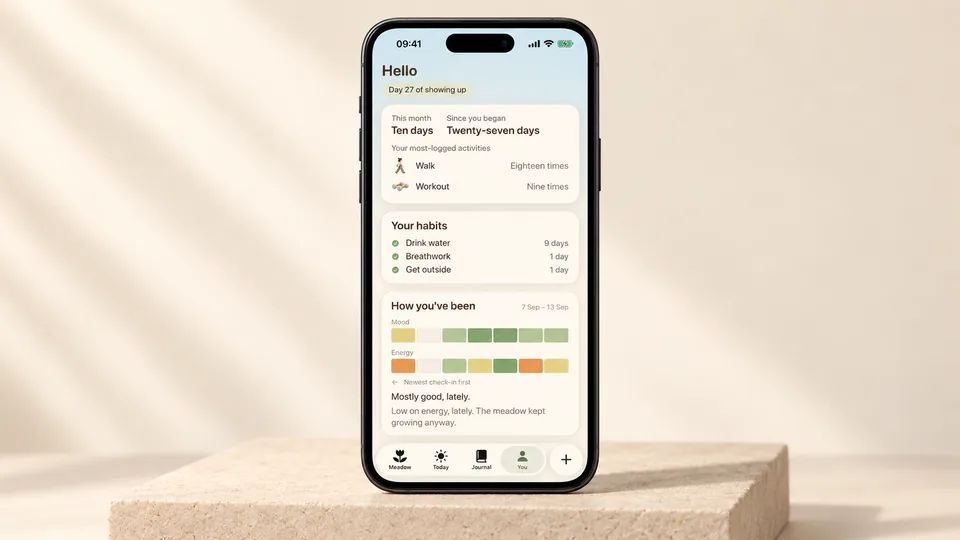
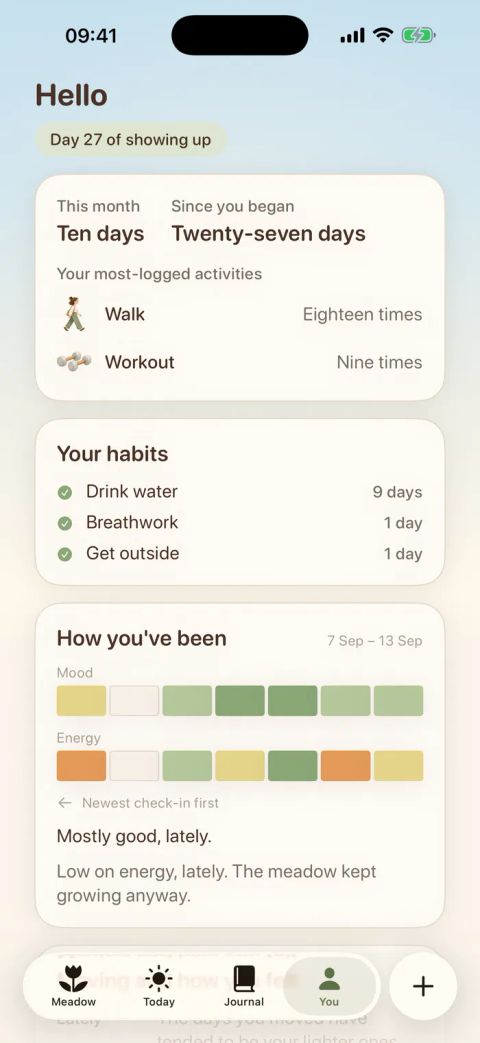
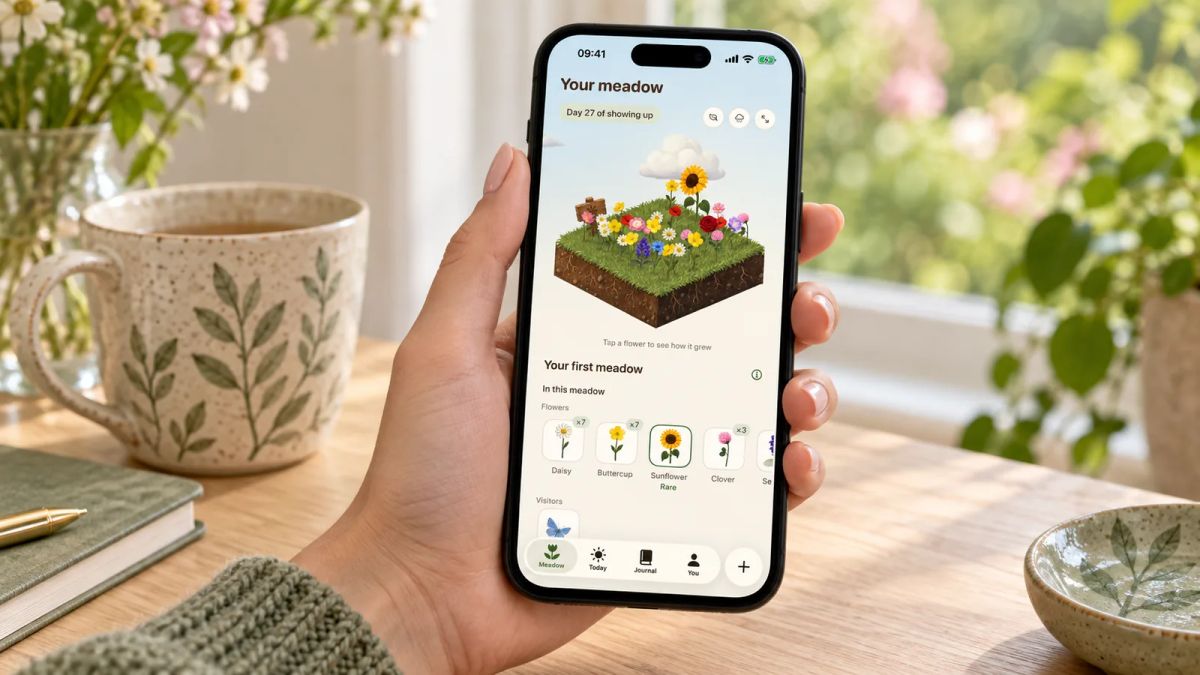
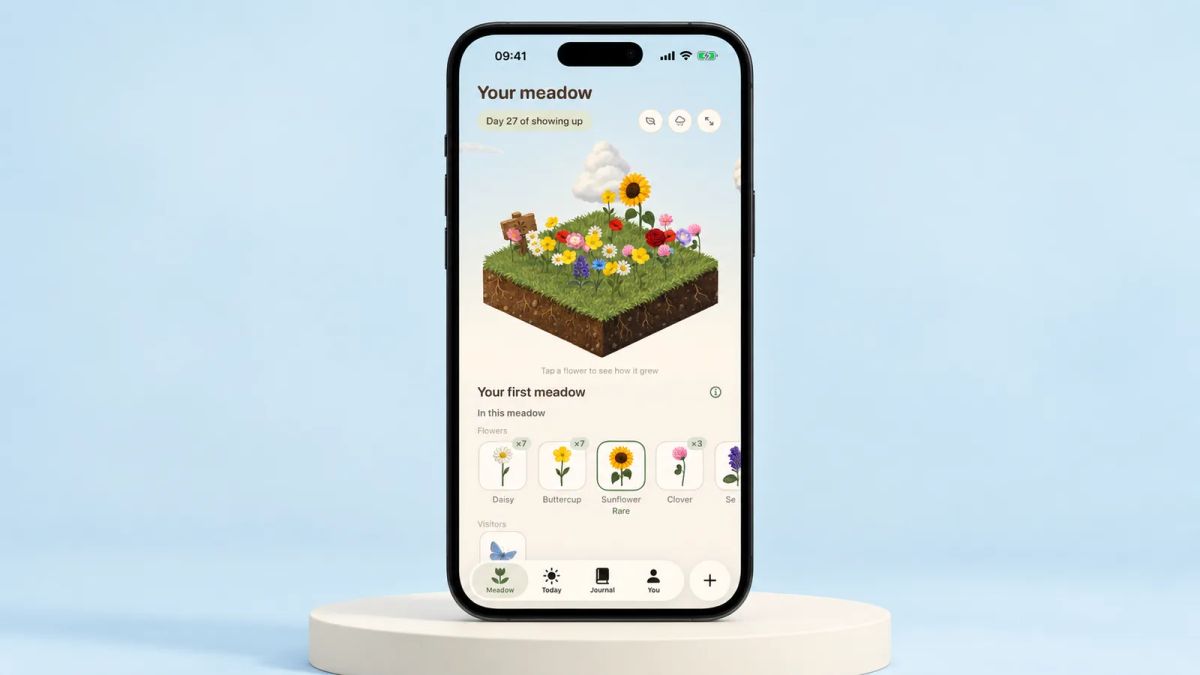
If what you want is neither a creature that seems to mind when you're away nor a coach steering you towards the next upgrade, there's a quieter third option. Meadow grows a real wildflower meadow through your actual efforts. You log the movement you enjoy with a timer, a walk, some yoga or a dance, tick off small daily habits, and note your mood and energy, and each day you show up a new flower blooms in a meadow that's yours alone.
The design is built around picking things up again, not keeping a run alive. There are no streaks, no guilt and no penalty for a missed day, so nothing wilts and nothing resets while you're away. There's also a breathwork feature, so you can practise your breathing alongside the meadow you've grown. Little and Often is run by the Meadow team, so we'll say the caveats plainly: Meadow is iPhone-only, and it's a paid app, made by Wildcard Wellness for people who want the reward of watching something grow without a pet to disappoint or a routine to keep up with.
Whichever way you go, remember the point was never the bird, the journey or the flowers. It was the walk, the water and the minute of breathing, and any of these three can carry that if you let it stay small.
AUTHOR
Co-founder of Meadow.
Ash is co-founder of Meadow, a habit and movement tracking app that turns small acts of self-care into a growing wildflower meadow.
See how far you've come
Your habits, moods and little wins, all in one place
Meadow keeps track of the walks, the water and the good days, so you can look back and watch your effort add up.
Download Meadow