Self-care ideas for women that survive a real week are small, cheap and quick enough to shrink on the days you have least to give. They earn their place when you are the one holding the family calendar in your head, a job that rarely stops long enough for a spa day to fix it.
If you want one thing before you read on, put a glass of water within reach and drink it now. That is the scale of what works. One doable action that leaves you a little steadier, chosen because it fits the week you are having, not the week you wish you had.
What follows is a menu sorted into rest, movement, calm, connection, boundaries and health admin. You are not meant to do all of it. The point is to find the one or two ideas that suit today and let the rest wait.
Why this is harder for women, and why that is not your fault
Women report more stress than men, and the same reasons come up year after year. The American Psychological Association's Stress in America work found women rating their stress higher than men and more likely to name family responsibilities as a source of it, along with a stronger sense that no one around them understands how stretched they are.
A large part of that pressure has no name on any rota. It is the mental load, the constant background thinking about who needs what and when.
Research from the University of Bath put numbers on it. Across more than two thousand US parents, mothers reported far more of the household's cognitive labour than fathers, the planning, remembering, scheduling and appointment-booking that keeps a home running. Mothers earning over one hundred thousand dollars did less physical housework, yet carried no less of this mental work. The researchers called it cognitive stickiness, because unlike a chore you can hand over, the thinking tends to stay stuck to women and is rarely renegotiated.
That is the honest backdrop to the guilt so many women feel about resting. When part of your mind never clocks off, sitting down can feel like dropping a ball. Naming the load helps, because it shows the problem is a system you are inside, not a personal failing you need to try harder to fix.
A menu to pick from, not another to-do list
The last thing an overloaded woman needs is a self-care checklist that becomes one more set of jobs to fall behind on. Read the categories below as options. Take the one that matches how you feel right now.
Rest and protect your sleep
Rest is the self-care our culture is worst at allowing, and women get the sharpest end of that, told to be endlessly available and then judged for being tired. Lying down for ten minutes with your eyes closed is a reasonable act of maintenance.
Sleep sets the tone for the whole next day, and the piece you can build is the wind-down before it. The Sleep Foundation suggests beginning a bedtime routine anywhere from thirty minutes to two hours before sleep, repeating the same calming steps each night so your brain reads them as a signal that rest is coming. Lights down, phone left in another room, a few pages of something undemanding. It costs nothing and works with the evening you already have.
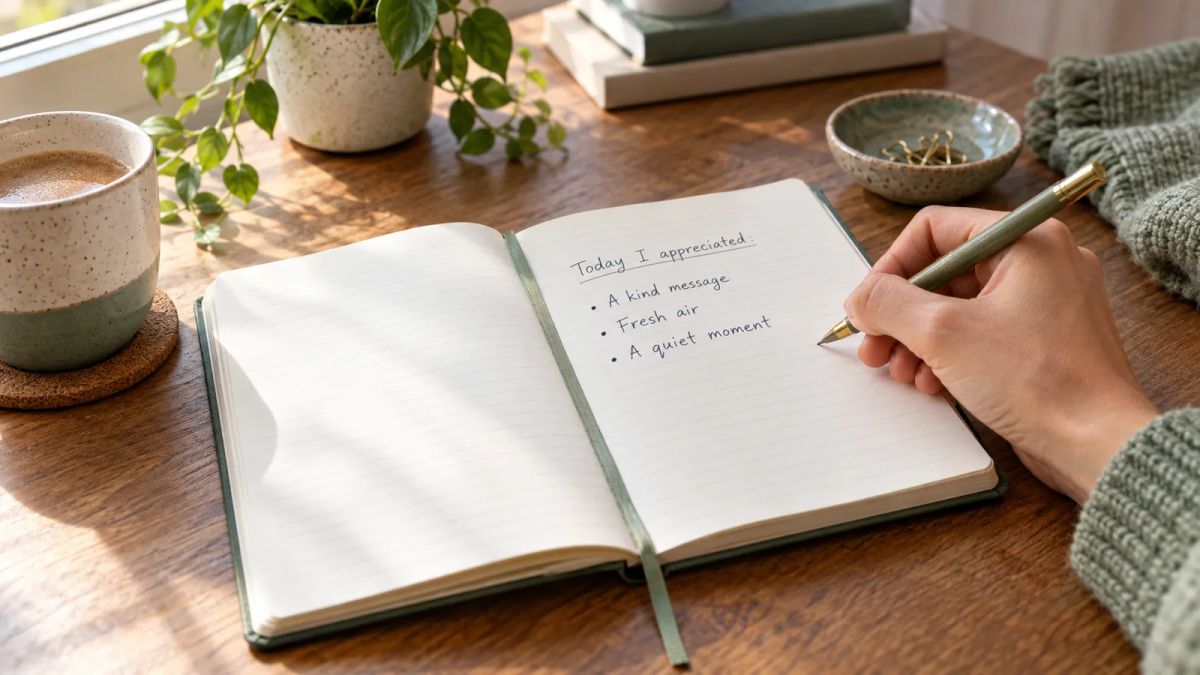
If your mind races the moment your head hits the pillow, the Sleep Foundation notes that writing a quick to-do list before bed can help you fall asleep faster. Parking the mental load on paper gets it out of your head for the night.
Move in a way that fits
Movement helps your mood, and the amount needed is smaller than the fitness industry implies. The CDC is plain that some activity is better than none and that any amount brings some benefit, which takes the pressure off the idea that it only counts if you change into gym kit.
There is a reason a walk clears your head. Harvard Health explains that exercise lowers stress hormones like cortisol and adrenaline and lifts mood-boosting endorphins, so a short walk does real work on a frazzled afternoon. A lap of the block, a stretch between meetings, one song danced round the kitchen while dinner cooks. If you are returning to activity after a long gap or you live with a health condition, a word with your GP before you push the pace is sensible.
Getting outside earns its own mention. A study of nearly twenty thousand people in England found that spending at least 120 minutes a week in nature was associated with better health and wellbeing, and it made no difference whether people reached that in one long visit or several short ones. This is an observational link, not proof, but two hours spread across a week is gentle, and a bench in the park at lunch counts towards it.
Calm a loud mind
When your head is full of everyone else's needs, sixty seconds of slowing down does more than it sounds like it should. Three slow breaths with a long exhale before you open the laptop. A minute spent writing down the one worry circling hardest.
Some women find the same quiet in a short list of things they are grateful for, and our gratitude journal prompts give you lines to start from when a blank page feels like too much. Others prefer a single steadying sentence to return to, and a few positive affirmations for women can soften the inner voice on a day it has turned sharp.
On a depleted day, good mental self-care takes decisions off your plate. Rereading a book you love, rewatching a familiar show, colouring one shape. Familiar things ask nothing of a tired brain, and that relief from choosing is a rest, not a sign you are slacking.
A little connection
A quick message to someone you like is self-care that happens to be free. It does not need to be a long phone call or a plan in the diary.
Connection is a real ingredient in wellbeing, not a bonus. The Greater Good Science Center at Berkeley lists social connection among its keys to wellbeing and points to research that even brief exchanges, including with strangers, can lift how we feel. A hello to a neighbour, a text saying you were thinking of someone, two minutes of chat at the school gate. Small doses count, which matters when a full social life is beyond this week.
The APA research noted a quiet trap here too, that stressed women often cancel the plans and contact that would help them most. If you feel the urge to withdraw, one short message is the smaller version worth reaching for.
Boundaries and the sentence "no"
Boundaries are self-care that does not look like self-care, because they protect your time before it is gone rather than mending you after. For women carrying the mental load, this is often the one item worth protecting first.
Saying no to one request, or handing a recurring task fully to someone else, removes a job from your head as well as your hands. The Bath research is a useful thing to point at in a conversation with a partner, because it shows the thinking work is unequally shared and can be renegotiated. Passing over a task means passing over the remembering and the chasing too, otherwise it quietly bounces back to you.
Start small. One "let me check and come back to you" instead of an automatic yes buys you room to decide on purpose.
Health admin you keep postponing
Plenty of real self-care is dull and easy to defer. Booking the smear test, the dental check or the appointment you have rescheduled twice. Ordering the repeat prescription. Replying to the letter that has been nagging from the side.
None of it feels restorative in the moment, and all of it lifts a low hum of worry off the days ahead. Clearing one postponed health task is a gift to next month's version of you.
The three things that get in the way
Most self-care advice ignores the reasons women skip it. Name the barrier and the answer gets smaller.
Guilt is the big one. Looking after yourself is what keeps you able to look after everyone else, so treating your own needs as the thing you get to last is how people burn out, not how they earn a gold star.
Money need not be a barrier, because the most useful items here are free. The water, the daylight, the breath, the message and the boundary cost nothing.
Time is the constraint most women feel hardest, and each idea above can shrink to two or three minutes. If the walk is too much, the smaller version is standing outside the back door with a cup of tea. A small thing done on a hard day counts for more than a grand plan you never reach.
Turning one idea into a habit
Reading a menu is the easy part. Keeping any of it going is where it slips, and the way through is to stop treating it as six new jobs and pick one to make close to automatic.
The move that tends to work is attaching the new action to something you already do. The American Heart Association's advice on making habits stick is to anchor a new behaviour to an established routine, so it rides along on a cue that happens anyway. Write yours as one sentence.
My self-care habit: ____________________
After I ____________________ (something I already do), I will ____________________ (one small action from the menu).
Here it is filled in:
My self-care habit: Two slow breaths before the school run.
After I click my seatbelt in, I will take two slow breaths before I start the car.
Seeing the days add up can help you keep going. A large review of monitoring studies found that keeping track of a behaviour is associated with being more likely to follow through, whether that is a tick on the calendar or a note in an app.
Decide your smaller version now, while your head is clear, so a rough day does not force the choice. When you miss a day, and you will, you have undone nothing. The next ordinary moment is a fresh start, so pick the next cue and carry on without the guilt tax.
Somewhere to look after yourself daily
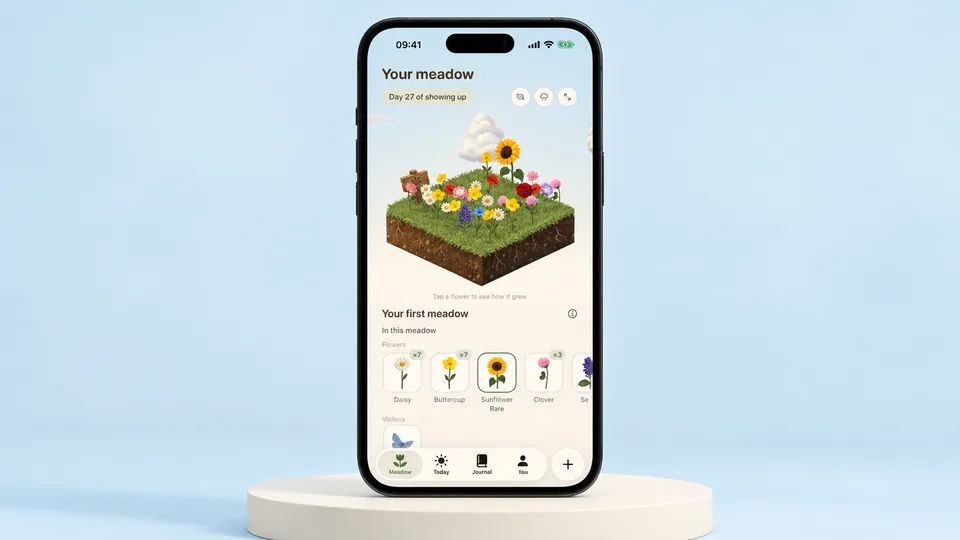
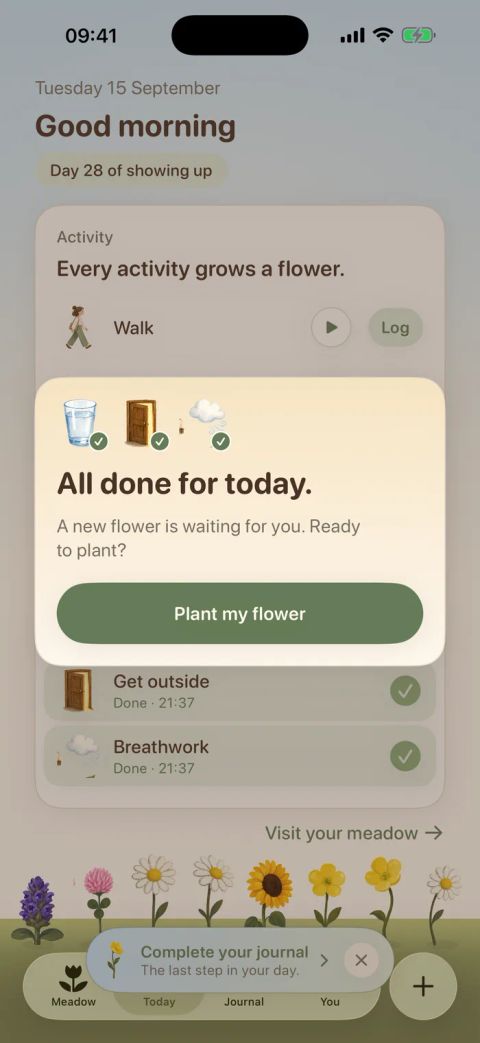
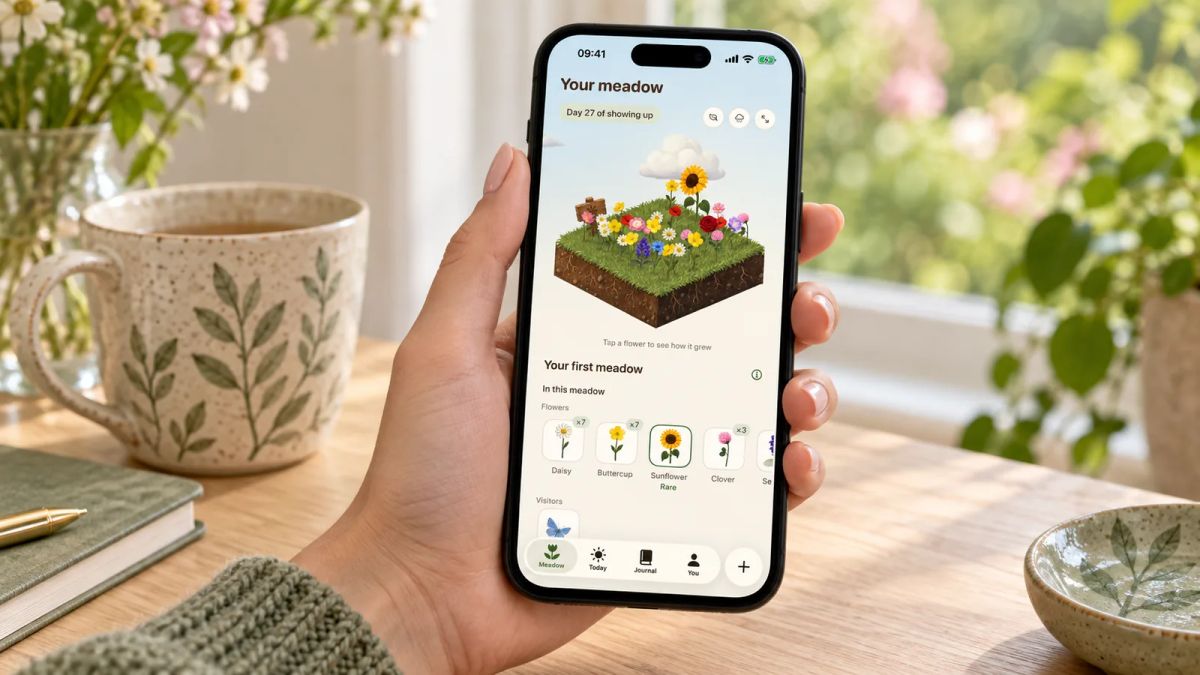
When looking after yourself feels like one more thing to remember, Meadow keeps it light. You log movement you enjoy, a walk, a dance, a little yoga, tick off small habits like drinking water or getting outside, and note your mood and energy, a daily win and a daily affirmation. It is a gentle habit app for iPhone from Wildcard Wellness, and every day you show up grows a wildflower in your own meadow, with rarer flowers and small animal visitors turning up over time. There are no streaks, so a missed day resets nothing and your flowers never wilt.
When to reach for more than a menu
These ideas are everyday wellbeing, and that is where their honest value sits. They are not a treatment, and they will not fix a caring load, a job with no let-up or a relationship that leaves you carrying everything. Reading them as a cure would be unfair to you.
If low mood or anxiety carries on for weeks, gets in the way of daily life, or feels heavier than you can hold, the NHS advice on low mood and depression is to talk to your GP. That is a sensible next step, not a sign the small things failed. If any of this feels like a lot on its own, our broader self-care ideas cover the same ground without the women-specific framing.
Frequently asked questions
Why do women need self-care more than men?
The need is not a personal weakness. Women report higher stress than men and carry most of the household mental load, the invisible planning and remembering that rarely gets shared, so the ordinary day asks more of them to begin with.
What are some self-care ideas for women with no time?
Shrink each one. Two slow breaths at a red light, a glass of water, one text to a friend, or standing outside for a minute. On a stretched day the tiniest version is the whole task, and it counts.
What are free self-care ideas for women?
Most of the best ones cost nothing. Daylight, a short walk, a wind-down before bed, three slow breaths, a message to someone you like, and saying no to one request are all free and take minutes.
How do I do self-care without feeling guilty?
Reframe it as maintenance, not indulgence. Looking after your own basic needs is what keeps you able to look after everyone else, and running yourself into the ground helps no one at home or at work.
Is self-care enough for anxiety or depression?
No. These ideas support everyday wellbeing but are not a treatment. If low mood or anxiety persists for weeks or disrupts daily life, speak to your GP.
One thing to do today
Pick a single item from the menu, name the everyday moment it will follow tomorrow, and take two slow breaths while you decide. One line, one cue, one small action is the whole of realistic self-care begun.
AUTHOR
Co-founder of Meadow.
Ash is co-founder of Meadow, a habit and movement tracking app that turns small acts of self-care into a growing wildflower meadow.
Every little bit counts
Five minutes counts. So does a dance in the kitchen.
Log the movement you enjoy and the small habits that help you feel good, and watch them bloom into something you can see.
Download Meadow